Folegandros rises sheer from deep water at the southern edge of the Cyclades — an island of vertical cliffs on one side and gentle farming country on the other, crowned by one of the most beautiful villages in Greece.
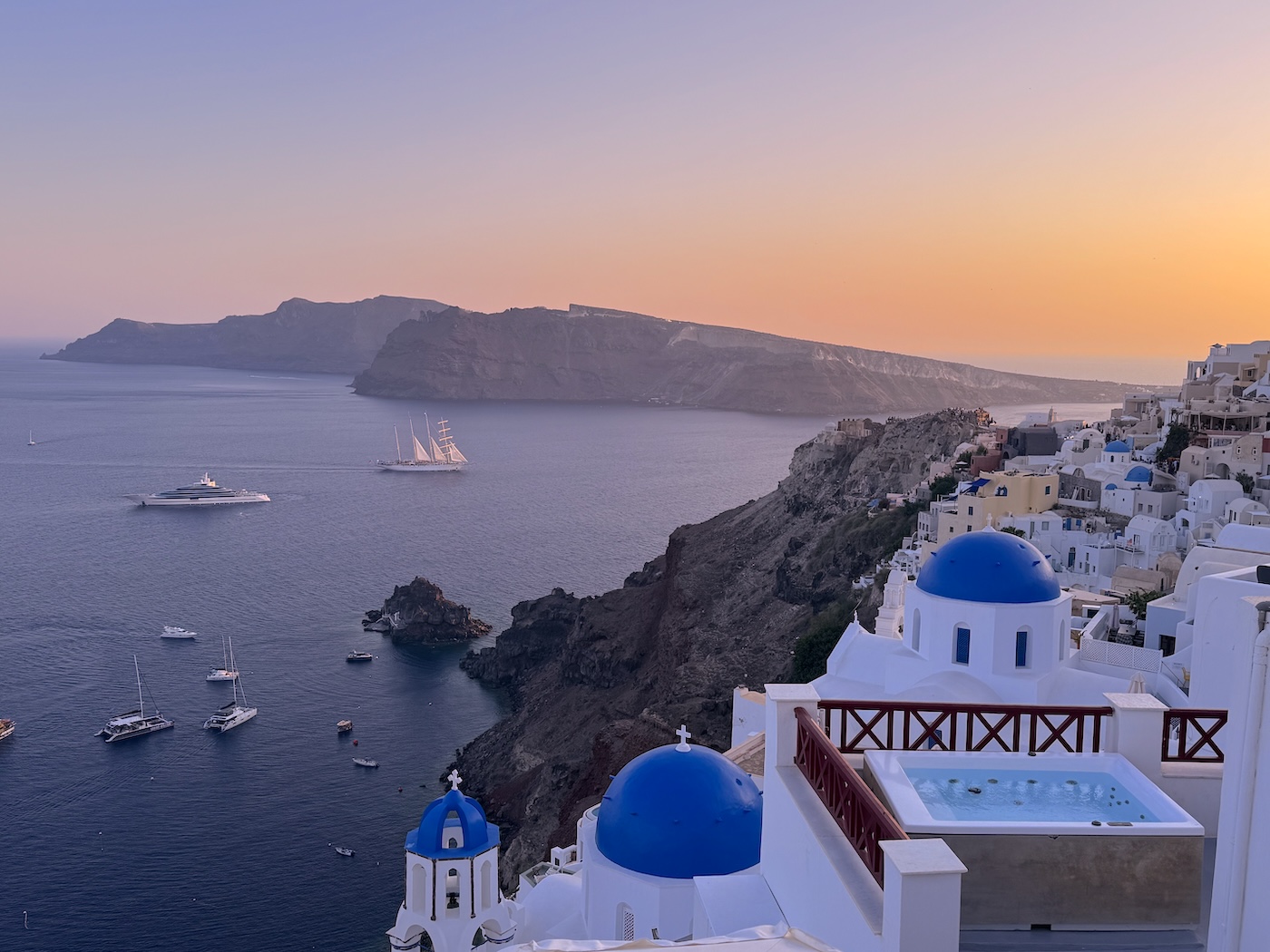
Chora perches on the cliff’s edge behind its medieval castle, a maze of lanes and squares where cars are rare and evenings unfold at walking pace. Above it, the whitewashed dome of Panagia watches over everything; below, the sea falls two hundred metres into blue.
This is the island travellers describe as “the Cyclades before the crowds” — no airport, few ferries, and a coastline of coves and sea caves that is best understood from the deck of a boat.
This guide covers what to see, what to do, the best beaches and swim stops, where to eat, and everything you need to plan a visit by boat.
Why visit Folegandros?
Geography made Folegandros what it is. The western coast drops in unbroken cliffs that kept harbours away for centuries; life developed inland instead, around farming terraces, stone huts and hilltop villages.
The result today is an island with almost no development pressure: Chora remains a living village rather than a resort, Ano Meria keeps its traditional farmsteads, and the beaches stay wild.
Sunsets here have a cult following — the whole western horizon performs nightly from the clifftop paths above town — yet the island never feels busy.
For crews, Folegandros is the perfect pause between the big names: a fair-weather stop with honest anchorages, a village worth dressing up for, and swimming that rivals anywhere in the Aegean.
What to see in Folegandros
Chora and the Kastro
The capital stacks its lanes against the cliff edge, wrapped around a thirteenth-century Venetian castle whose walls are formed by the houses themselves.
Three small squares — Pounta, Dounavida and Kontaridi — string through the village like beads, each shaded by vines and strung with lights after dark. Wander without a plan; every alley ends at a view or a doorway worth photographing.
Come back after dinner too: Chora at night, lamps glowing and conversation spilling from the squares, is one of the sweetest scenes in the islands.
The Church of Panagia

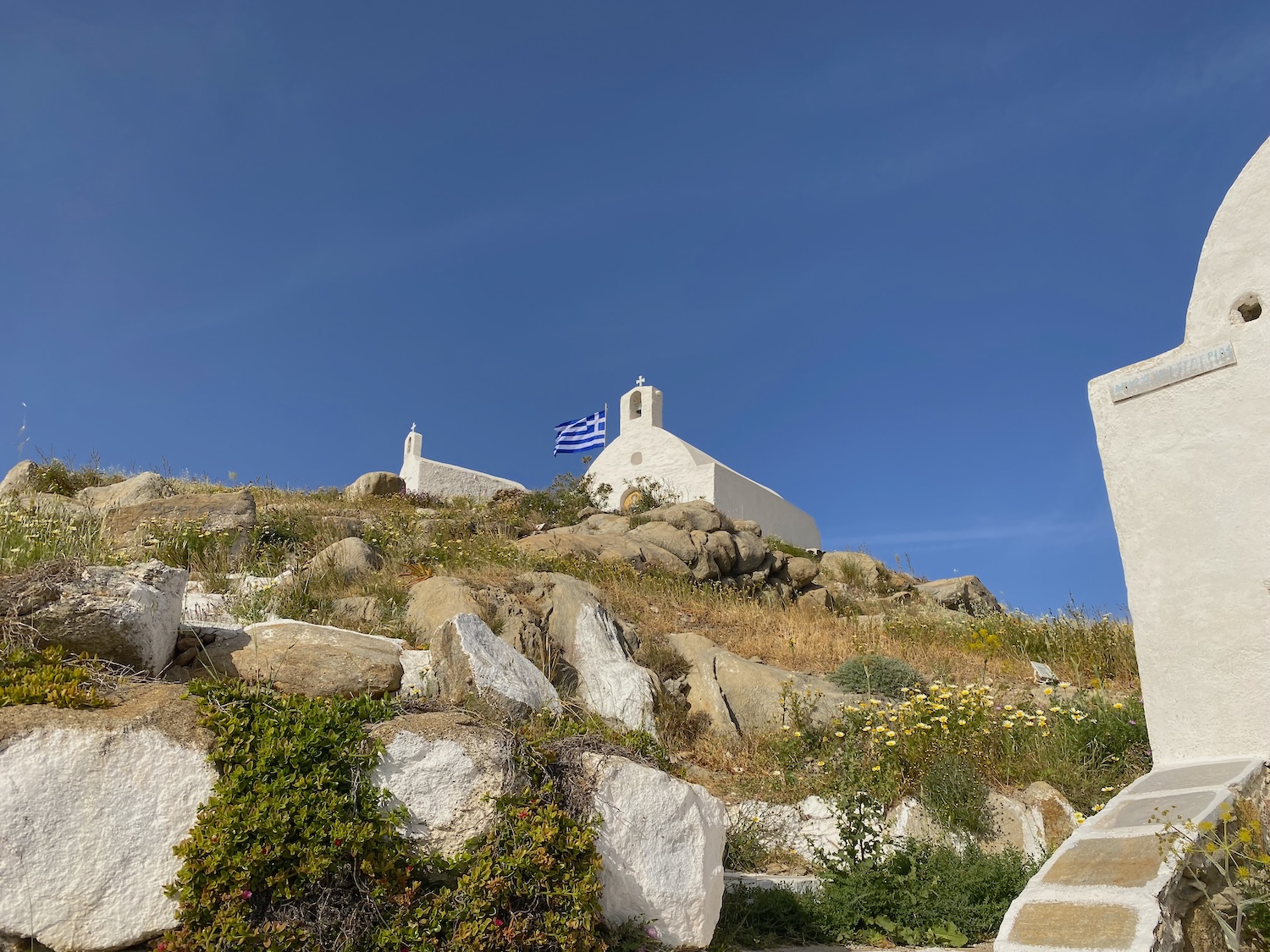
Above Chora, on the shoulder of the hill, stands the island’s beloved Church of Panagia — brilliant white against the sky, built on the site of an ancient temple.
The zigzag path up takes ten minutes and delivers the island’s signature panorama: the whole village below, the cliffs plunging west, and the sea running to the horizon.
Time it for sunset and you will understand why photographers keep returning.
Ano Meria and the farmsteads

Beyond Chora the road climbs into Ano Meria, a scattered village of thimonies — low dry-stone farmhouses with walled gardens that have fed the island for centuries.
The little Ecological and Folklore Museum explains this self-sufficient world beautifully, and the surrounding chapels and terraces make the best easy walking on the island.
Karavostasis, the port
Down at the water, Karavostasis gathers the island’s small harbour, a pebble beach and a handful of tavernas into a relaxed seaside hamlet.
It is your landing point by tender, the ferry connection ashore, and a pleasant place for a swim within minutes of the anchor.
What to do in Folegandros
Keep the sunset ritual

Folegandros faces the open western sea, and the whole island turns out for the evening show.
Join the gentle procession up to the Panagia plateau or claim a table on the cliff-edge path below town; either way, arrive early and stay until the last light leaves the water.
Walk the old paths

Stone-paved paths link Chora, Ano Meria and the southern coast, threading terraces, chapels and abandoned farmsteads.
The classic outing runs from Chora down to Livadi or Angali for a swim-and-lunch finish; go early in high summer and carry water.
Boat day along the cliffs
The western coast is Folegandros at full drama: unbroken rock walls, sea caves and water so deep it turns indigo.
Take the tender or the whole boat north on a calm morning, explore the caves near Ambeli, then finish at Katergo for lunch — a coastline you simply cannot see from land.
Slow down properly
Folegandros has no sights to tick off by the dozen; its luxury is rhythm.
Morning swim, long taverna lunch, afternoon read in the shade of a square, evening volta — follow that pattern for two days and you will leave restored.
Beaches and swim stops in Folegandros
Folegandros trades convenience for beauty: most beaches ask a walk or a boat, and reward both.
Katergo

The island’s icon: a strip of pale shingle beneath the southeastern cliffs, backed by low rocks and fronted by astonishingly clear water.
Taxi-boats run from Karavostasis in summer, but arriving by tender from your own anchorage is better still. Calm mornings only — it opens south.
Angali
A sheltered pebble bay on the west coast with a much-loved taverna at the head of the path. Reachable on foot from Ano Meria or by boat in settled weather.
Karavostasis
The easy swim: a pebble-and-sand town beach right by the harbour, handy for a quick dip between boat jobs and lunch.
Livadi
South of Chora, a broad quiet stretch reached by road or path — good for an afternoon when the meltemi keeps everyone else off the west coast.
Ambeli
The wild card on the northwestern shore: a rocky cove beneath the cliffs, visited by few and loved by those who make the effort. Flat-sea days only.
Food and where to eat in Folegandros
Folegandros cooks from its farmstead tradition: hand-cut pasta, slow goat stews and — uniquely — desserts made from watermelon.
Start with matsata, the island’s fresh ribbon pasta served with chicken or rooster, move on to sourotto, goat simmered in rich tomato, and save room for karpouzopita, a watermelon pie that tastes nothing like it sounds and entirely of summer.
Squares of Chora
The three squares hold the island’s best tables under the vines: family kitchens serving matsata and sourotto, ouzeri plates for grazing, and bakeries whose cheese pies vanish by noon.
Book ahead in August or take your chances happily after nine, when tables turn and the squares reach full charm.
Karavostasis waterfront
By the harbour, a short row of tavernas serves fresh fish and simple grills steps from where your tender ties up — the natural choice after a swim-filled day aboard.
Angali taverna
At the head of the west-coast bay, the single taverna at Angali is a destination in itself: grilled fish, garden salads and cold wine with your feet practically in the sand.
Combine it with the walk down from Ano Meria and you have the island’s classic day out.
Sweets and provisions
Look for karpouzopita and spoon sweets in Chora’s shops, plus local honey and capers. Provisions are adequate for galley top-ups; anything substantial comes easier from Milos, Paros or Santorini.
Exploring Folegandros by boat
Folegandros rewards skippers who plan around weather: one practical port, dramatic but unforgiving cliffs, and superb day stops when conditions cooperate.
Arriving and berthing
Karavostasis is the only port: a small mole and ferry landing on the southeastern coast, where visiting yachts tie up where directed or anchor in the open bay just off the beach.
The bay opens south and southeast — comfortable in summer meltemi winds, restless in southerlies. There is no marina, no fuel dock and limited water on the quay; plan top-ups at Milos, Ios or Santorini and treat Folegandros as a self-sufficient highlight.
In peak weeks the quay fills with ferry movements; keep the face clear, brief the crew on lines, and have the anchorage plan ready.
Anchorages and swim stops
Katergo is the signature day stop in calm weather: anchor off the shingle in four to six metres over sand and weed, swim ashore and enjoy the finest water on the island. It offers no shelter from the south — check the forecast honestly.
Karavostasis bay itself makes the sensible overnight in northerly winds, with easy dinghy access to the tavernas and the bus up to Chora.
Angali suits flat summer days on the west coast, while the northern coves near Ambeli reward expeditions in true calm. The cliff coast itself is magnificent sailing — admire it underway, not at anchor.
Cruising tips
Folegandros sits mid-channel on the Milos–Santorini axis, so passages are honest: Sikinos about ten miles northeast, Ios sixteen, Santorini twenty-two east, Milos twenty-six northwest.
The meltemi blows hard across these open stretches — plan longer legs for mornings and expect a lively beam sea by afternoon.
Provision fully before arriving, top up water at the quay by arrangement, and give the island at least one night: Chora after dark is half the reason to come.
Getting around Folegandros
A small bus links Karavostasis, Chora and Ano Meria several times daily in season; taxis are few, scooters rent by the port, and the walking paths connect nearly everything else.
Distances are short — Chora lies ten minutes above the port — but allow time for views, chapels and unplanned swims along the way.
How many days do you need in Folegandros?
One full day captures the essence: morning swim at Katergo, lunch in Karavostasis, Chora and Panagia in the golden hour, dinner under the vines and the walk home through lamplit lanes.
Two days let the island breathe: add the Ano Meria museum, the walk to Angali, a second sunset from a different clifftop and the pleasure of doing very little extremely well.
On a crewed charter, Folegandros typically appears as one or two fair-weather nights between Milos and Santorini — the quiet chapter guests remember longest.
Islands to visit after Folegandros
Folegandros anchors the southwestern Cyclades, with four excellent onward legs close by.
Sikinos, north, stays beautifully under the radar: terraced vineyards and a harbour shared with fishing boats.
Ios, northeast, pairs a hilltop Chora with thirty-plus beaches and relaxed anchorages.
Milos, northwest, rewards with lunar Sarakiniko and fifty-plus beaches best explored by boat.
Santorini, east, closes the arc with the caldera, the villages and the world’s most photographed sunset.
Linked together, they form the southern-Cyclades grand tour — dramatic, varied and gloriously uncrowded in between.
Final thoughts
Folegandros doesn’t compete with anyone. The cliffs stand where they always stood, Chora glows after dark exactly as it has for centuries, and the water off Katergo remains as clear as anywhere in Greece.
Arrive by boat, provision sensibly and let the island set its unhurried pace. You will eat wonderfully, sleep deeply and photograph more sunsets than you meant to.
And you will understand why sailors keep this one quiet.
Research sources
Harbour classifications, mooring arrangements and island facts in this guide were cross-checked against the references below.
- Municipality of Folegandros — official information on ports, access and island services.
- Greek National Tourism Organisation — Folegandros — official destination guide.
- Hellenic Coast Guard — Port Authority Index — contacts for the local port authority.
These references support itinerary research but do not replace live navigational information, port notices or your skipper’s judgement.