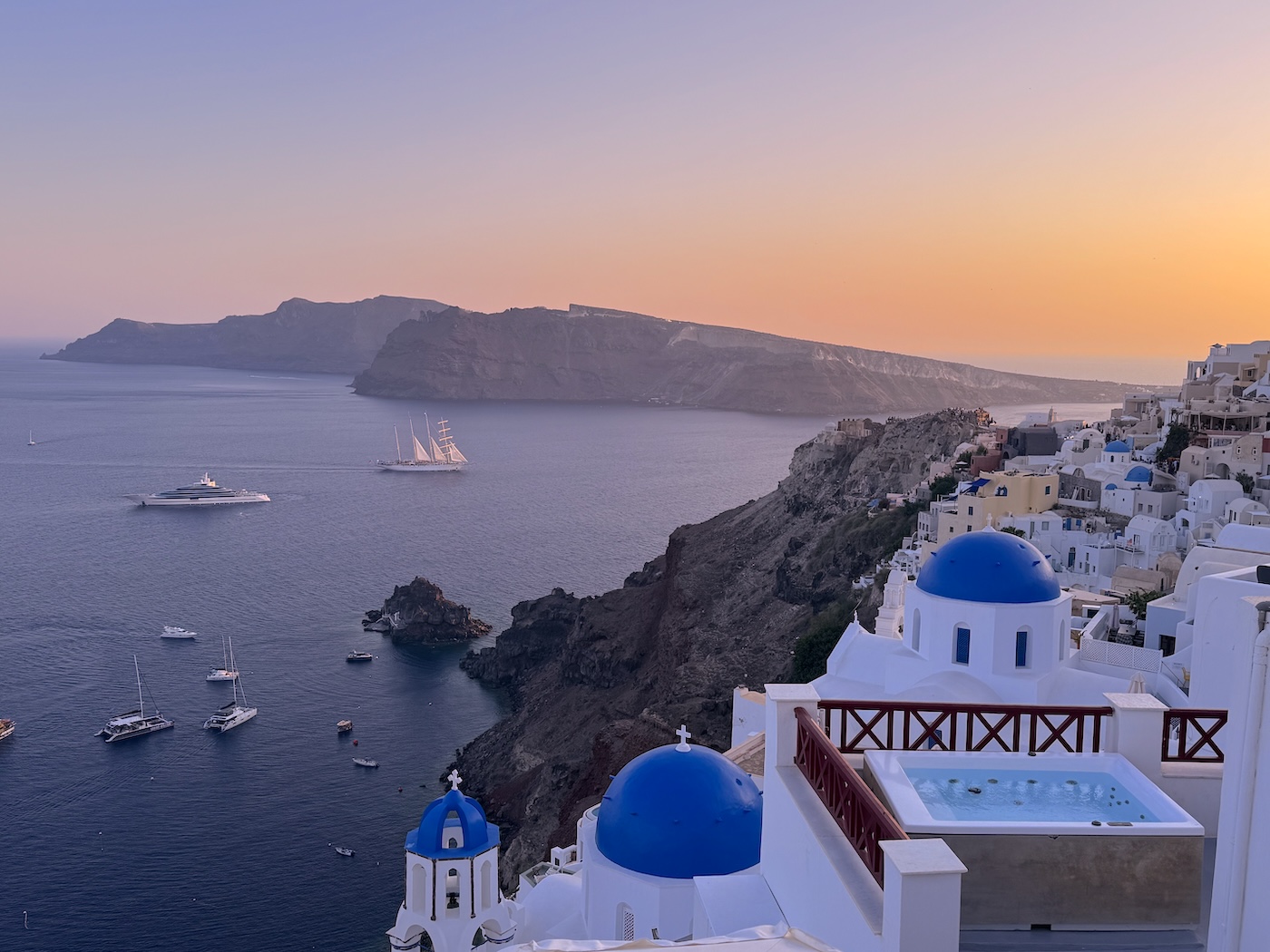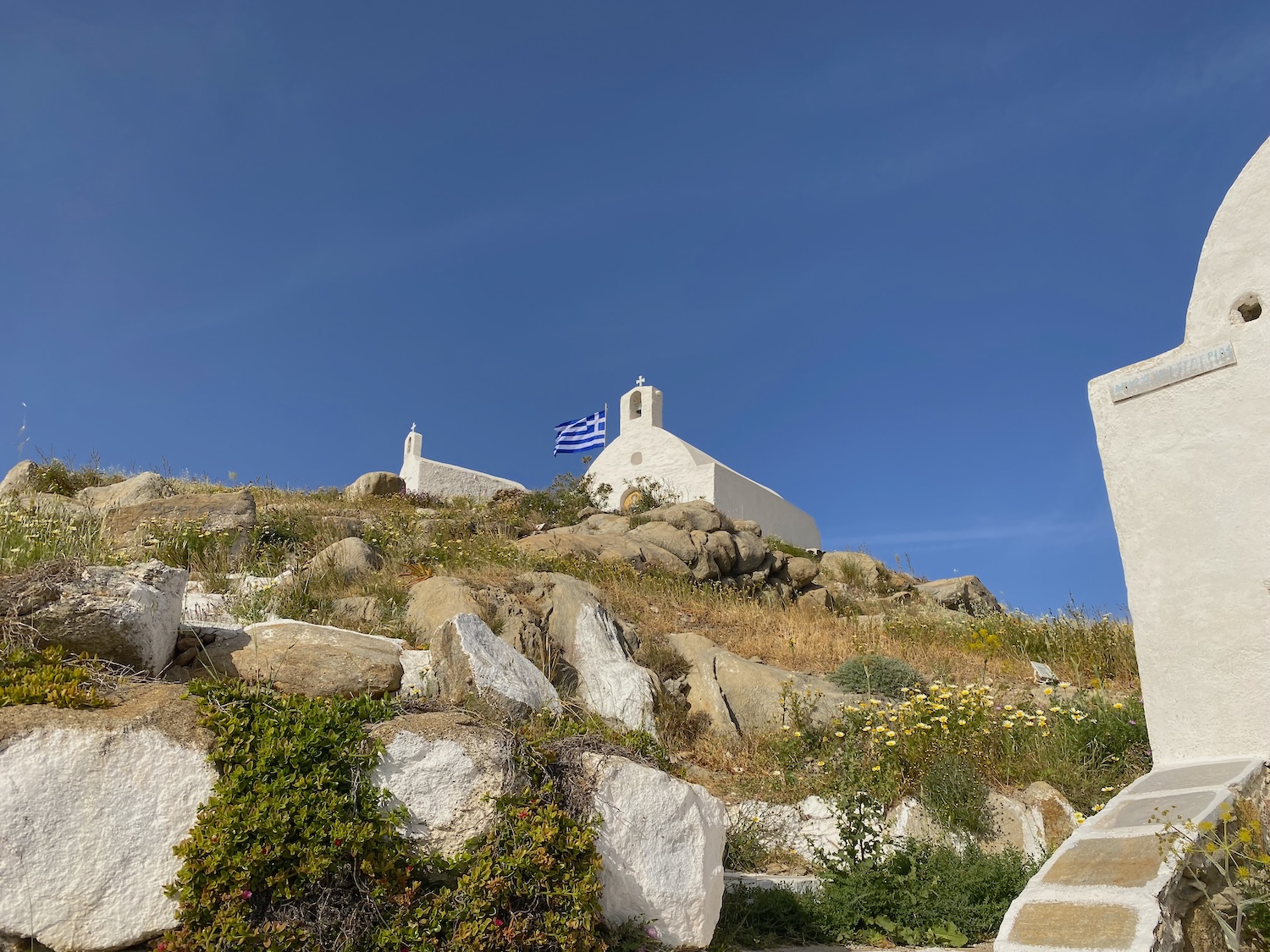
Ios stacks its capital like an amphitheatre on a hillside between two bays — one of the most beautiful villages in the Cyclades, ringed by more than thirty beaches and washed in water that shifts between turquoise and deep blue.
The island carries two reputations at once. To some it is the youthful party stop of the Aegean; to sailors it is something better: a compact cruising ground of sandy southern coves, quiet eastern bays and a port that puts everything within reach.
History runs deeper than the beach bars suggest. Tradition makes Ios the resting place of Homer, and the prehistoric settlement of Skarkos ranks among the most important early Bronze Age sites in the Aegean.
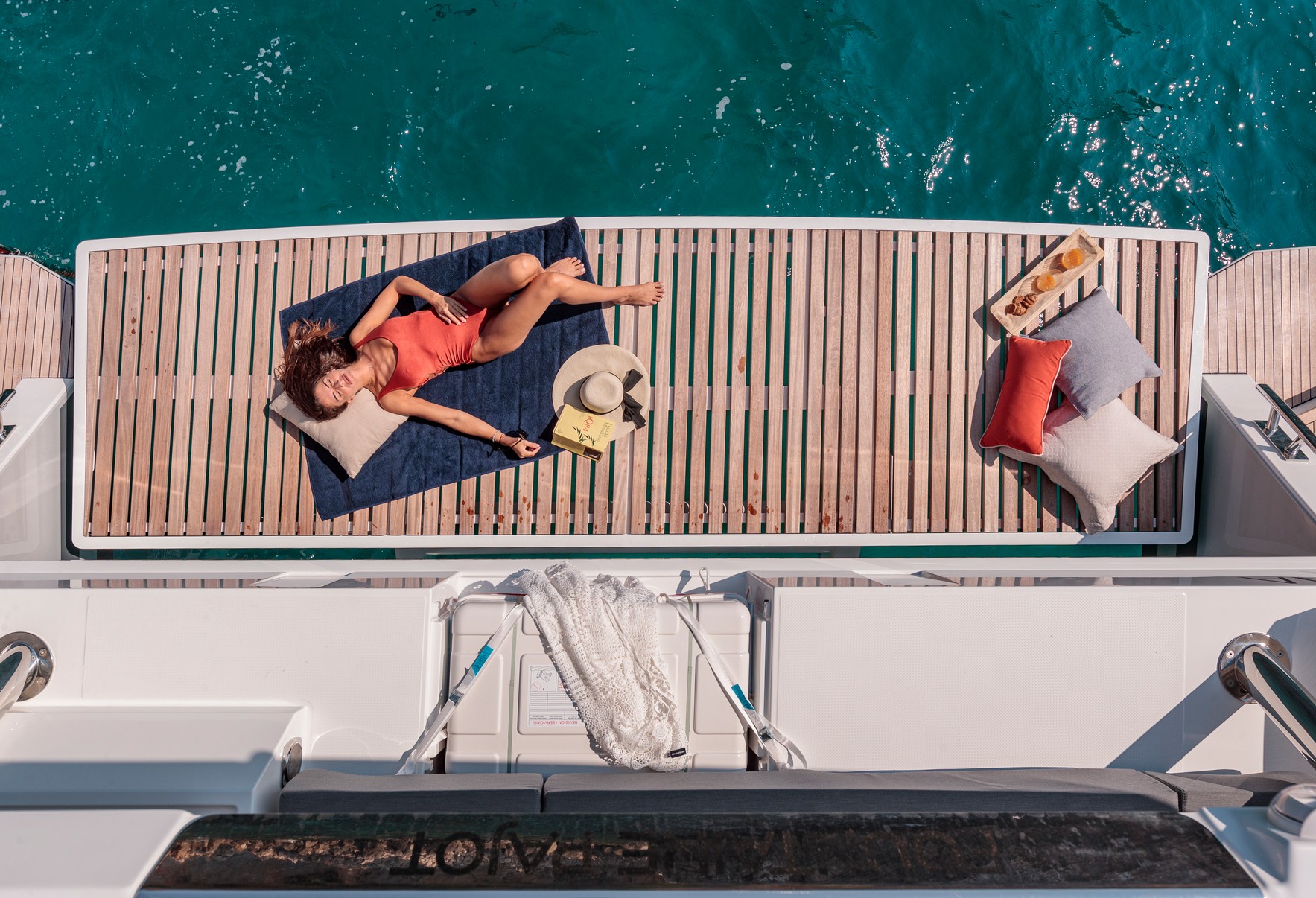
Seen from the deck of a catamaran, Ios is pure ease: short hops between anchorages, a welcoming quay for nights ashore and swimming that rivals anywhere in the central Cyclades.
This guide covers what to see, what to do, the best beaches and swim stops, where to eat, and everything you need to plan a visit by boat.
Why visit Ios?
Ios sits almost exactly midway between Naxos and Santorini, which shaped its whole story: Minoans and Mycenaeans traded here, Ionian settlers followed, and the island grew prosperous on its position along the ancient sea routes.
Today that position makes it a natural stepping stone on any Cyclades route — close enough to Santorini for an easy morning run, far enough to feel like a different world.
The island rewards both moods. Come for the famous summer energy around Mylopotas if you like; come in June or September and you will find empty sands, slow lunches and Chora at its most romantic.
For crews, Ios hits a sweet spot: a real town quay for provisioning and dinners ashore, plus a south coast of genuinely lovely anchorages within an hour of the berth.
What to see in Ios
Chora, the hilltop capital
.jpeg)
Chora climbs its hill in terraces of whitewash beneath a line of old windmills, its lanes closed to cars after dark and strung with lights where the bars begin.
Wander upward through the maze: blue-painted doorways, tiny chapels, bougainvillea spilling over arches, and views opening towards both coasts as you climb.
The evening volta here is a Cyclades highlight — start at the lower square and let the lanes pull you uphill.
Panagia Gremiotissa
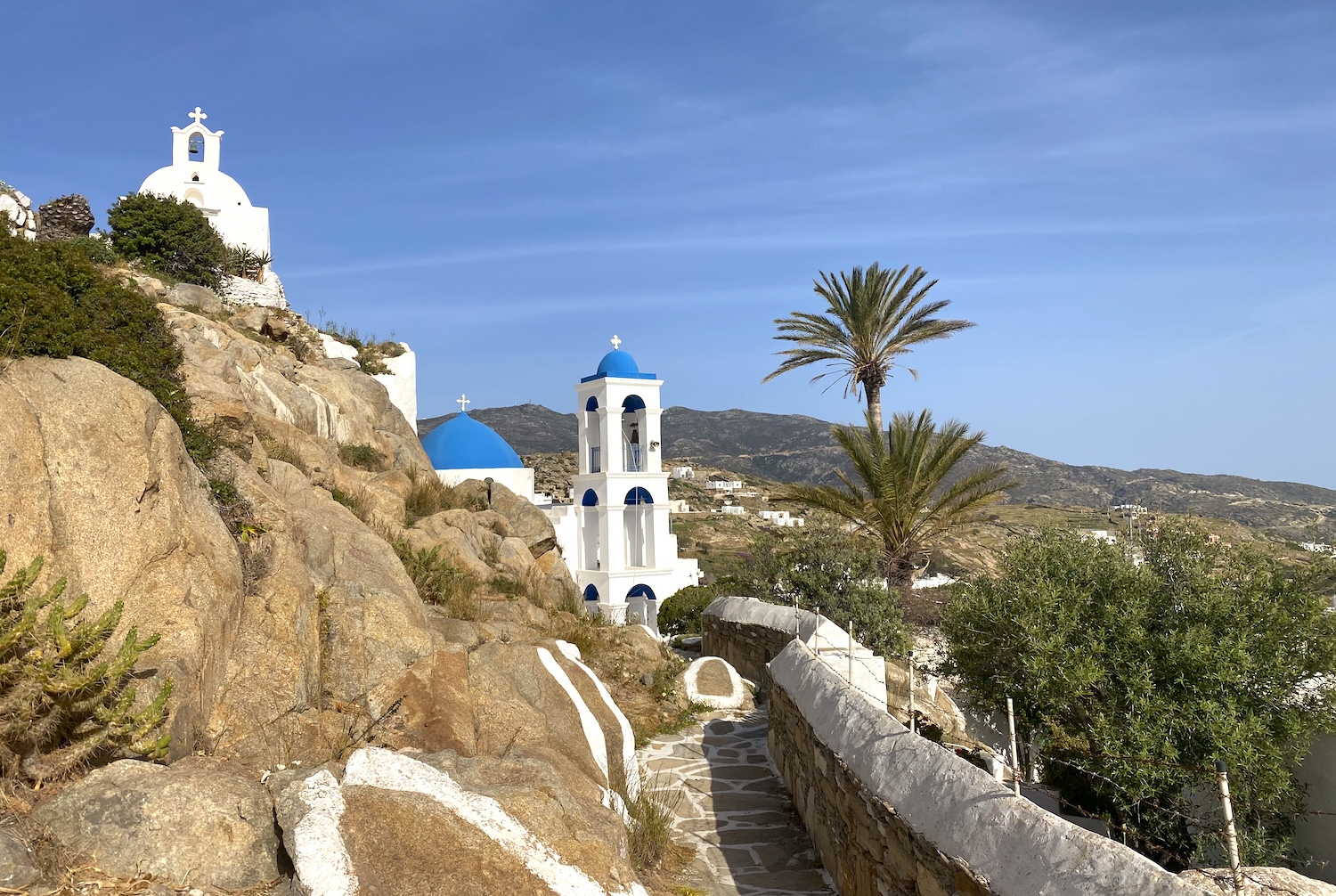
At the very top of the village stands Panagia Gremiotissa, the island’s most beloved church, built — tradition says — around an icon found hanging on a cliff edge.
The walk up takes fifteen minutes past windmills and wayside shrines, and the terrace beside the church delivers the best panorama on Ios: the whole amphitheatre of Chora below, the sea on every side.
Sunset here is a small event; arrive half an hour early and take it slowly.
Skarkos and the archaeology museum
On the low hill between Chora and the port lies Skarkos, an early Bronze Age settlement excavated to an unusual state of preservation — two-storey houses, stone streets and drainage, all nearly four and a half thousand years old.
The finds — marble figurines, pottery, tools — are displayed in the Archaeological Museum in Chora, and together they make a compelling case that this little island was once among the most sophisticated places in the Aegean.
Homer’s island
Herodotus wrote that Homer’s mother came from Ios and that the poet himself died and was buried here; a Hellenistic tower on the hill of Plakotos is still pointed out as his tomb.
Proof is impossible, but standing on that windy ridge you will not much care — the view alone argues for immortality.
What to do in Ios
Beach-hop the south coast
Magganari’s trio of sandy coves anchors any visit: swim one, walk ten minutes over the headland, swim the next.
By boat or by the rough coast road, the southern shore delivers the island’s finest sand and calmest water — go in the morning before the day-trippers, stay for lunch.
Climb to Gremiotissa at golden hour
The walk from Chora’s top square to the church and windmills above is short but memorable, especially in the last light.
Take a bottle of water, claim a spot on the terrace wall and watch the islands fade westwards — Sikinos first, then Folegandros on clear evenings.
Walk the ridge trails
Old paths link Chora with Agia Theodoti on the east coast and climb towards Plakotos, the island’s high point, passing dovecotes, ruined towers and chapels along the way.
Spring brings wildflowers and mild air; even in summer, mornings are pleasant if you start early and carry water.
Enjoy the evening, your way
Ios after dark ranges from quiet taverna tables under the vines to the famous bars around the lower square — and both can share the same evening.
Dinner at eight, people-watching at ten, a nightcap wherever the music sounds right: the island has practised this routine for decades and does it well.
Beaches and swim stops in Ios
With thirty-plus beaches, Ios offers a cove for every wind and mood — several of them simplest from the water.
Mylopotas
The long sandy bay below Chora: sunbeds, beach clubs and shallow clear water, liveliest in the late afternoon when the day’s boats come in.
Magganari
The southern showpiece: three linked sand coves backed by dunes and tamarisks, with tavernas at the waterline and water worth crossing an island for.
Kolitsani
A quick hop from Chora, a smaller sand-and-pebble stretch with a relaxed, easy-going crowd.
Agia Theodoti
On the quiet east coast, a broad bay with an early-Christian church and ancient ruins behind the sand — history and swimming in one stop.
Psathi and the northern coves
Remote sands reached by track or tender, for days when you want the island entirely to yourselves.
Food and where to eat in Ios
Ios eats well across the board: fresh fish at the ports, family kitchens up in Chora and toes-in-the-sand tavernas on the southern beaches.
Tavernas of Yialos
Along the port waterfront, fish tavernas display the morning’s catch on ice and grill it to order steps from where your tender ties up.
Order octopus, a fava and whatever white fish looks best; add a carafe of island white wine and watch the ferries glide in.
Lanes of Chora
Up in the village, the alleys hide courtyard restaurants serving slow-cooked goat, stuffed peppers and modern Greek plates alongside the classics.
Book ahead in August or wander at nine and follow the chatter — the best tables rarely advertise.
Beach tables at Magganari
The tavernas behind Magganari’s sands serve grilled fish and salads all afternoon — the natural finish to a southern-coast swim day, and better arriving by tender than by the rough road.
Sweets and provisions
Chora’s bakeries turn out excellent cheese pies and almond sweets; local honey, capers and sun-dried tomatoes pack well for the galley. Supermarkets at the port cover full provisioning without difficulty.
Exploring Ios by boat
Ios is one of the easiest islands in the Cyclades to cruise well: a proper town quay, forgiving distances and a south coast built for lazy days at anchor.
Arriving and berthing
Yialos, the main port, runs a long straight quay shared with ferries. The port authority directs visiting yachts to spaces as movements allow — typically stern-to or bows-to with lines ashore — and anchoring just off the quay is the normal alternative when berths are tight.
Water is available on parts of the quay by arrangement and fuel can be arranged by mini-tanker; provisioning in town is genuinely good. In July and August, aim to be tied up by mid-afternoon ahead of the ferry rush.
The harbour opens northwest — comfortable in southerlies, choppy in a strong meltemi, in which case the southern anchorages are your friends.
Anchorages and swim stops
Magganari is the signature stop: drop the hook off the westernmost cove in four to six metres over clean sand and enjoy the best beach day in the central Cyclades. It opens south, so save it for meltemi days rather than southerlies.
Agia Theodoti on the east coast suits westerly weather, with sand holding and ruins ashore for a stroll.
Kolitsani and the coves north of Yialos work for quick daytime swims in settled conditions. Overnight, the quay remains the restful choice — the town is the whole point of Ios.
Cruising tips
Distances are friendly: Santorini about seventeen miles south, Sikinos seven west, Folegandros sixteen southwest, Naxos eighteen north.
The channel towards Santorini accelerates the afternoon breeze into a proper sail — plan that leg for the morning and let the westerly carry you home later instead.
Ferry traffic runs heavy all summer: keep the fairway clear, expect wash near the terminal, and brief the crew on ferry-schedule awareness before anyone swims off the stern in port.
Getting around Ios
Buses fan out from the port to Chora and Mylopotas constantly in season, with summer services continuing to Magganari; scooters and cars rent at both ends of the hill.
Distances are modest — nowhere is more than half an hour away — though the road south to Magganari is rough enough that many guests simply come by boat.
How many days do you need in Ios?
One full day covers the essentials: Skarkos or the museum in the morning, a long afternoon at Magganari and dinner in lamplit Chora with a sunset climb to Gremiotissa beforehand.
Two days let the island open up: add the east-coast bay of Agia Theodoti, a second beach afternoon, the ridge walk towards Plakotos and a slower evening in the squares.
On a crewed charter, Ios typically takes one or two easy nights between the western Cyclades and Santorini — the sociable interlude with the best swimming of the route.
Islands to visit after Ios
Ios sits at the crossroads of the southern Cyclades, with four excellent onward legs close by.
Santorini, south, needs no introduction: the caldera, the villages and the world’s most photographed sunset.
Sikinos, west, stays beautifully under the radar: terraced vineyards and a harbour shared with fishing boats.
Folegandros, southwest, crowns the arc with a clifftop capital and beaches at the end of the world.
Naxos, north, adds big landscapes, mountain villages and the marble Portara glowing at dusk.
Linked together, they trace the classic southern-Cyclades circuit — varied, dramatic and wonderfully easy to sail.
Final thoughts
Ios knows exactly what it is, and that confidence is part of the charm.
By day it is all water and sand — Magganari’s coves, the quiet east coast, swims off the platform whenever the mood strikes. By night it becomes a village again: lamps in the lanes, laughter climbing the hill, the windmills black against the stars.
Arrive by boat, give it two days and let the island choose your pace. You will leave tanned, well fed and already planning the return.
Research sources
Harbour classifications, mooring arrangements and island facts in this guide were cross-checked against the references below.
- Municipality of Ios — official information on ports, access and island services.
- Greek National Tourism Organisation — Ios — official destination guide.
- Hellenic Coast Guard — Port Authority Index — contacts for the local port authority.
These references support itinerary research but do not replace live navigational information, port notices or your skipper’s judgement.