Anafi sits at the southeastern corner of the Cyclades, a small island of golden beaches and green valleys crowned by Kalamos — a sheer limestone monolith that rises straight from the sea like a second Cape Sounion.
Ferries call only a few times a week, the roads are quiet enough for tortoises, and the biggest decision of the day is which cove deserves your afternoon. This is the island Greeks escape to when they want the Cyclades of forty years ago.
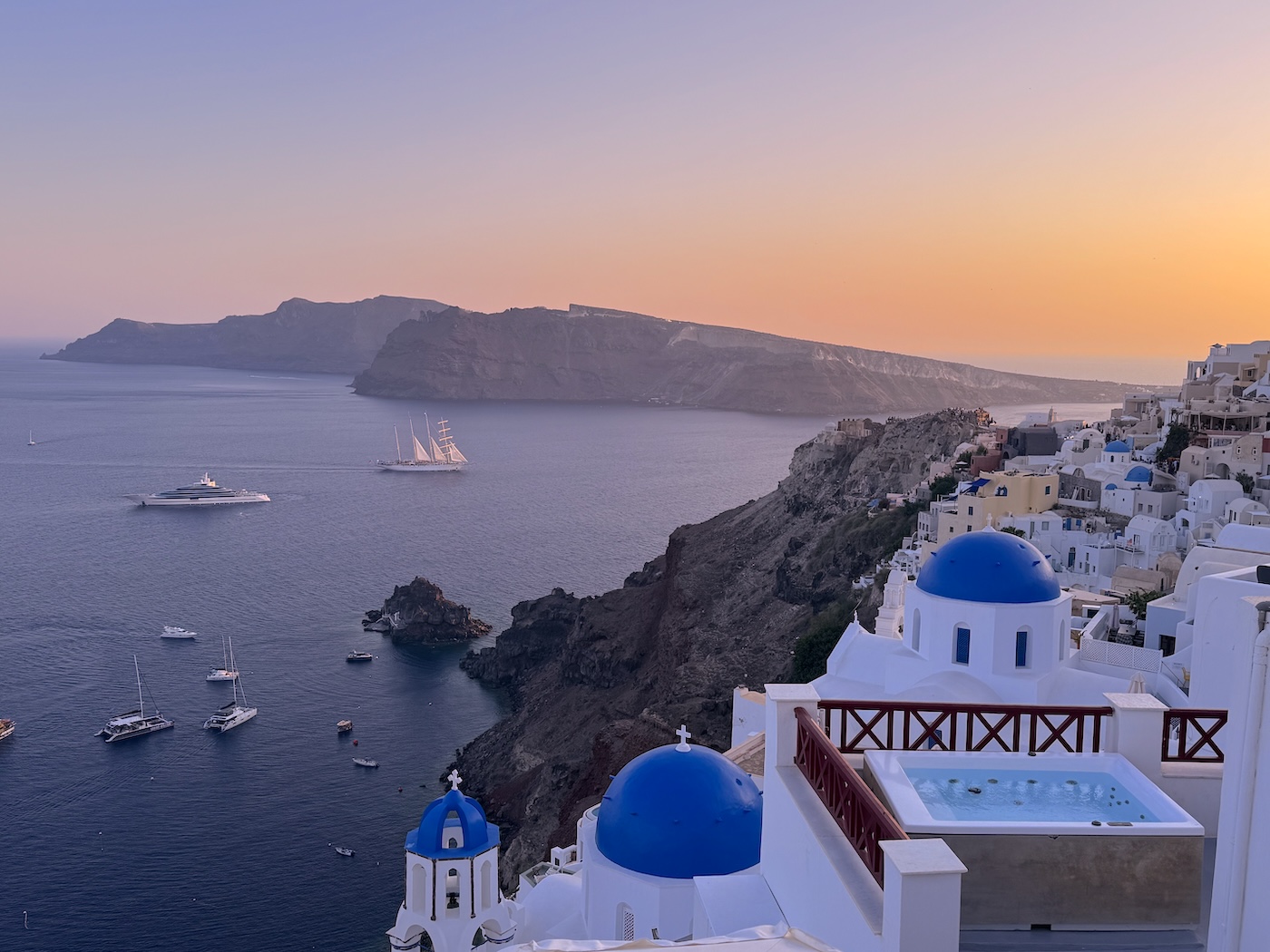
Myth says the Argonauts found shelter here on their return from Colchis; sailors have been grateful ever since. Today that gratitude is reserved for swimmers, stargazers and anyone who has watched Santorini’s caldera glow pink across the water at dusk.
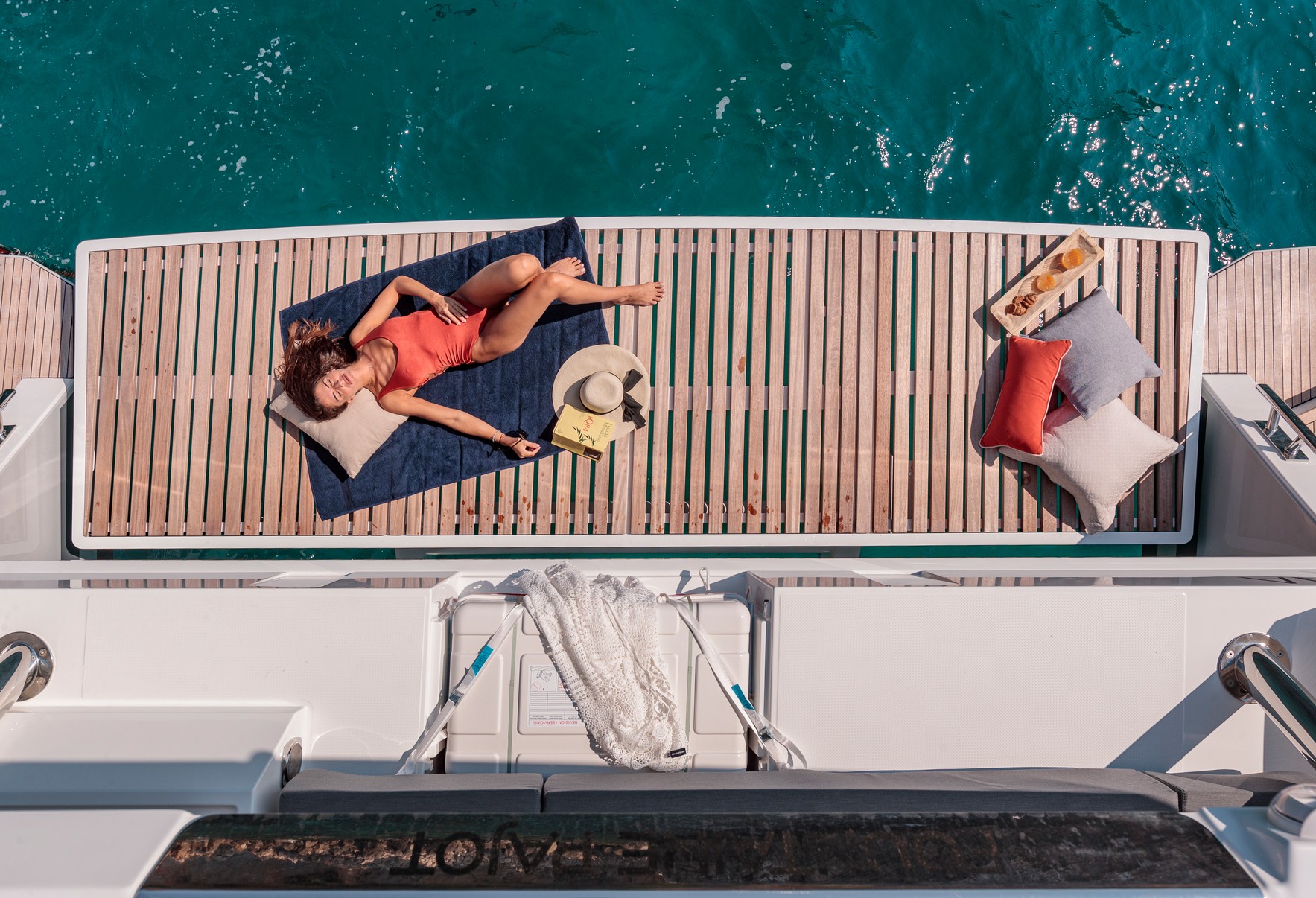
Seen from the deck of a catamaran, Anafi is simplicity itself: one long protected coast, honest distances and swimming that rivals anywhere in the Aegean.
This guide covers what to see, what to do, the best beaches and swim stops, where to eat, and everything you need to plan a visit by boat.
Why visit Anafi?
Anafi lies barely seventeen nautical miles east of Santorini, yet it feels like a different century. Where its neighbour hosts millions, Anafi counts a few hundred residents, two villages and a coastline built for doing very little, beautifully.
The island’s silhouette is its signature: Kalamos, at 463 metres one of the Mediterranean’s great monoliths, guards the eastern cape with a monastery on its summit. Beneath it stretch the long southern sands — Kleisidi, Agioi Anargyroi, Roukounas — each calmer than the last.
Culture runs deeper than the postcard suggests. Ancient Anafi kept a sanctuary of Apollo Asgelatas, whose ruins still sit near the monastery, and the island’s weaving tradition survives in workshops you can visit today.
For crews, Anafi is the perfect counterweight to a Santorini week: an easy morning sail out of the caldera traffic, then total calm — anchorages with room to spare, tavernas steps from the tender, and the darkest night sky you’ll find in the Cyclades.
What to see in Anafi
Chora

The capital perches on a hilltop beneath the ruins of a Venetian castle, its whitewashed lanes stacked for defence and for the view.
Wander the alleys, duck into the small folklore collection, then climb to the castle walls as the light softens — from up here Santorini’s caldera rim glows on the horizon like a distant stage set.
Down below, the twin coves of Klisidi hold the closest swimming to town, five minutes on foot.
Kalamos and the Monastery of Panagia Kalamiotissa
Kalamos is the reason artists keep coming back: a single rock rising nearly half a kilometre from the sea, weathered into pinnacles and caves.
On its summit plateau stands the monastery of Panagia Kalamiotissa, rebuilt in the nineteenth century on the site of the ancient temple of Apollo Asgelatas. The footpath up takes about ninety minutes from Klisidi and delivers a 360-degree panorama over the whole southern Aegean.
Even if you don’t climb, see it from the water once — sailing past the monolith at first light is an experience you will not forget.
Ancient traces
Scattered around the monastery plateau and the coastal site of Katalymata lie the remains of Anafi’s antiquity: sanctuary walls, Roman baths and Hellenistic towers, all gloriously unrestored and rarely visited.
Combine them with the hike up Kalamos and you have one of the Cyclades’ great walk-and-wonder mornings.
The plain of Livadi
Inland, the fertile plain of Livadi explains how the island has always fed itself: figs, vines, wheat and beehives tucked between dry-stone walls.
Roads and paths thread the hamlets; spring visitors get the bonus of wildflowers in ridiculous profusion.
What to do in Anafi
Hike to the monastery
The trail from Klisidi to Panagia Kalamiotissa is the island’s classic outing — steady, scenic and best started at sunrise.
Take more water than seems sensible, wear real shoes, and time your descent for a swim at Agioi Anargyroi directly below.
Beach-hop the south coast
Anafi’s southern shore strings together half a dozen distinct beaches within a few miles — sandy, pebbly, organised and wild.
Do them properly by boat or scooter: swim, move on, repeat. By late afternoon you will have found your favourite — and probably have it to yourself.
Sleep under the Milky Way
With almost no artificial light, Anafi’s night sky is a spectacle in its own right.
Take a rug ashore after dinner, lie back on the warm sand at Roukounas and let the show run — shooting stars included, frequently.
Meet the loom
Anafi’s woven textiles — blankets, bags and the famous flokati-style rugs — are still made on traditional looms by local weavers.
Small workshops welcome visitors in Chora; buying directly supports a craft that has survived here for centuries.
Beaches and swim stops in Anafi
Small island, generous sands: Anafi’s south coast offers a beach for every mood, several of them easiest reached from the water.
Klisidi
The town beach: twin sandy coves beneath Chora with a taverna at hand and glassy water most mornings.
Agioi Anargyroi
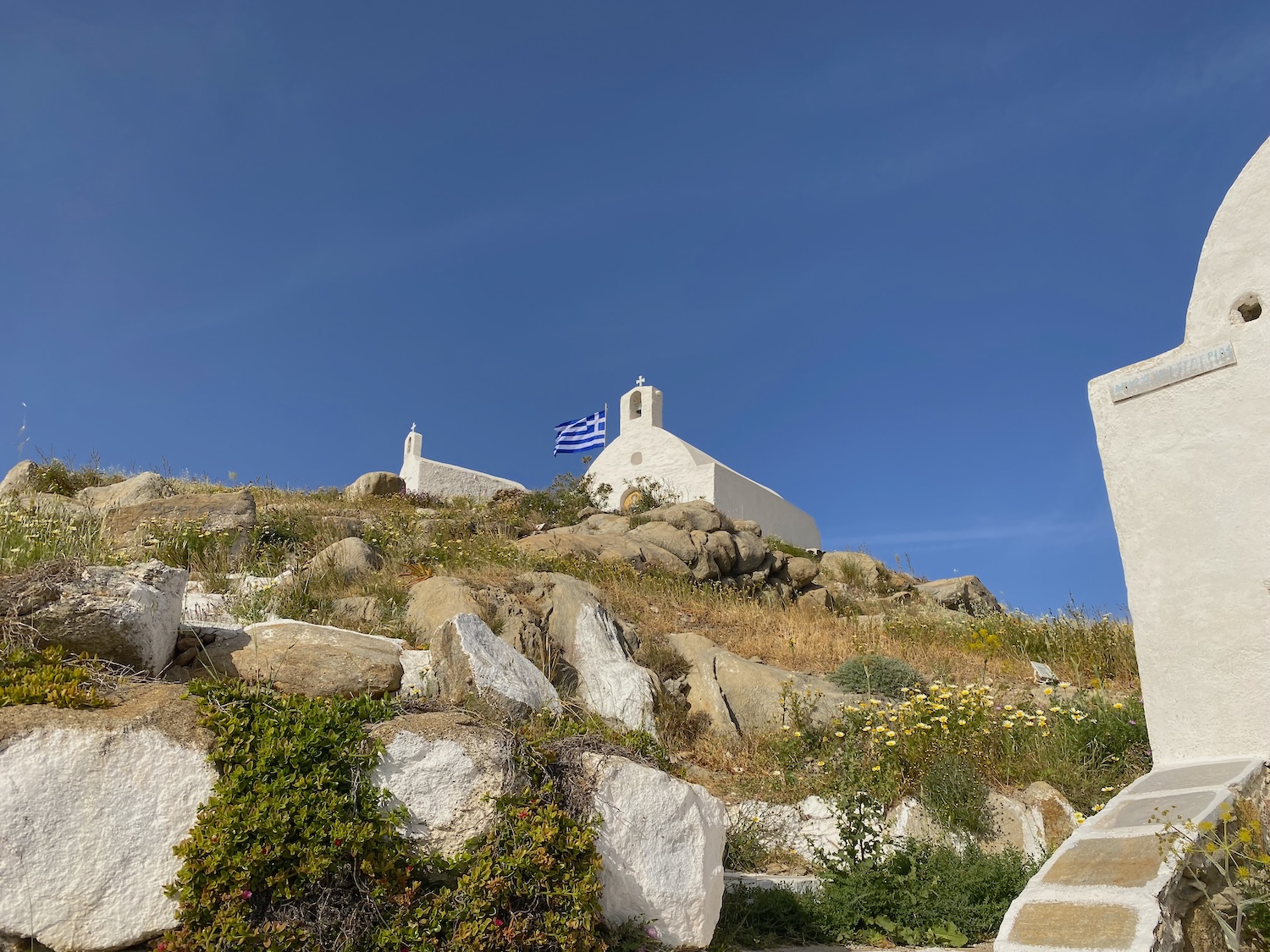
Beneath the cliffs of Kalamos, a chapel-topped cove with clear water over rocks and sand — the classic reward at the end of the monastery hike.
Roukounas
The island’s longest beach: nearly a kilometre of soft sand backed by dunes and tamarisks, with a free-spirited, anything-goes vibe and room for everyone.
Agios Nikolaos
By the little port bay, a sheltered morning swim with a taverna close enough to smell the grill.
Flamourou and the eastern coves
Pebble pockets along the wilder eastern shore, best visited by tender in settled weather. Bring shoes for the entries and enjoy having the place to yourselves.
Food and where to eat in Anafi
Anafi cooks simply and honestly: whatever the boats bring in, garden vegetables, goat from the hillsides and honey from hives you can practically point at.
Tavernas at the port bay
Around the small harbour of Agios Nikolaos, family-run tavernas serve fresh fish and seafood meze steps from where your tender ties up.
Order grilled octopus, a fava and whatever white fish is on ice; lobster appears when the boats are lucky, and it is worth rearranging an evening for.
Chora’s plateia
The square under the castle is the island’s living room: kafeneia serving Greek coffee and homemade spoon sweets, simple grills at night, and conversation that slows to island speed.
Arrive hungry at eight and let the evening take care of itself.
The island table
Ask ahead for slow-cooked goat, caper salad and fava made the old way — many tavernas cook these dishes on request rather than daily.
Finish with thyme honey drizzled over yogurt, or xerotigana-style honeyed pastries when there’s a feast on.
Provisions
Stock up before you arrive: Anafi’s shops cover basics but little more. Local honey, capers and bundles of oregano make fine galley souvenirs; everything else comes easier from Santorini or Paros.
Exploring Anafi by boat
Anafi is a barefoot stop in the best sense: no marina, minimal formalities and anchorages with space to swing. What it asks in self-sufficiency it returns in peace.
Arriving and berthing
The port bay of Agios Nikolaos, on the southwestern coast, is the practical entry: a roomy open roadstead with a small ferry pier. Anchor in four to eight metres over sand and weed, keep the pier face clear for ferries, and check in with the port authority on scheduled-call days.
There is no quay berthing and no fuel dock — plan provisions and fuel top-ups in Santorini or Paros before crossing. Water ashore is limited.
Exposure matters: the southern bays face southwest and are wonderfully comfortable in summer meltemi conditions, restless in southerlies. If a deep low pushes swell from the south, enjoy Anafi by day and overnight back towards Santorini’s lee instead.
Anchorages and swim stops
Roukounas makes the finest overnight anchorage in northerly winds: a long sand-bottomed roadstead off the dunes, with easy dinghy access to the beach and tamarisk shade ashore.
Agioi Anargyroi and Klisidi suit calm-weather day stops beneath the monolith — transparent water, a short row to the sand and the monastery watching from above.
The eastern coves, including Flamourou, reward flat-sea mornings; round the Kalamos headland only in settled conditions, as gusts pour off the rock with little warning.
Cruising tips
The passage from Santorini runs about seventeen miles northeast — leave with the morning calm and arrive in time for lunch. Afternoons see the strait between the islands accelerate into a proper breeze, so plan the return leg early too.
Ferries are infrequent, which keeps the bay quiet but means services are thin: treat Anafi as a self-sufficient highlight between better-supplied stops.
Onward legs flatter planners: Sikinos and Folegandros lie west, Ios northwest, and ambitious routes can push southeast towards Astypalaia. However you shape it, give Anafi at least one night — the stars alone justify it.
Getting around Anafi
A small bus connects the port, Chora and the main beaches a few times a day in season; scooters and cars rent beside the landing, and taxis are few — arrange them ahead.
Nothing is more than twenty minutes away, and the walking paths are excellent. Many guests park the transport entirely and go everywhere on foot.
How many days do you need in Anafi?
One full day captures the essence: Chora in the morning, the monastery hike or a Kalamos viewpoint, a long afternoon at Roukounas and dinner under increasingly theatrical stars.
Two days let the island work its magic: add the eastern coves by tender, a weaving workshop in Chora and a second, slower beach day with lunch that refuses to end.
On a crewed charter, Anafi typically appears as a single blissful night woven between Santorini and the western Cyclades — the quiet chapter everyone remembers.
Islands to visit after Anafi
Anafi sits at the Cycladic crossroads of the southeastern Aegean, with four excellent onward legs close by.
Santorini, back west, needs no introduction: the caldera, the villages and the world’s most photographed sunset.
Ios, north, pairs a hilltop Chora with eighteen kilometres of sand and relaxed anchorages.
Sikinos, west, stays beautifully under the radar: terraced vineyards and a harbour shared with fishing boats.
Folegandros, beyond it, crowns the route with a clifftop capital and one of Greece’s loveliest squares.
Linked together, they form a southern-Cyclades arc of quiet islands — perfect company for Anafi’s unhurried charm.
Final thoughts
Anafi doesn’t perform. It simply gets on with being one of the loveliest small islands in Greece while the rest of the world queues elsewhere.
Give it a night and you gain a monastery sunrise, a beach with dunes, and a sky so busy you will stay up far later than planned.
Arrive by boat, provision sensibly and let the island set the pace. You will leave rested — and quietly protective of the secret.
Research sources
Harbour classifications, mooring arrangements and island facts in this guide were cross-checked against the references below.
- Municipality of Anafi — official information on ports, access and island services.
- Greek National Tourism Organisation — Anafi — official destination guide.
- Hellenic Coast Guard — Port Authority Index — contacts for the local port authority.
These references support itinerary research but do not replace live navigational information, port notices or your skipper’s judgement.