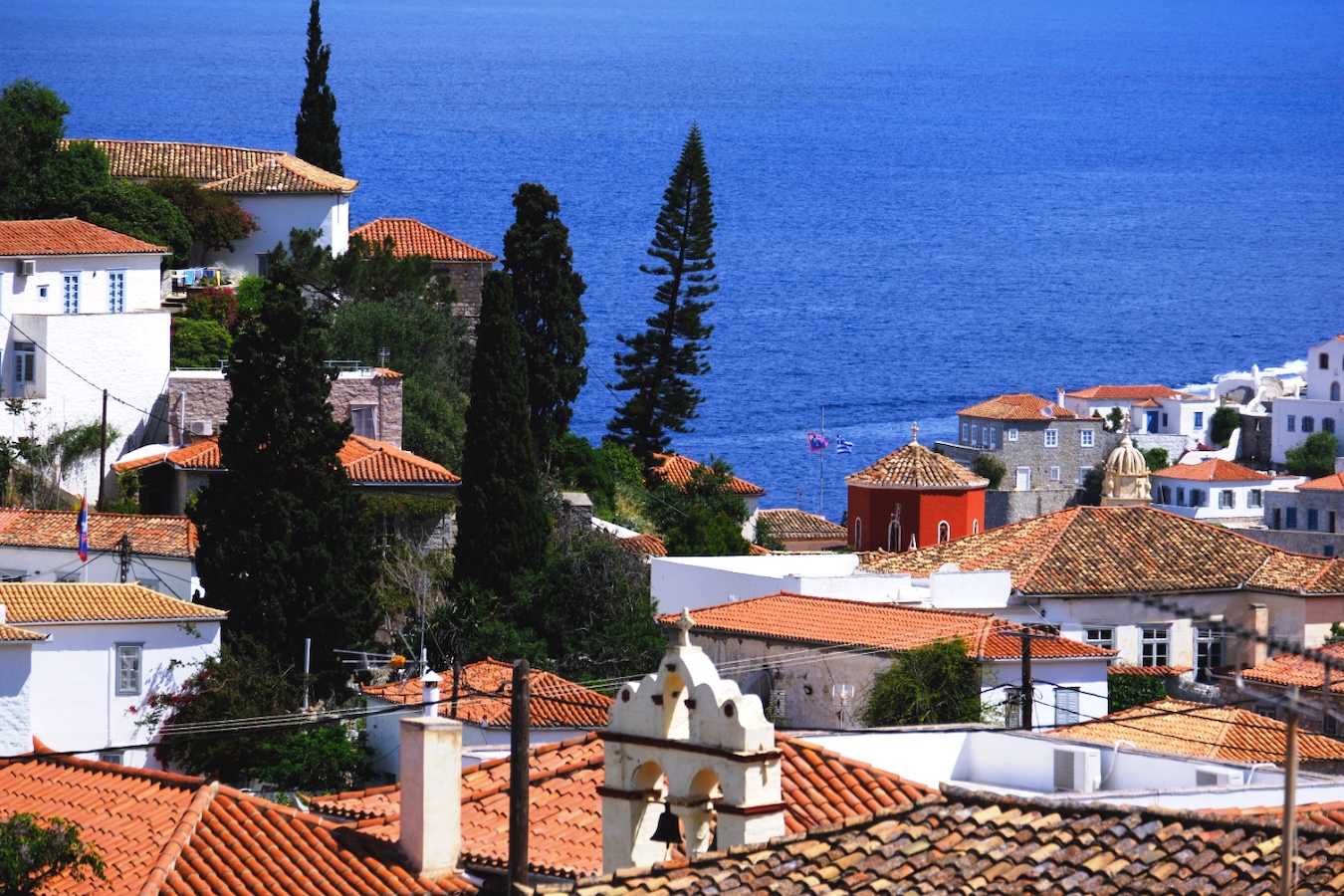
Poros greets you with the happiest waterfront in the Saronic Gulf: a curve of cafés and fishing boats facing the pine-covered hills of the Peloponnese across a narrow, sparkling strait.
Geography made this town what it is. Poros is really two islands — the little volcanic Sphaeria, where the town stands, and the larger, forested Kalavria behind it — separated from the mainland village of Galatas by a channel barely a couple of hundred metres wide.
The strait gives Poros its lemons, its theatre and its luck. Lemon groves descend the opposite shore almost to the waterline, ferries and yachts thread the gap all day like ships on a model sea, and ancient Kalavria guarded a sanctuary of Poseidon so respected that the statesman Demosthenes chose to end his life here in 322 BC rather than fall into his enemies’ hands.
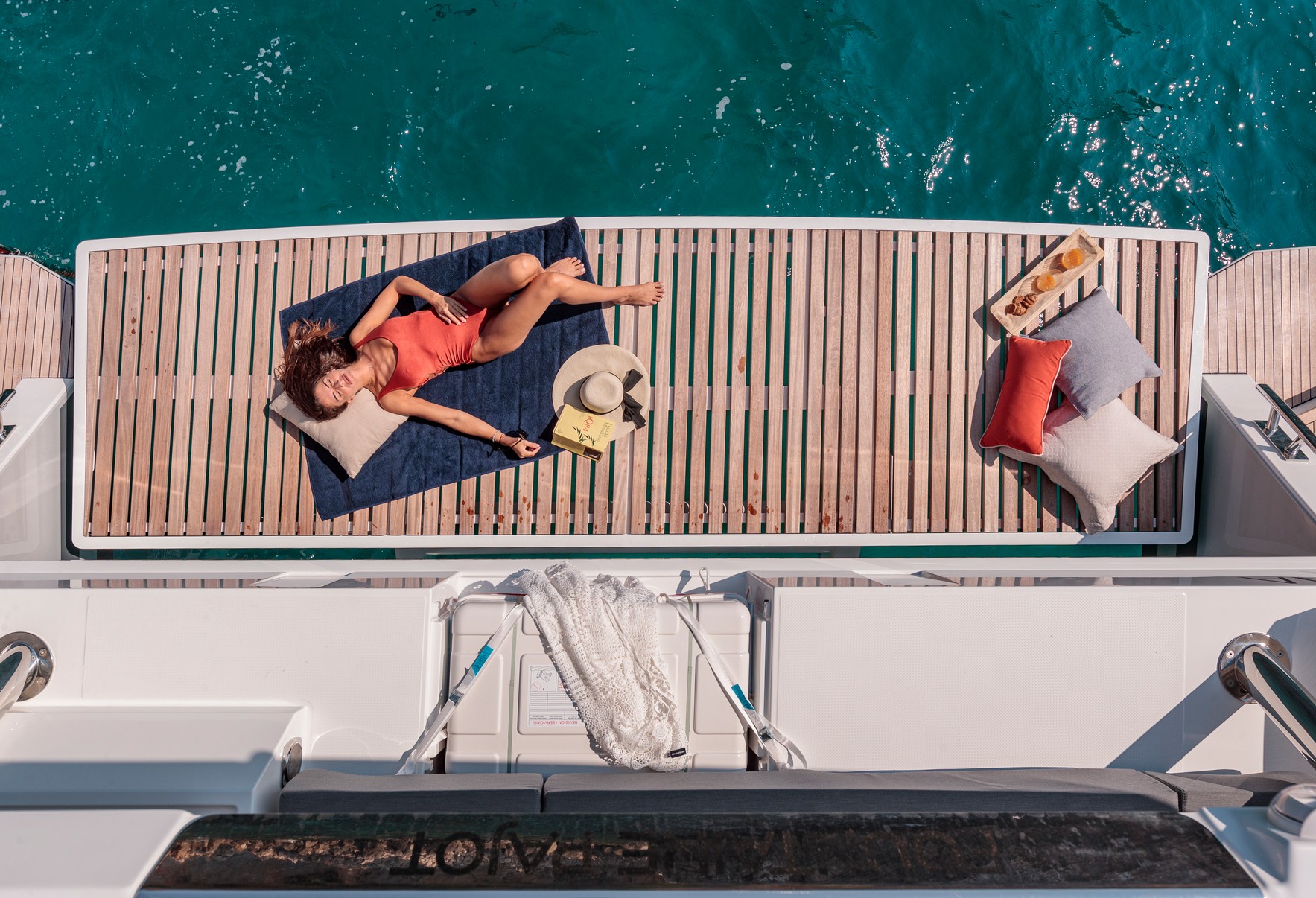
Seen from the deck of a catamaran, all of it unfolds at once — town, channel, lemon hills and a big, forgiving bay that makes skippers relax their shoulders.
This guide covers what to see, what to do, the best beaches and swim stops, where to eat, and everything you need to plan a visit by boat.
Why visit Poros?
If Hydra is the Saronics’ showpiece, Poros is its comfortable living room. The bay is deep and well protected, the town is genuinely lived-in year-round, and everything a crew could want — provisions, repairs, banks, a laundry, an excellent meal — sits within a short walk of the quay.
That convenience has made Poros a sailing centre for generations: naval cadets train in the harbour, yacht clubs race here, and the island’s yards know exactly what a visiting catamaran needs.
Ashore, the island rewards curiosity. A climb to the clock tower delivers the classic panorama, the plateau of ancient Kalaureia holds one of Greece’s most atmospheric sanctuaries, and quiet roads loop through pine forest to coves with names as lovely as Love Bay.
Add its position roughly halfway round the classic Saronic circuit, and Poros becomes the natural hinge of any route — the night you stop chasing miles and start enjoying them.
What to see in Poros
The town and the clock tower

Poros town stacks itself up the northern slope of Sphaeria in tiers of ochre and rose houses, and every lane seems to lead either down to the water or up to the clock tower.
Climb the stepped alleys late in the afternoon. From the tower platform the whole geography of the island explains itself: the strait glittering below, Galatas and its lemon groves beyond, and the long green shoulder of Kalavria stretching away to the temple plateau.
Back at sea level, stroll the Kanali promenade along the southern shore, where locals swim off low walls between coffee and lunch.
The Temple of Poseidon
On a windswept plateau in the middle of Kalavria stand the calm ruins of the sanctuary of Poseidon, seat of a loose alliance of seven ancient states and, for centuries, a place of refuge.
It was here that Demosthenes, the greatest orator of Athens, took poison in 322 BC as Macedonian soldiers closed in — a story that gives the quiet site an unexpected weight.
Few monuments in Greece offer better value for effort: a short drive or cycle from town, no crowds worth mentioning, and views over the strait that are worth timing for sunset.
The Russian Dockyard
At the eastern end of the strait, among pines at the water’s edge, lie the stone warehouses and slipways of a Russian naval station established in the 1830s, when the new Greek state still relied on foreign squadrons.
The arched buildings half-open to the sky make an evocative picnic spot, and the water off the old stones is deep, clear and irresistible on a hot afternoon.
The Monastery of Zoodochos Pigi
Inland from Askeli, a cobbled road climbs through pines to the eighteenth-century monastery of Zoodochos Pigi, whitewashed against the green like a handful of Cyclades dropped into the forest.
The courtyard is immaculate, the small museum explains the monastery’s role sheltering fighters and refugees during the War of Independence, and the terrace view runs all the way back down to your mastheads in the harbour.
Galatas and the Lemon Forest
Directly across the strait, the mainland village of Galatas keeps a secret on its slopes: the famous Lemon Forest, thousands of trees running down almost to the tide line.
Water taxis and little ferries cross constantly. Go towards evening, when the light turns the groves luminous, eat at a taverna set among the trunks, and remember you are also standing near ancient Troizen — mythical birthplace of the hero Theseus.
What to do in Poros
Swim at Love Bay
The name promises a lot and delivers. Love Bay is a pocket-sized cove on Kalavria’s western shore where pines lean out over emerald water and a small jetty serves the swimmers below the historic Villa Galini.
Arrive by bike, on foot or — best of all — by tender, and take the first swim of the day before the boats find it.
Cycle around Kalavria
Kalavria’s quiet roads form a satisfying loop through pine forest and past nearly every good beach on the island: Neorio bay, Love Bay, Vagionia and back over the shoulder to town.
Bikes and e-bikes rent cheaply by the port, the terrain stays gentle, and shade makes even August rides pleasant if you start early.
Watch the channel theatre
Grab a table on the Kanali or the main quay and watch the strait work: ferries pivoting, fishing boats dodging dinghies, charter yachts threading the gap under the gaze of every café in town.
It is free entertainment of the highest order, best accompanied by an iced coffee and zero sense of urgency.

Hike through pine and lemon country
Marked paths link the monastery road to the ridge chapels and onwards towards the temple plateau, threading forest that smells of resin and, on the mainland side, of lemon blossom in spring.
Take water, go early in high summer, and let a two-hour walk earn you the afternoon’s swim.
Taste the lemons
Poros and its neighbouring coast have grown lemons for centuries, and the fruit turns up everywhere: in spoon sweets, in homemade liqueur, in the lemon pies cooling on taverna counters.
Shops in town sell bottles and jars that travel well — the most cheerful souvenir the island offers, and a fine addition to the galley.
Beaches and swim stops in Poros
With two islands and a sheltered strait, Poros offers a swimming option for every wind and mood — several of them easiest reached from the water.

Askeli
The long organised beach just northeast of town: sand and shingle, sunbeds, water sports and tavernas, with the monastery road climbing away behind it.
Kanali
The town’s own easy stretch along the promenade — arrive with a book, leave for lunch, repeat.
Love Bay
The signature swim: pine shade, glassy shallows and a jetty for tenders. Come early or late; everyone else will have the same excellent idea.
Russian Bay
By the old dockyard, a calm mix of sand and pebble with superb snorkelling around the stones and a café in the pines. Sheltered and family-friendly.
Vagionia
A quiet southern cove with a small church and a taverna under the trees — the place when you want the day to slow right down.
Monastiri
Organised and shallow beneath the monastery headland, handy for families and a popular lunch stop for boats working the eastern side.
Food and where to eat in Poros
Poros eats generously: fresh fish on harbour-front terraces, meze in backstreet ouzeri, and lemon-perfumed cooking across the strait. The catch arrives with the caïques, the vegetables come from the plain of Troizen, and the lemons need no introduction.
Harbour-front fish tavernas
The quay and the streets immediately behind it hold a dense cluster of fish tavernas, long-running favourites such as Apagio among them, where ice trays of the day’s catch line the entrance.
Point at your fish, add grilled octopus, a fava and a cold carafe, and settle in. Tables fill early on summer evenings — book or come at sunset sharp.
Tables under the lemon trees
Across the strait at Galatas, tavernas set their tables inside the Lemon Forest itself — lemon chicken, lamb with lemon sauce, salads dressed from the trees overhead.
The five-minute crossing makes it feel like an expedition; the prices make it feel like a secret.
Meze where the locals eat
Follow the navy cadets from the training base uphill from the port and you will find the simple mezedopoleia that keep the island fed: meatballs, feta saganaki, fried courgettes, retsina by the half-litre.
Order four plates too many and accept the consequences.
Sweets and provisions
Look for lemon spoon sweet, citrus liqueurs and honey-soaked pastries in the shops around the main street, plus thyme honey from the Kalavria hillsides.
For the boat, Poros is the provisioning star of the Saronic loop: proper supermarkets within walking distance of the quay mean one trolley run covers the rest of the trip.
Exploring Poros by boat
This is the stop where the whole crew exhales. The bay is broad and kind, the approaches are straightforward, and the town delivers more practical support than anywhere else in the gulf — which is exactly why so many routes are built around it.
Arriving and berthing

Approach through the strait for the full postcard, keeping a sharp eye on the ferry timetable and the constant water taxis. The port authority directs berthing on arrival: visiting yachts normally go stern-to or bows-to along the town front, leaving the northern end to the ferries.
Holding is excellent sand-and-mud throughout the bay, depths are friendly, and even the notorious afternoon breeze that funnels through the strait raises little more than a chop at anchor. Leave the fairway marked for the ferries and take the port authority’s lines happily.
Services are the loop’s best: water and limited electricity on parts of the municipal quay (ask first), fuel by mini-tanker arrangement, and the boatyard across the bay at Neorio handling haul-outs and repairs. In July and August, aim to arrive by mid-afternoon while choice berths remain.
Anchorages and swim stops
The main bay, west and southwest of the town front, makes a reliable overnight anchorage in northerly winds with an easy dinghy ride ashore for dinner.
Russian Bay is the prettiest plan-B on the island: pine-backed, calm in northerlies, with swimming off the old dockyard stones and a café in the trees.
Love Bay takes a handful of boats for a magical day stop — mind the swim zones and the jetty traffic — while the southern coves at Vagionia and Monastiri suit settled days, and Askeli on the northeastern shore comes into its own when southerlies blow.
Cruising tips
Think of Poros as the service station, the hinge and the reward of the loop all at once. Stock up here before remoter legs, top tanks and fuel, and let the yard look at anything that has been nagging at you since Athens.
Ferry wash travels fast through the strait — stand off until it passes rather than fighting it, and keep the tender at idle where swimmers gather along the Kanali.
Distances flatter every plan: Hydra lies about two hours east, Spetses makes a comfortable next-day leg, and the return towards Athens fits easily into a final morning-plus-afternoon. If the meltemi-type northerly pipes up, remember that everything south and east of you is closer than it looks.
Getting around Poros
Local buses run from the port towards Askeli and the monastery, taxis wait by the quay, and scooters, quad bikes and bicycles rent along the main street.
Nothing is more than twenty minutes away. Water taxis cross to Galatas on demand in season, which turns “lunch on the mainland” into a ten-minute decision.
How many days do you need in Poros?
One full day covers the essentials: the clock tower climb, a morning swim at Love Bay, a long harbour lunch and dinner watching the strait perform.
Two days let the island open up: sunset at the Temple of Poseidon, lunch in the Lemon Forest, a full circuit of Kalavria by bike and an unhurried afternoon at Russian Bay.
On a crewed charter, Poros usually takes the hinge position mid-loop — close enough to everything, comfortable enough that nobody minds spending two nights.
Islands to visit after Poros
Poros sits near the centre of the friendliest island-hopping network in Greece, with four excellent onward legs close by.
Hydra, eastwards, delivers the Saronics’ most spectacular arrival: a horseshoe harbour ringed by stone mansions in a strictly car-free town.
Spetses, southeast, adds naval history, a classic-yacht old harbour and a gorgeous coastal cycle path.
Aegina, north, brings a great hilltop temple, a grand harbour town and Greece’s proudest pistachios.
Agistri, northwest, is pure swimming: pine forest running into turquoise coves barely an hour from Athens.
Linked together, they form the classic Saronic loop — varied, sheltered and wonderfully low-stress.
Final thoughts
Poros rarely tops the magazine covers, and that is precisely its strength.
This is the island where the route breathes: a town that works, a bay that forgives, lemons across the water and a temple on a plateau where history sat down and stayed. Give it two nights and it repays you with the smoothest sailing week imaginable.
Arrive by boat, tie up to the sound of café chatter drifting across the strait, and you may find — as many crews do — that the hinge of the journey quietly becomes its favourite part.
Research sources
Harbour classifications, mooring arrangements and island facts in this guide were cross-checked against the references below.
- Hellenic Coast Guard — Port Authority Index — contacts for the local port authority.
- Greek National Tourism Organisation — Poros — official destination guide.
- Wikipedia — Poros — island geography, the Kalaureia sanctuary and local history.
These references support itinerary research but do not replace live navigational information, port notices or your skipper’s judgement.