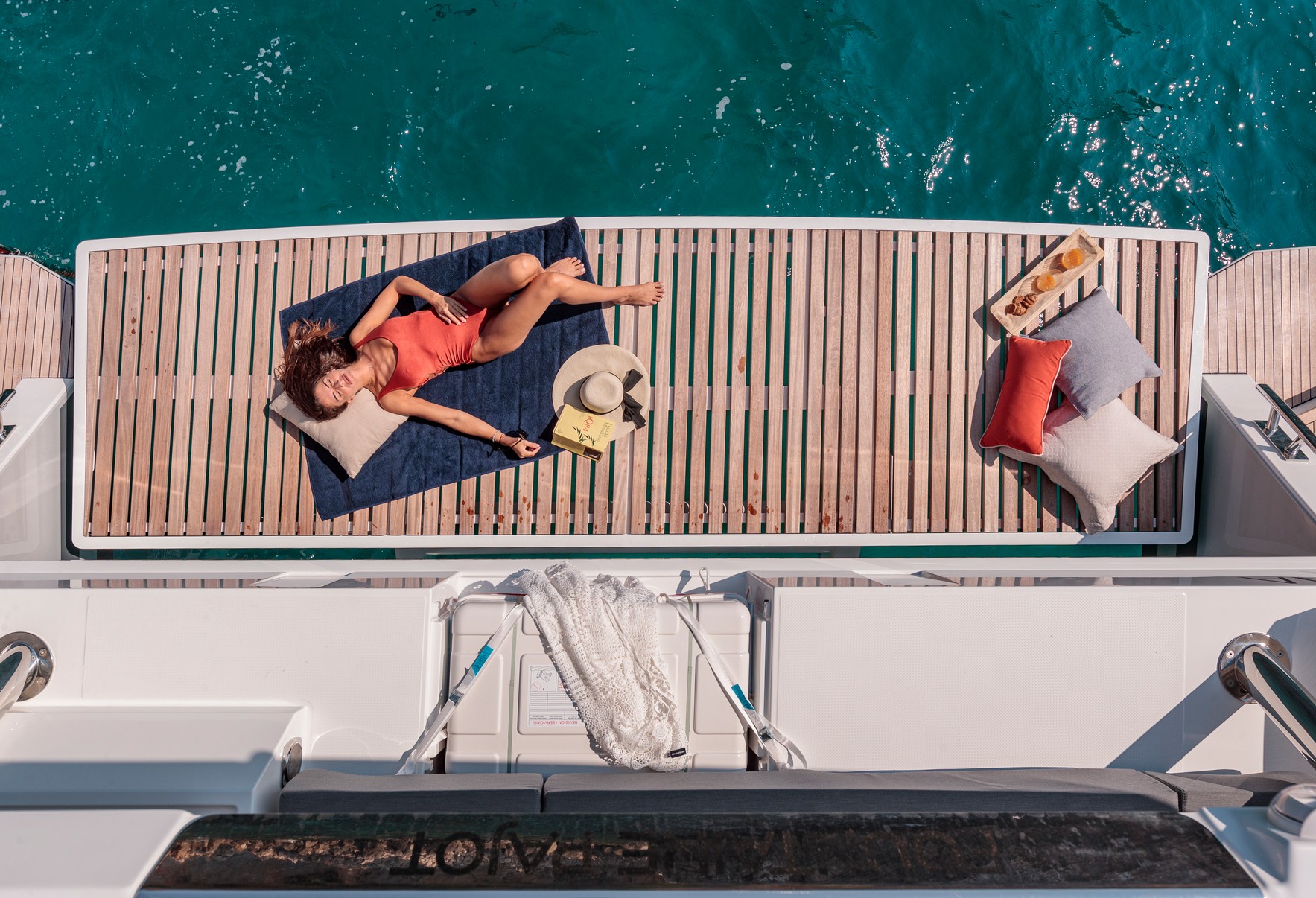
Kimolos sits barely a mile across the water from Milos, yet it belongs to a slower world: a volcanic-tinged island of white cliffs, a medieval castle wrapped in lanes, and beaches where the rock itself is pale as chalk.
The island took its name from the chalky earth — kimolia — once mined here, and its coastline still glows with it: Prassa’s blinding-white shore, the mushroom-shaped Skiadi rock, coves of milky turquoise.
Tourism never quite arrived. Chora remains a living village, Psathi a working fishing port, and even in August you will find sand to yourselves — especially with the vast uninhabited islet of Polyegos waiting offshore.
Seen from the deck of a catamaran, Kimolos is a compact cruising gem: sheltered bays for every wind, a friendly little harbour, and Milos’s full services one short hop away.
This guide covers what to see, what to do, the best beaches and swim stops, where to eat, and everything you need to plan a visit by boat.
Why visit Kimolos?
Proximity without the crowds is the pitch: Kimolos shares Milos’s extraordinary geology and water quality but none of its summer traffic. The ferry hop between them takes minutes; the change of pace takes longer to believe.
The island rewards curiosity. Mining history, a drowned ancient city, catacombs and a museum of faithful casts reward a morning ashore, while the swimming — Prassa, Gerakia, Polyegos — ranks with any in the Cyclades.
Villages stay real. Chora’s kafeneia serve shepherds and schoolteachers; the bakery sells out by noon; everyone waves.
For crews, Kimolos is the perfect quiet counterweight in a Milos-centred week: easy access, honest anchorages and evenings that feel discovered rather than scheduled.
What to see in Kimolos
Chora and the Kastro
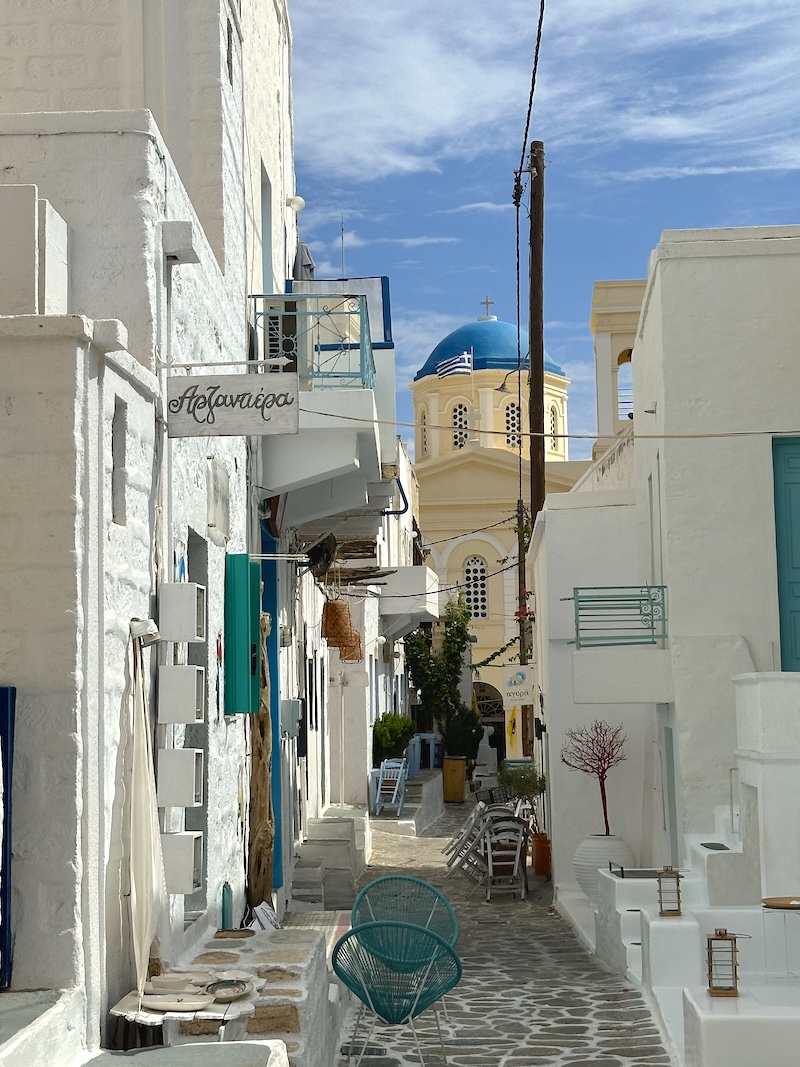
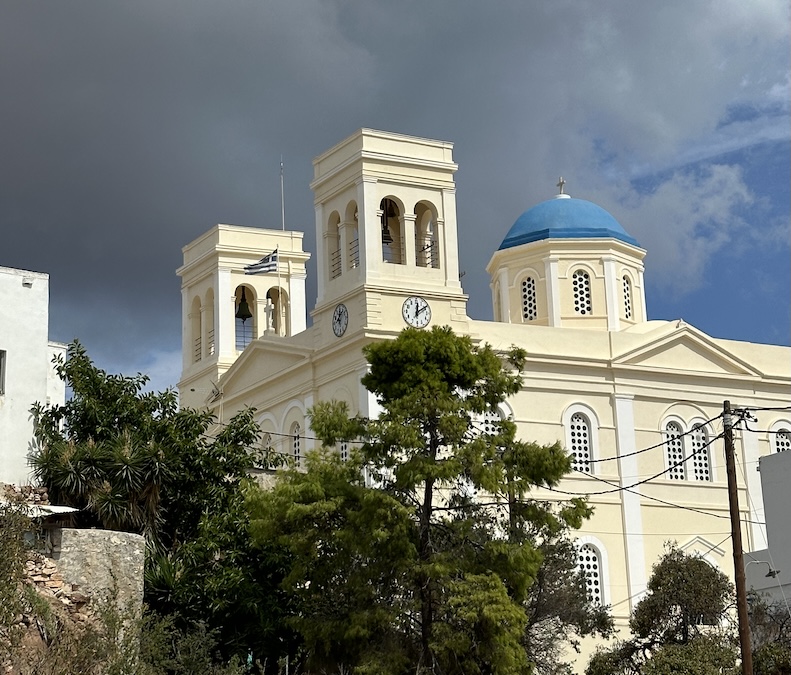
The capital gathers its whitewashed lanes around a medieval fortress whose outer walls are formed by the houses themselves, exactly as in Antiparos or Naxos — but here you will share them mostly with cats.
Wander inward through the Kastro’s alleys and tiny churches, then out again to the small Archaeological Museum, whose careful casts stand in for originals carried off to foreign museums long ago.
Come back after dark: the lanes glow under lamps and conversation spills from doorways.
Goupa and Kara

On the northeastern coast, the twin coves of Goupa and Kara thread between pale rocks, their ledges carved with syrmata — boat shelters cut into the cliff where fishing craft were hauled clear of the weather.
Water here is startlingly clear over white stone. Swim, photograph, repeat; it is one of the Aegean’s most photogenic small harbours.
Prassa and the Skiadi rock
Nearby Prassa pairs its famous white beach with the strange, beautiful landscape that created it — chalk terraces glowing against blue water.
A short walk inland brings you to Skiadi, a mushroom-shaped rock sculpted by wind and salt into one of the Cyclades’ oddest natural monuments. Go early; there is no shade and no company.
Ellinika and the ancient city
On the southern coast, the bay of Ellinika hides the remains of ancient Kimolos: walls slipping beneath the sea, early-Christian tombs and catacombs cut into the rock behind a chapel-topped shore.
Snorkellers drift over history here; bring a mask and read the ruins through the water.
What to do in Kimolos
Boat day to Polyegos

Polyegos, the largest uninhabited islet of the Cyclades, lies just south of Kimolos — seven square kilometres of rolling hills dropping into bays of impossible turquoise.
No buildings, no roads, nobody: drop the hook, swim ashore and have one of the great empty islands of the Aegean to yourselves for the day.
Walk the stone paths
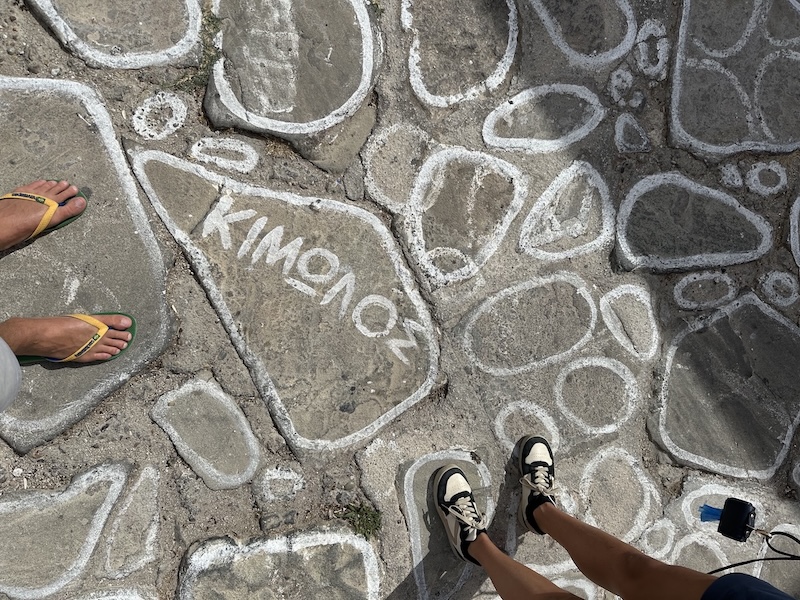
Old paved paths link Chora with Psathi, Prassa and the southern chapels, threading terraces, dovecotes and views across the strait to Milos.
Distances are modest and the walking gentle — an hour’s stroll earns swims at either end.
Slow down in the lanes
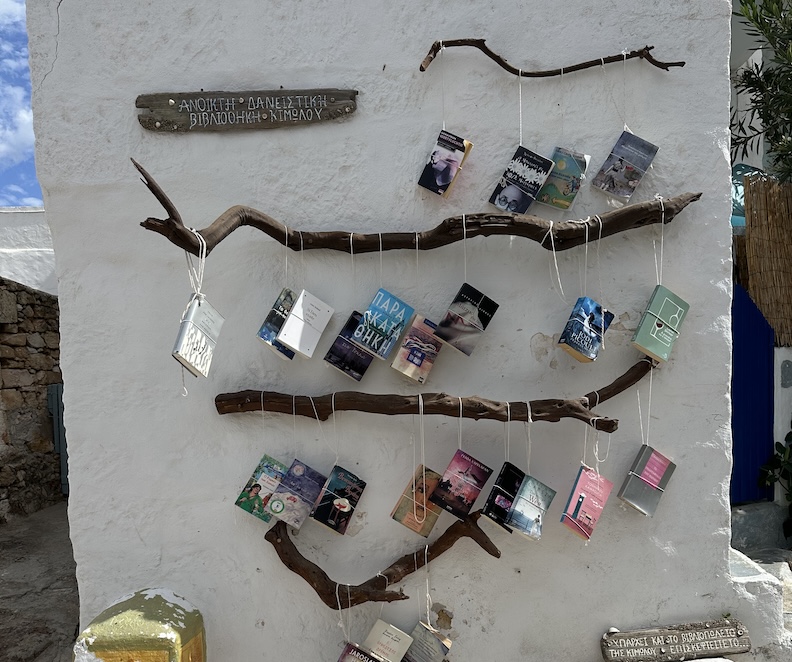
Part of Kimolos’s charm is entirely unplanned: cafés where chairs spill onto cool stone, a lane where second-hand books hang along the wall for anyone to take or leave, grandmothers sweeping steps before church.
Give Chora an unhurried hour and let it introduce itself.
Snorkel the white coast
The rocks around Prassa, Gerakia and Goupa hold small fish, octopus and light-play found nowhere else in the archipelago — the white seabed turns the shallows silver.
Mornings are calmest; fins and a mask are all the equipment required.
Beaches and swim stops in Kimolos
Small island, remarkable variety: white-sand southern bays, chalk coves to the north and Polyegos beyond — most of it easiest from the water.
Prassa
The icon: blinding white sand and rock shelves in water so clear it looks retouched. Come early or by tender; midday sun bounces fiercely off the chalk.
Bonatsa and Kalamitsi
The southern favourites — soft sand, shallow family-friendly entry and tamarisk shade, comfortable through the meltemi season.
Psathi
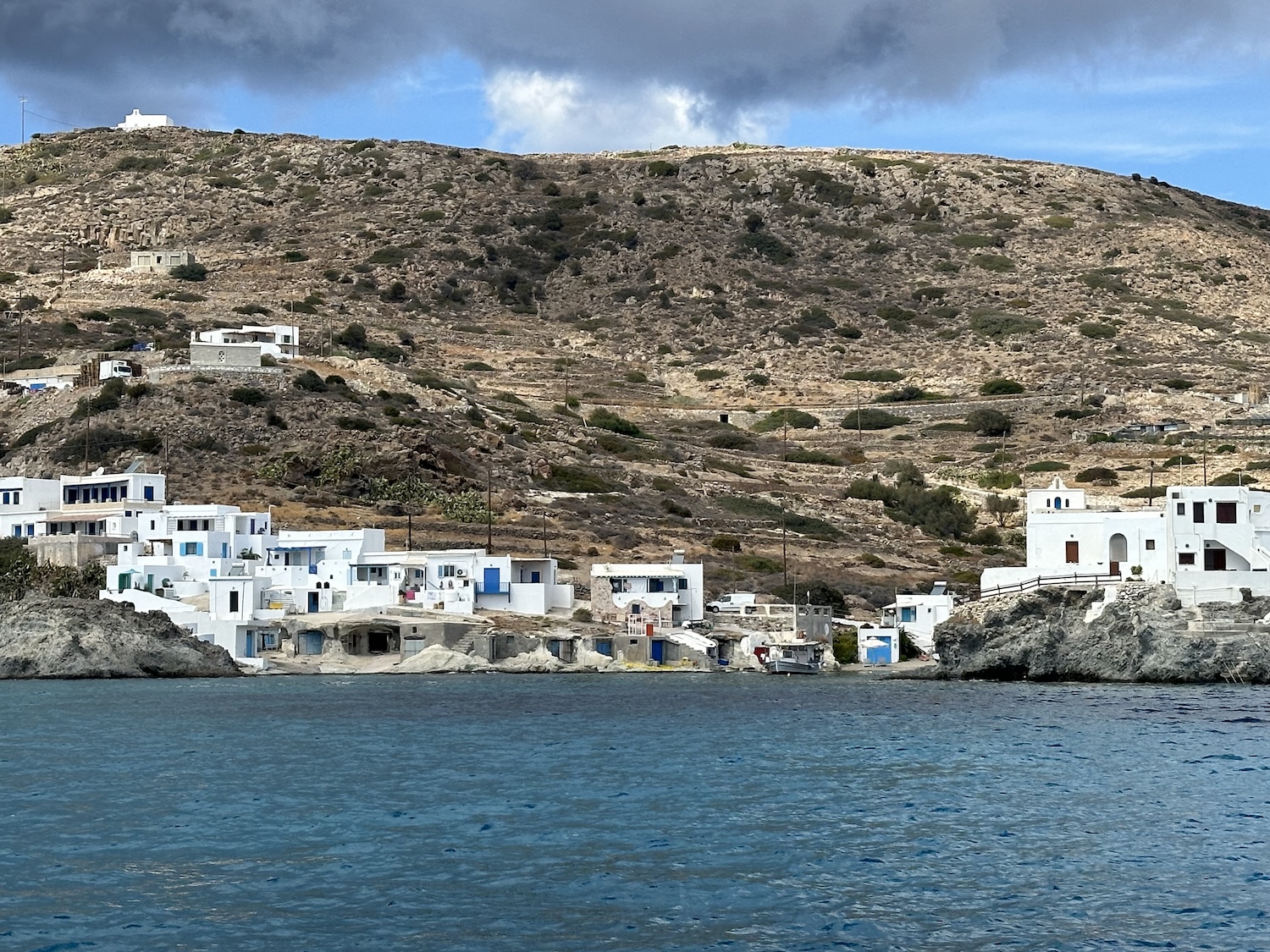
The port beach: sand and pebble beside the harbour, tavernas within reach and your tender tied a few steps away.
Gerakia and Mavrospilia
Quieter corners — a rocky cove near Prassa and a broad southern strand — for when you want the water to yourselves.
Polyegos bays
The signature swim of the area: anchor off the islet’s southern shores in settled meltemi weather and enjoy wide, wild, glass-clear bays with nothing built on them at all.
Food and where to eat in Kimolos
Kimolos cooks the old way: garden vegetables, fresh cheeses, goat from the hillsides and fish straight off the boats — plus one flatbread worth crossing an archipelago for.
Order ladenia, the island’s signature: a thick olive-oil bread topped with tomatoes, onions and herbs, baked until the edges caramelise. Add cheese pies, a salad and whatever fish is on ice.
Tavernas of Psathi
Along the port, family-run tavernas serve the day’s catch with tables practically over the water — grilled whole fish, calamari and ladenia warm from the oven.
Arrive by tender, book ahead in August, and stay for the ferries’ lights crossing from Milos after dark.
Chora tables

In the village, ouzeri and courtyard kitchens plate meze for grazing: fava, fried cheeses, meatballs, tomato fritters and local wine at village prices.
Follow the locals rather than the signs — the best tables hide down the smallest lanes.
Sweets and provisions
Look for spoon sweets, local honey and the bakery’s morning pastries; provisioning is adequate for top-ups, but anything substantial comes easier from Milos.
Exploring Kimolos by boat
Kimolos is cruising in miniature: two practical stopping points, bays matched to every wind and Polyegos as the day-trip prize.
Arriving and berthing
Psathi, the port on the southeastern coast, offers a small mole shared with the Milos ferry plus anchoring in the open bay off the beach. The port authority directs arrivals; space is modest in August, so come early or plan to swing.
Goupa, on the north coast, gives tiny-scale shelter in southerly weather for shallow-draught craft — otherwise treat the northern coves as fair-weather day stops.
There is no marina and no fuel dock: top up at Milos (Adamantas or Pollonia) before hopping across. Water may be available at the Psathi quay by arrangement.
Anchorages and swim stops
Southern sands — Bonatsa, Kalamitsi and Mavrospilia — shelter beautifully through the meltemi, with sand holding and beaches a short swim away.
Prassa and Gerakia on the northern coast come alive in southerlies: chalk-white scenery, transparent water and usually room to swing.
Polyegos is the crown: anchor off its southern bays in northerly winds for the finest swimming ground in the western Cyclades. Mind depths and posidonia as you work in, and treat it as daylight-only unless the forecast is flawless.
Cruising tips
The hop from Milos runs under an hour from Pollonia — but give the strait respect: it funnels the afternoon breeze and the Milos excursion traffic alike.
Ferries call at Psathi most days; keep the face of the mole clear around arrivals and expect brief wash.
Distances flatter planners: Milos under five miles west, Sifnos fourteen northeast, Folegandros eighteen southeast. Provision and fuel at Milos, then enjoy rare luxury — an island group where everything worth seeing lies within an easy morning’s sail.
Getting around Kimolos
A seasonal bus links Chora and Psathi; scooters and cars rent in Chora, taxis are few, and the walking paths connect nearly everything else.
Nothing is more than twenty minutes away, and most guests settle into the rhythm of mornings afloat and evenings on foot.
How many days do you need in Kimolos?
One full day captures the essence: Chora and the Kastro in the morning, a swim-and-lunch loop at Prassa or Polyegos and dinner on the Psathi waterfront.
Two days let the island breathe: add the Ellinika ruins, the walk to Skiadi, a second Polyegos morning and a slow evening in the lanes.
On a crewed charter, Kimolos typically takes one or two quiet nights woven into a Milos week — the pause guests describe afterwards as their favourite.
Islands to visit after Kimolos
Kimolos sits at the heart of the western Cyclades, with four excellent onward legs close by.
Milos, across the strait, needs no introduction: lunar Sarakiniko, syrmata coves and fifty-plus beaches.
Sifnos, northeast, is the food pilgrimage: clay-pot revithada, mastelo lamb and monasteries over the sea.
Folegandros, southeast, crowns the arc with a clifftop capital and beaches at the end of the world.
Antiparos, northeast beyond Sifnos, adds castle lanes, a famous cave and sunset sands near Paros.
Linked together, they trace the Cyclades’ western arc — dramatic, varied and gloriously uncrowded in between.
Final thoughts
Kimolos has mastered the art of staying itself while the world speeds up around it.
The chalk glows, the ladenia comes out of the oven at one, the ferry arrives and leaves and the village carries on — and somewhere offshore, an entire empty island waits for your anchor.
Arrive by boat, stay an extra night and see how quickly “the quiet one” becomes the standard every other island is measured against.
Research sources
Harbour classifications, mooring arrangements and island facts in this guide were cross-checked against the references below.
- Municipality of Kimolos — official information on ports, access and island services.
- Greek National Tourism Organisation — Kimolos — official destination guide.
- Hellenic Coast Guard — Port Authority Index — contacts for the local port authority.
These references support itinerary research but do not replace live navigational information, port notices or your skipper’s judgement.