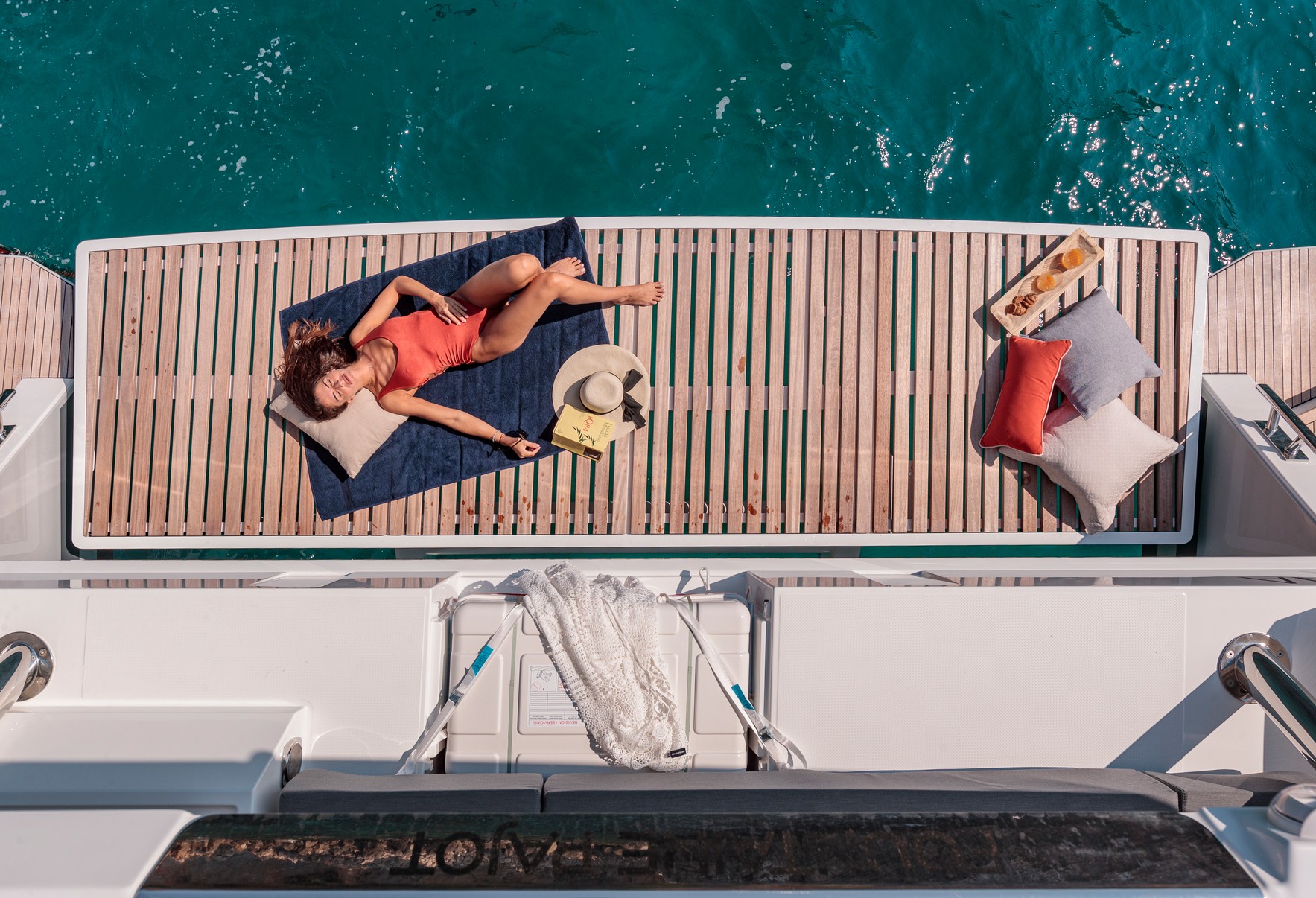
Kea is the closest Cyclade to Athens — barely an hour by ferry from Lavrio — yet it feels nothing like a commuter island. Oak groves and running springs cover hills that stay green into summer, four ancient cities once shared its coastline, and stone paths still stitch village to village.
Athenians have kept it as their discreet weekend escape for decades, which explains the elegant stone houses and the absence of package tourism. Nothing here is built for anyone in a hurry.
For sailors, Kea is a gift: the natural first or last night of an Athens-based charter, with a sheltered main port, a famously sociable little harbour at Vourkari, and beaches that reward every wind direction.
This guide covers what to see, what to do, the best beaches and swim stops, where to eat, and everything you need to plan a visit by boat.
Why visit Kea?
Geography starts the story. Kea sits at the gateway to the Cyclades, sixteen miles or so from Cape Sounion, close enough that ancient ships used it as a landmark on the Athens run — and modern crews still do.
Nature sets it apart next. The island is greener than almost any neighbour, watered by springs and shaded by native oaks, which made it famous in antiquity for wine and honey rather than marble.
History runs deep: four city-states shared the island, the poet Simonides and the physician Erasistratus were born here, and the lonely temples of Karthaia still stand above the sea on the southeastern coast.
For crews, all of this comes with rare convenience — short protected passages, honest services at Korissia, and enough variety ashore to fill a day or a week.
What to see in Kea
Chora and the Lion of Kea

The capital, also called Ioulis after its ancient predecessor, stacks whitewashed houses up a hillside well above the sea — pirate-era logic that now buys wonderful views and cool evening air.
Wander the arcaded lanes, duck into the Archaeological Museum’s bronze-age finds, then follow the path out of town to the island’s symbol: the Lion of Kea, a lion sculpted whole from the living rock around 600 BC, gazing eternally toward the sea.
Come late afternoon, when the heat drops and the kafeneia around the squares fill with locals.
Vourkari and Korissia

Korissia, the main port, spreads along a broad bay backed by the island’s shops and services; neighbouring Vourkari, one cove south, is its chic little sibling — a tight harbour ringed by tavernas where the sailing crowd gathers every evening.
Arrive by tender, join the quay-side parade at dusk, and you will understand why so many Aegean sailors call Vourkari their favourite hour of any charter.
Ancient Karthaia
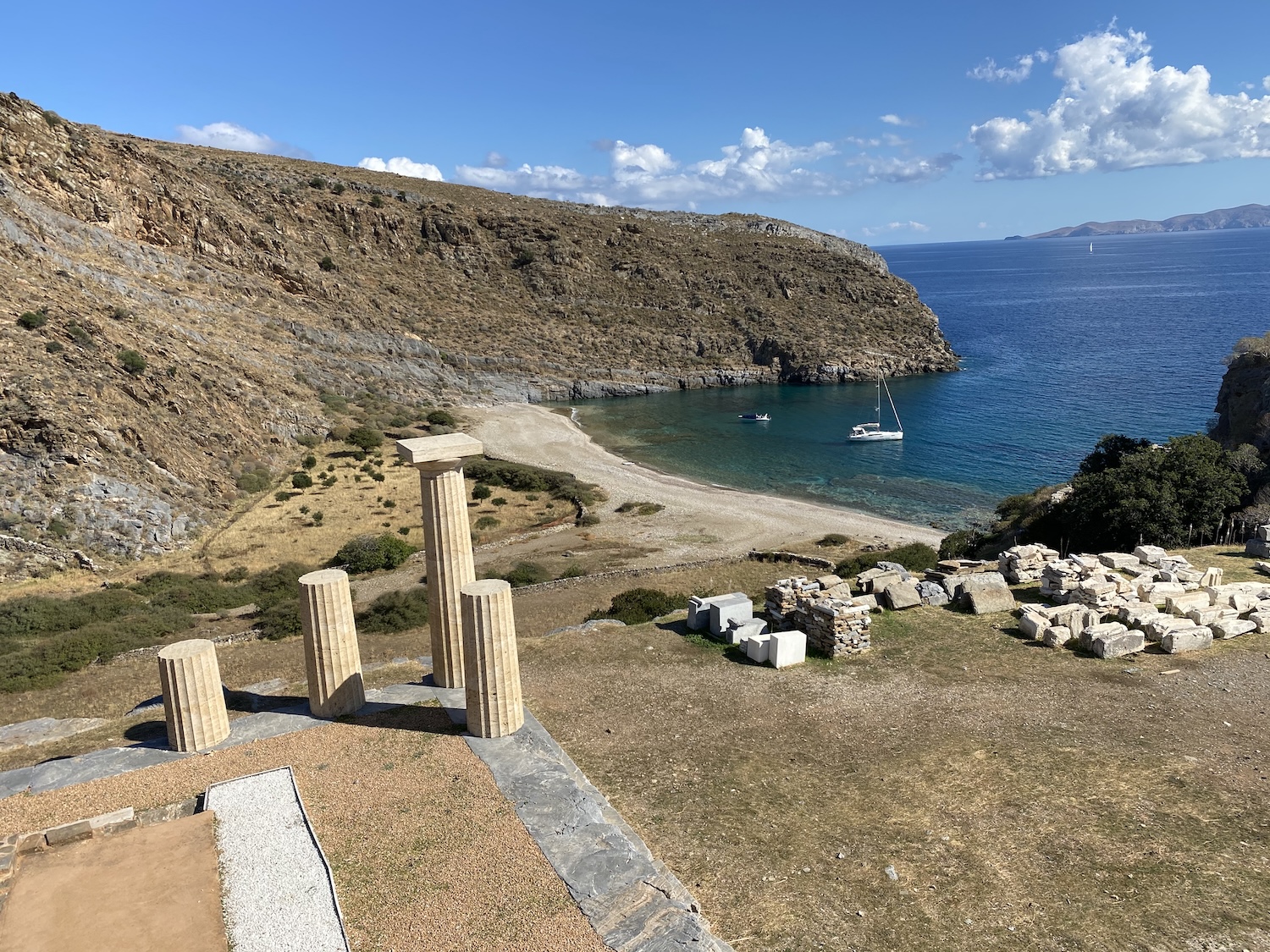
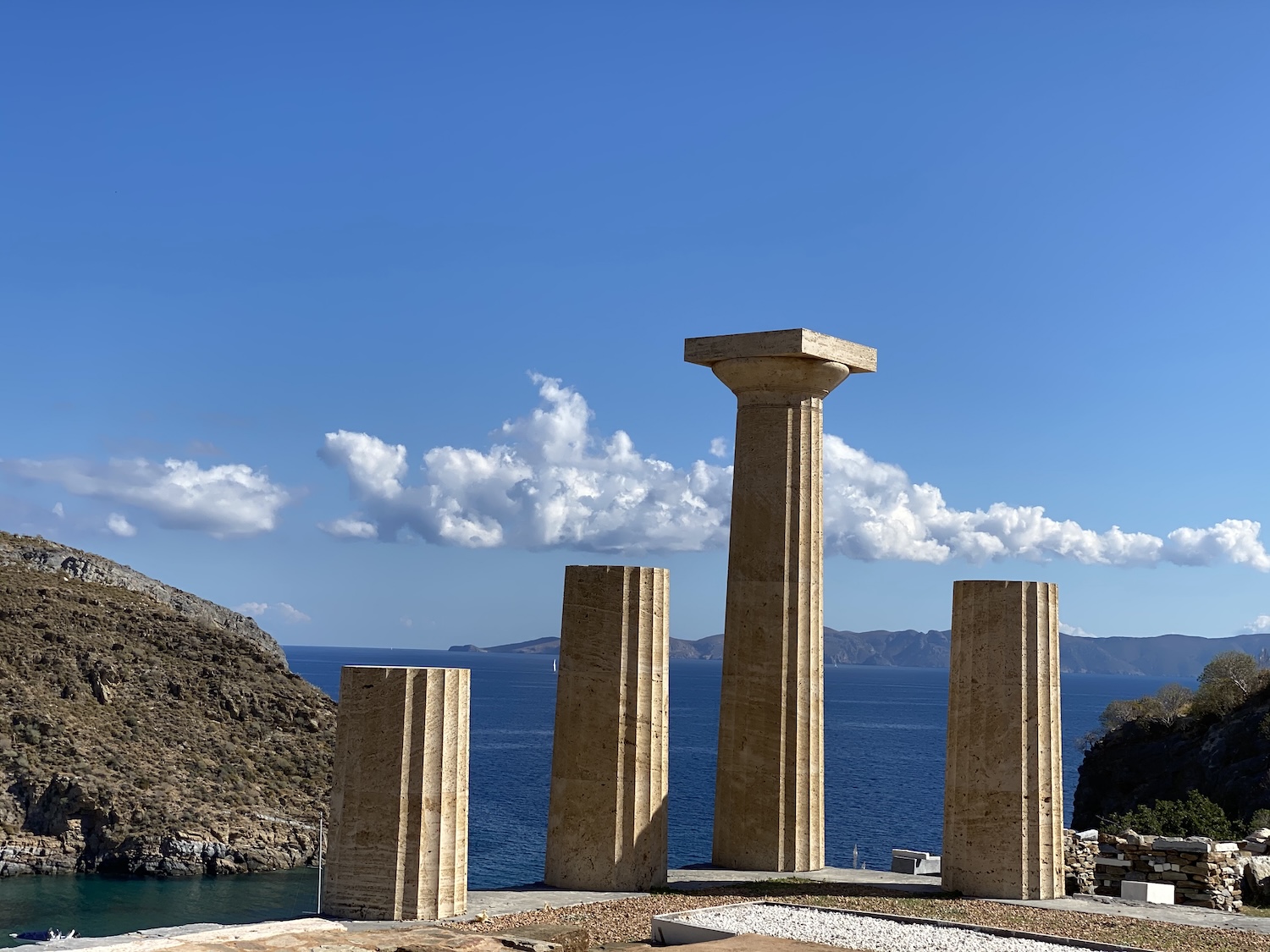
On a headland above the southeastern coast lie the ruins of Karthaia, one of Kea’s four ancient cities: two Doric temples — Apollo and Athena — a theatre and city walls, all gloriously unrestored and reached only on foot or by boat.
This is one of the great boat-and-ruins combinations in Greece: anchor in the bay below, row ashore and climb twenty minutes through thyme-scented slopes to temples that have watched the same water for two and a half thousand years.
Poles and the temple by the sea
On the eastern coast, the twin bays of Megales and Mikres Poles hold quiet water, a handful of farmsteads and the lonely remains of a small ancient temple above the shore.
Few visitors make it here; arriving by tender turns an obscure ruin into a private discovery.
Panagia Kastriani
On the northeastern cape, the monastery of Panagia Kastriani perches on a cliff-top promontory above crashing water — founded, tradition says, after shepherds found an icon impossible to move.
The courtyard views run the length of the Aegean skyline; combine it with a swim at nearby Xyla for a memorable morning.
What to do in Kea
Hike the ancient paths
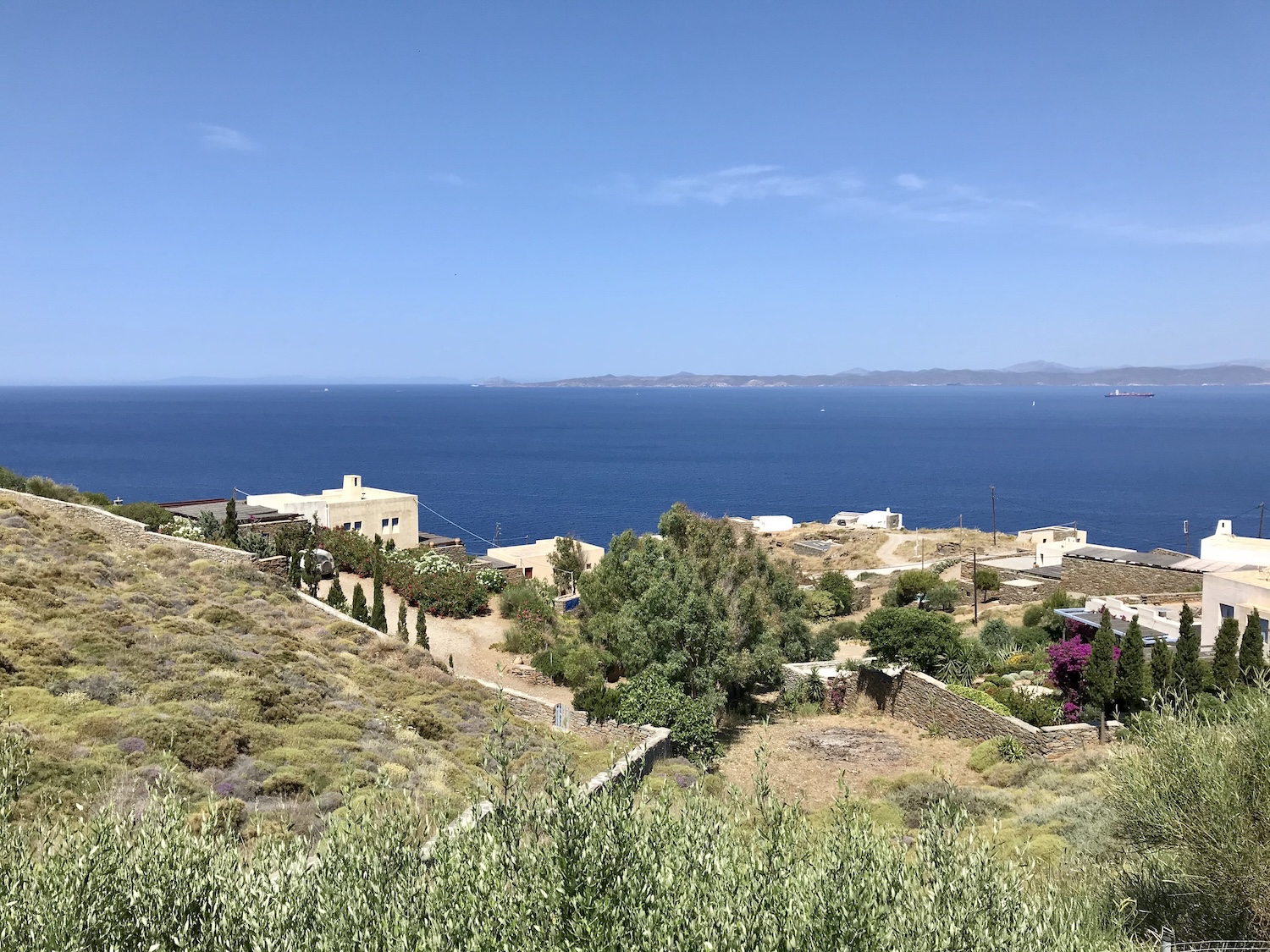
Kea keeps one of the best waymarked trail networks in Greece, much of it on stone-paved paths built centuries ago and lovingly restored by local volunteers.
The classic route links Chora with Karthaia in about two hours each way through oak shade and open ridge; shorter loops connect the villages and springs. Go early, carry water, and let the island unfold at walking pace.
Swim the southern bays
Koundouros and Spathi string sandy, family-friendly swimming along the sheltered southern coast, with beach bars in high summer and glassy mornings most days.
Rent a car ashore or simply arrive by tender — either way, these are the easy afternoons charters are made of.
Taste the island table
Kea’s larder runs to tangy ksinotiri cheese, thyme honey, wild oregano and pasteli, plus whatever the boats land each morning.
Order a cheese pie with your coffee, ask for the day’s fish at dinner and finish with a spoonful of honey over yogurt — simple pleasures done properly.
Keep the Vourkari evening
As the sun drops, the sailing fleet converges on Vourkari and the quay turns into one long table.
Claim a seat, order grilled octopus and a cold drink, and swap passage notes with strangers who will be friends by midnight.
Beaches and swim stops in Kea
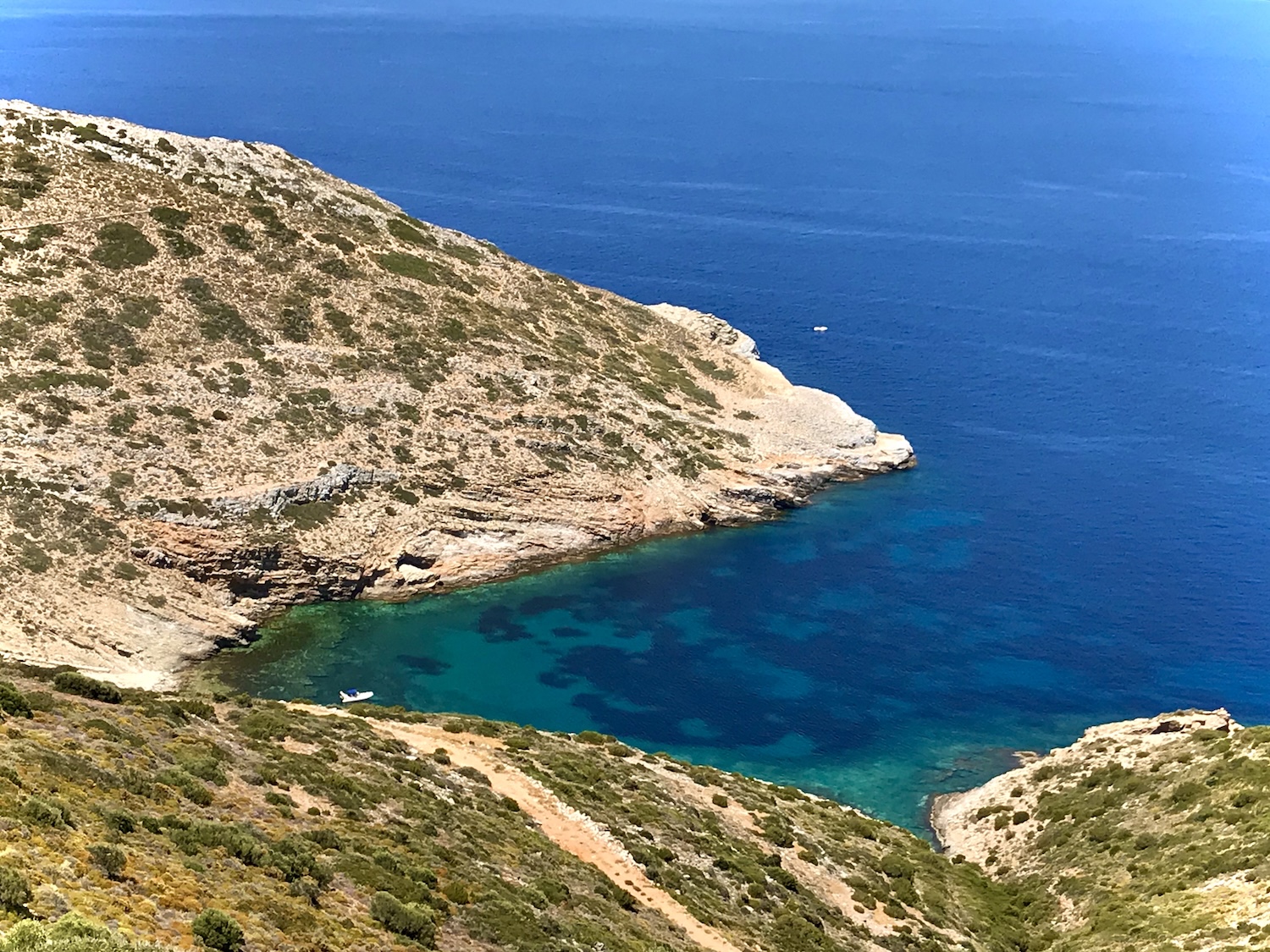
Kea’s coast splits neatly by wind: sheltered southern sands, wild northern coves and historic eastern bays — several best reached from the water.
Otzias
The island’s longest beach curves along the northwestern coast below olive groves — golden pebble-and-sand, tamarisk shade and tavernas at the back. Best in southerly weather.
Koundouros and Spathi
The southern favourites: soft sand, shallow entry, sunbeds and beach bars, comfortable through the meltemi season when northern coasts blow through.
Poles
Twin eastern bays of pebble and clear water beneath the old temple site — quiet even in August, and lovely from the anchor.
Karthaia cove
The signature stop: swim off the boat beneath the ancient headland, then climb to the temples before lunch. Calm-weather days only.
Xyla
The wild card near the northeastern tip: a broad, undeveloped strand beneath the monastery road, for days when you want the Aegean to yourselves.
Food and where to eat in Kea
Kea cooks with quiet confidence: fish from its own waters, cheese and honey from the hills, and tavernas that answer to locals first.
Vourkari waterfront
The harbour’s tavernas are the island’s social engine — fresh fish on ice, grilled octopus over coals and tables that fill as the fleets come in.
Book ahead in July and August, or arrive early and enjoy the show from the quay wall.
Korissia port tables
Along the main port, family-run tavernas serve hearty island classics — goat stews, ksinotiri pies, fried calamari — steps from where your tender ties up.
It is the practical choice after a day afloat, and friendlier than its convenience suggests.
Chora courtyards
Up in the capital, courtyard restaurants under vines plate refined versions of island cooking, best enjoyed after the sunset walk to the Lion.
Ask for whatever features ksinotiri — the island’s sour cheese — and thank us later.
Provisions
Korissia’s supermarkets cover full galley restocking; add jars of local honey, pasteli and bundles of mountain oregano for flavours that outlast the trip.
Exploring Kea by boat
Kea is the ideal opening chapter of a Cyclades charter: short approach, forgiving harbours and a coastline arranged for swimming between sights.
Arriving and berthing
Korissia, the main port, offers the island’s full services: a long quay shared with ferries plus roomy anchoring in the large bay, comfortable through the summer meltemi and mainly exposed to strong westerlies. Water is available on parts of the quay and fuel can be arranged by mini-tanker.
Vourkari, just south inside the same bay, is the yacht-favourite: a compact harbour where berths are few and coveted — call ahead in peak season, or anchor at the entrance and dinghy in for dinner.
Ferry movements are moderate; keep the fairway clear and expect brief wash around arrivals.
Anchorages and swim stops
Otzias makes a beautiful overnight in southerly winds: a wide open roadstead off the longest beach, with easy dinghy access to tavernas ashore.
Koundouros and Spathi shelter the southern coast through the meltemi — sand holding, clear water and beach bars within swim of the anchor.
Karthaia and Poles reward calm easterly days with the island’s most atmospheric stops: ruins above, clear water below. The northern coast is wilder and exposed — admire Xyla from the deck in anything but flat calm.
Cruising tips
The approach from Lavrio or Sounion runs about sixteen miles and makes a perfect first leg — leave with the morning calm, arrive for lunch and a swim.
Mind the strait towards Kythnos to the south: it funnels the meltemi into a brisk, gusty breeze by afternoon, so time that crossing for the morning too.
Distances flatter every plan: Kythnos eight miles south, Andros twelve north, Syros twenty-two east, Sifnos twenty-eight southeast. However the route bends, Kea sits conveniently at its start.
Getting around Kea
Buses link Korissia with Chora and some beaches but run thin; cars and scooters rent at the port, and taxis meet the ferries.
Roads are good by island standards and distances short — Chora lies fifteen minutes above the port — though the hiking trails often beat the roads for sheer pleasure.
How many days do you need in Kea?
One full day covers the essentials: Chora and the Lion in the morning, an afternoon at Koundouros or Karthaia and the Vourkari evening ritual.
Two days let the island breathe: add the hike across to Karthaia, Panagia Kastriani, a slow lunch inland and a second swim at whichever bay the wind spared.
On a crewed charter, Kea typically appears as the first or last night of the route — and both slots suit it perfectly.
Islands to visit after Kea
Kea anchors the northwestern corner of the Cyclades, with four excellent onward legs close by.
Kythnos, eight miles south, brings thermal springs, Kolona’s sand spit and easy bays made for lazy lunch stops.
Andros, north across the strait, adds springs, museums and beaches you’ll share with nobody.
Syros, east, delivers Ermoupoli’s marble squares and the best urban evening in the islands.
Sifnos, southeast, is the food pilgrimage: clay-pot revithada, mastelo lamb and monasteries over the sea.
Linked together, they form the classic western-Cyclades circuit — varied, sheltered and wonderfully low-stress.
Final thoughts
Kea understands timing better than any island in Greece: close enough for a Friday evening, far enough to feel earned by Saturday morning.
Lions carved from rock, temples above empty bays, trails under oak shade and a harbour that fills with friends every dusk — none of it shouts, all of it stays with you.
Arrive by boat, give it a proper day or two, and let the closest Cyclade prove that proximity and magic are not opposites.
Research sources
Harbour classifications, mooring arrangements and island facts in this guide were cross-checked against the references below.
- Municipality of Kea — official information on ports, access and island services.
- Greek National Tourism Organisation — Kea — official destination guide.
- Hellenic Coast Guard — Port Authority Index — contacts for the local port authority.
These references support itinerary research but do not replace live navigational information, port notices or your skipper’s judgement.