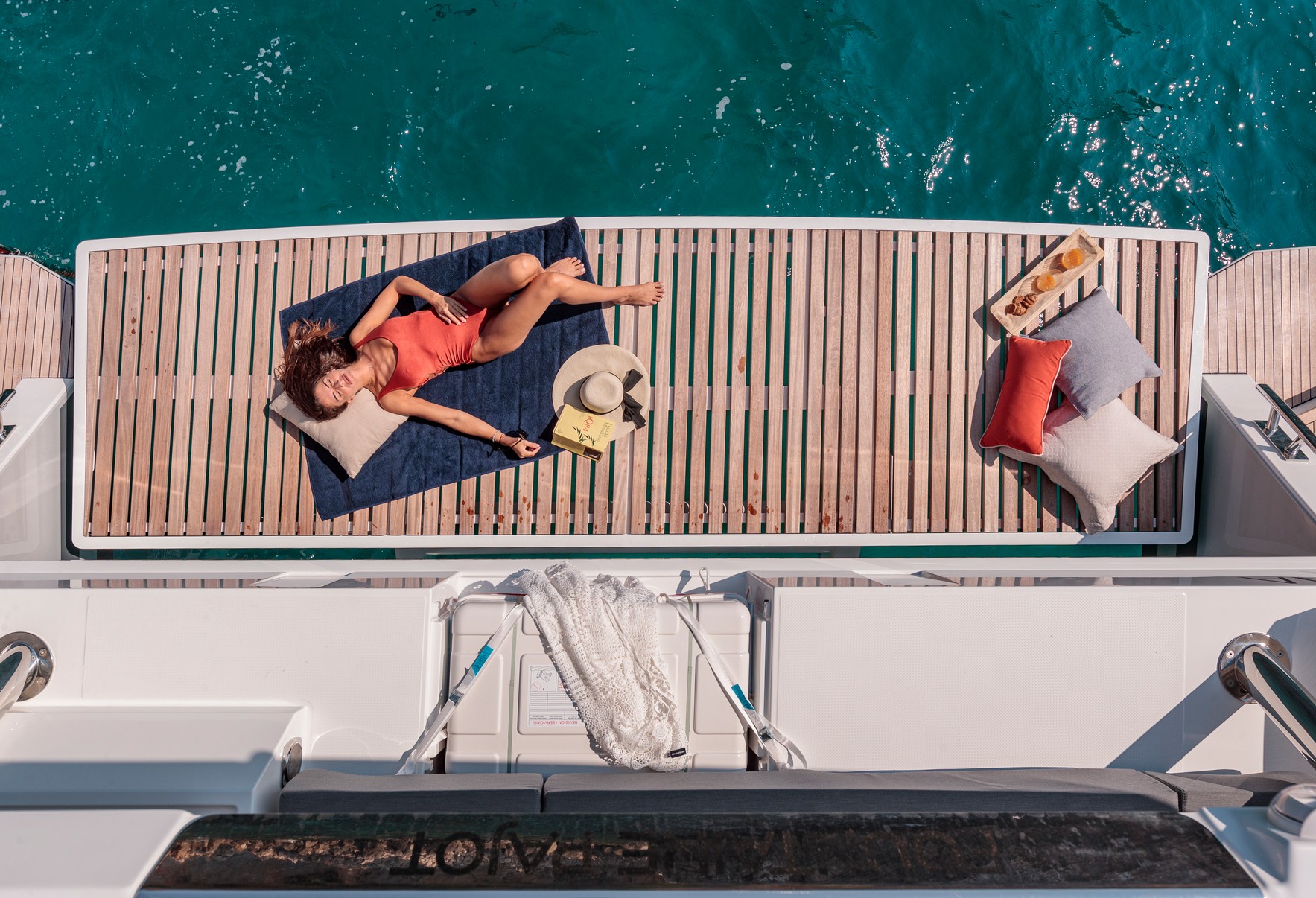
Ithaca is small, green and deeply indented — the kind of island sailors return to for the shelter, not the services. Its bays hold calm water when the surrounding sea is rough, and its harbours are villages first, ports second.
It is also Odysseus’s island, and the association is everywhere: a cave of votive offerings, a spring named in the Odyssey, and a landscape that matches the poems better than any marketing would.
Compact distances, sudden gusts off the hills and stern-line berthing make this a stop for crews who enjoy close-quarters anchoring — and the rewards are out of proportion to the effort.
Why visit Ithaca?
Ithaca sits east of Kefalonia in the central Ionian. It is only about 96 square kilometres, mountainous and pine-covered, with a population of a few thousand and a coastline that folds into bays almost too many to count.
The island has been identified with Homer’s Ithaca for nearly three thousand years. Whether or not every location can be pinned down, the landscape is the story: a rugged island with a superb natural harbour at Vathy, and small bays that shelter a sailing culture going back millennia.
For a charter crew, Ithaca is the quiet counterweight to its busy neighbours. Even in August you can find an empty bay, and the villages of Kioni and Frikes feel like the Ionian of decades ago.
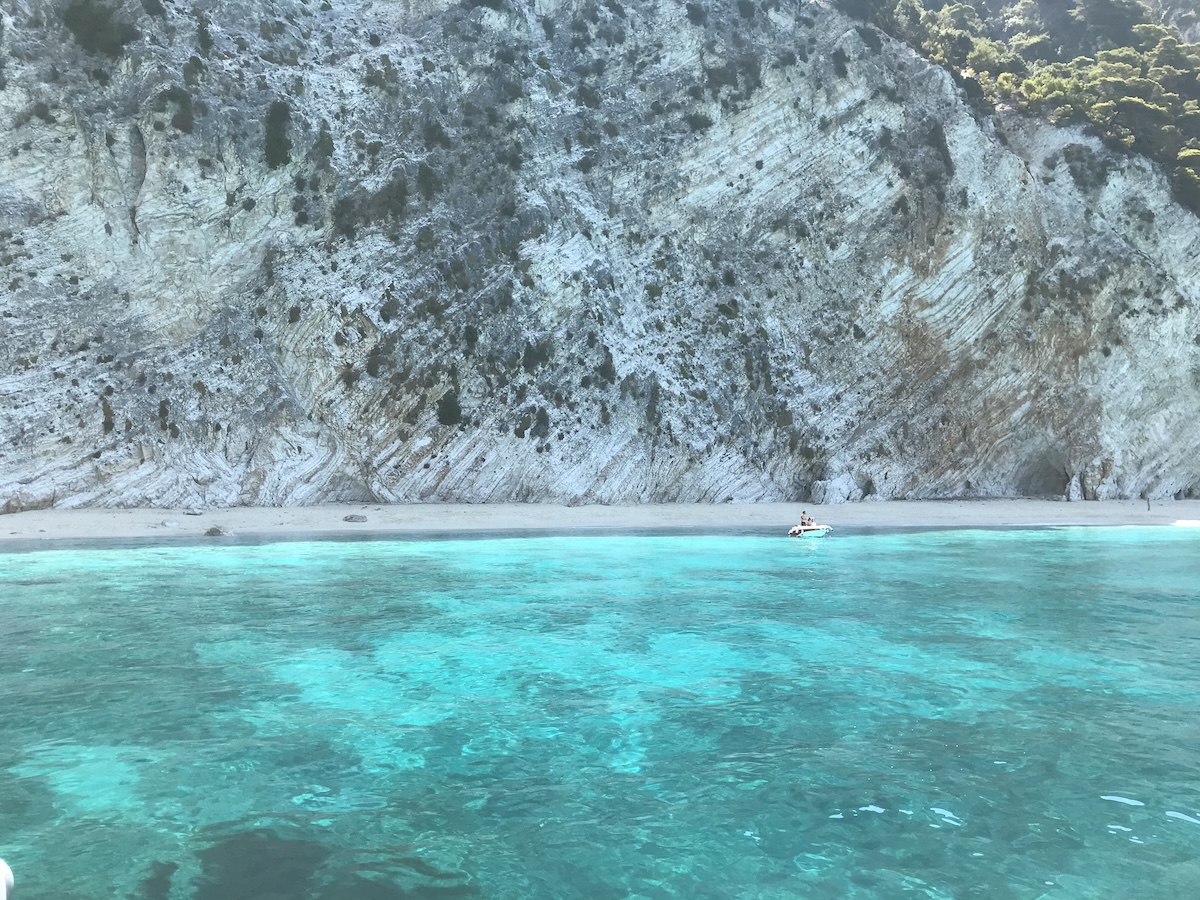
Exploring Ithaca by private catamaran
Vathy, the capital, sits at the head of one of the largest natural harbours in the world: a long, landlocked bay entered through a narrow, well-defined mouth. Holding in the mud is excellent, space is generous, and the town quay gives access to the island’s best provisioning.
Kioni, further north on the east coast, is the postcard stop: an amphitheatre of houses around a small harbour with tavernas on the quay. Space is limited and depths rise quickly, so most crews take stern lines. Frikes, just below it, is a smaller working harbour with a windmill landmark and strong local gusts in the afternoon.
The east coast holds the best bays: Gidaki, Filiatro and Sarakiniko for swimming, and the sheltered channels of Lygia and Pera Pigadi for a genuinely quiet night. Polis Bay, on the west coast, is a well-sheltered stop beside the Cave of Loizos.
Two local facts shape the anchoring. Katabatic gusts spill off the hills into most bays, sometimes hard, so use generous scope and stern lines where offered. And in the strait facing Kefalonia, expect five to ten knots more wind than the forecast — the passage is short but lively.
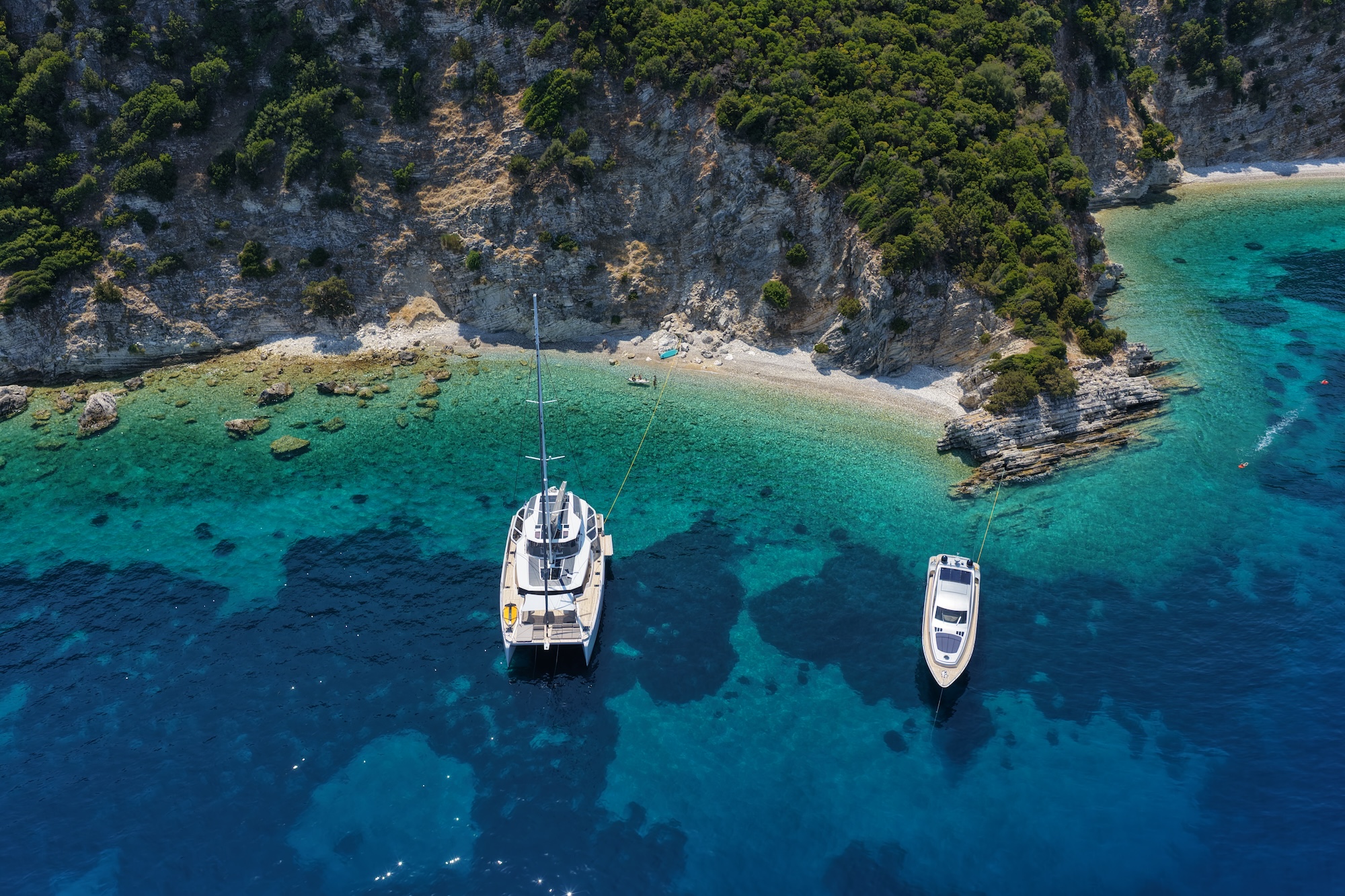
Beaches and swimming stops
Gidaki, east of Vathy, is the island’s signature beach: white pebbles, pines and clear water, reachable only on foot or by boat — which keeps it quiet even in August. Water taxis run from Vathy if the tender is staying aboard.
Filiatro, closer to town, is the easy family swim: shallow sandy entry and a taverna in season. Sarakiniko and Kaminia nearby add more pebble-and-pine options along the same stretch.
Agni, on the north-east coast, pairs a lovely pebble bay with one of the island’s most celebrated tavernas — a swim-and-lunch stop by tender in settled weather.
On the west coast, Polis Bay offers calm water beside the archaeological cave, and Afales at the northern tip is a spectacular but exposed day stop for flat mornings only. The north-coast beaches are wild and beautiful, with access mostly by boat or a demanding walk.
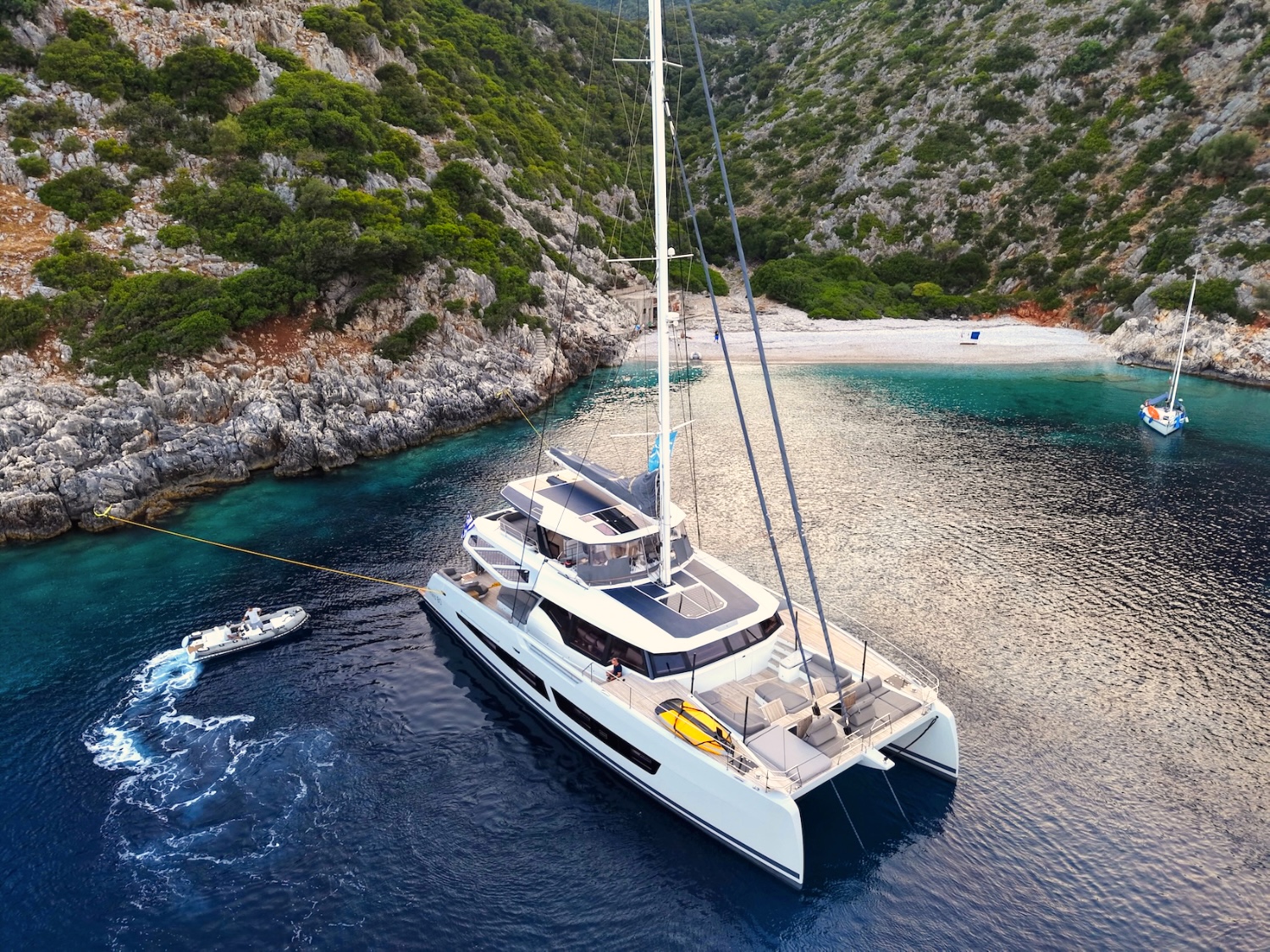
What to see
Wander Vathy: an amphitheatre of Venetian-style houses rebuilt after the 1953 earthquake, around a harbour that explains the island’s sailing history at a glance. The Archaeological Museum holds Mycenaean finds from the island’s early settlements.
In the mountain village of Anogi, the church of Kimisi Theotokou preserves remarkable Byzantine frescoes from the twelfth and thirteenth centuries — among the finest in the Ionian — and the viewpoint above looks down the whole east coast.
At Polis Bay, the Cave of Loizos held a sanctuary where ancient sailors left bronze tripods and an inscription to Odysseus. The finds are in the museum; the cave is a short walk from the anchorage.
North of Stavros, the “School of Homer” site at Pilikata and the Aetos hill acropolis keep the Homeric debate alive, while the spring of Arethusa near Perachori is the island’s most poetic short walk — especially at dusk, when the channel lights of Kefalonia come on across the water.

What to do
Walk the old mule path from Vathy up to the Monastery of Kathara on Mount Nirito, continuing to Anogi or Perachori. Start early; the views over the bay repay every step.
Swim, then eat: take the tender to Agni for lunch, or anchor off Gidaki for the afternoon and let the day-trip boats thin out before returning.
Spend an evening in Kioni and Frikes — the two villages are minutes apart, and the quayside tavernas and small bars are the island’s best social hour.
Try local honey and thyme products, and keep an eye out for the island’s small production of olive oil and capers. Everything travels well back to the boat.
Food & where to eat
Ithaca cooks simply and well: fresh fish, grilled octopus, local goat, seasonal vegetables and the Ionian classics — sofrito, pastitsada and bourdeto — inherited from Corfu.
On Agni bay, the taverna of the same name is an Ionian institution, serving the day’s fish on a terrace a few metres above the water. It is a tender-access lunch or dinner worth planning the day around; book ahead in summer.
In Kioni, the tavernas on the quay are relaxed and reliable, with tables practically at the waterline. In Vathy, the harbour-front restaurants serve straightforward fish and meze, while a street or two back the prices and cooking improve.
For a local experience, eat inland: kafeneia in Anogi, Perachori or Stavros serve home cooking, local wine and conversation at village pace.
Research sources
These sources were used to check the guide. Port operations, opening hours and restaurant schedules can change, so confirm details close to your visit.
This guide supports itinerary planning; it is not a navigational source. The captain remains responsible for current charts, weather, safe depths, berth instructions and local restrictions.