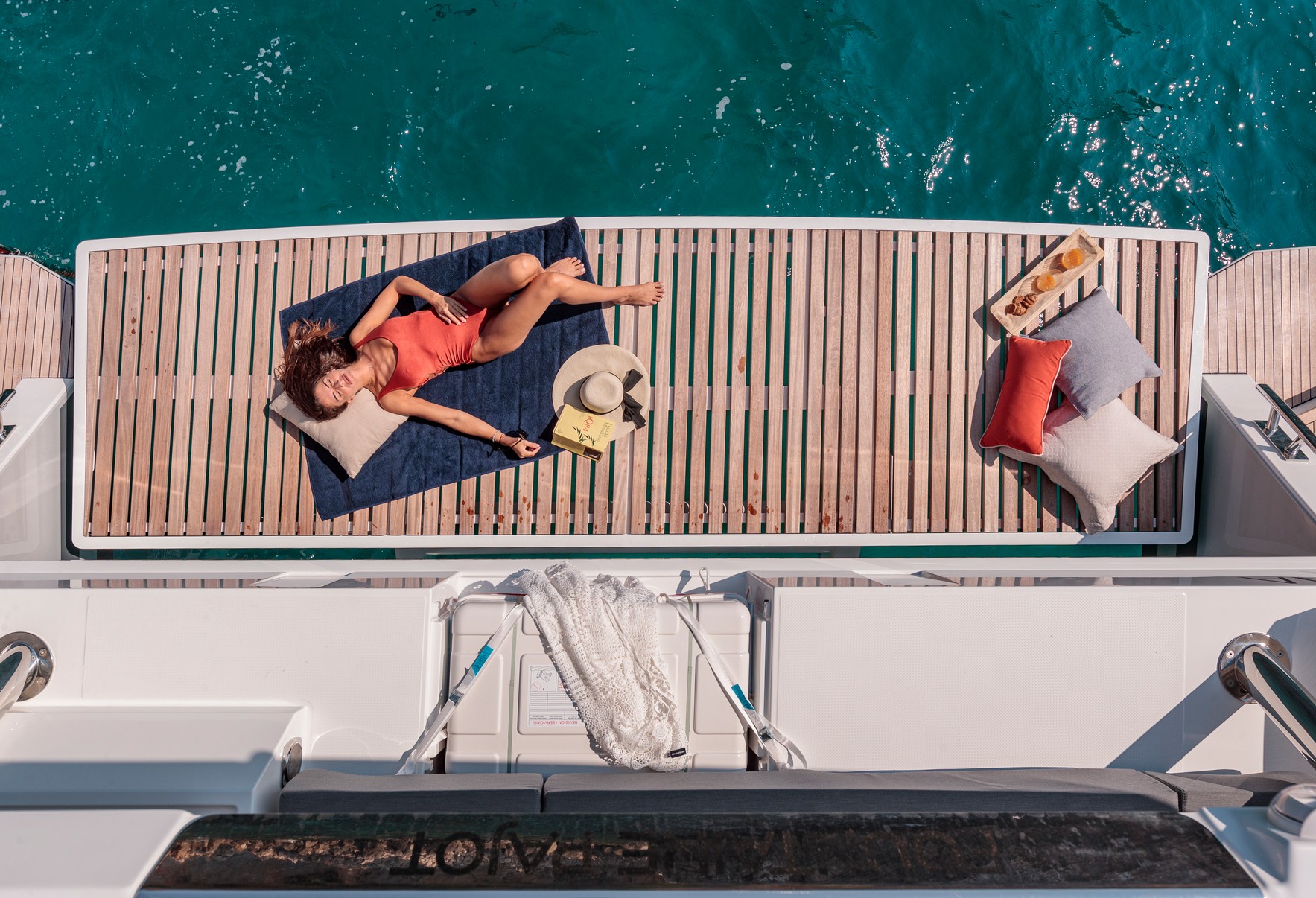
Fournoi is an archipelago of about twenty islands and islets scattered between Ikaria and Samos, on the old east–west and north–south shipping lanes of the Aegean.
That position made it busy in antiquity — and dangerous enough that the seabed now holds the highest known concentration of ancient shipwrecks in the Mediterranean. It also makes it a superb sailing ground: sheltered channels, fishing-village harbours and water that stays clear.
For a yacht crew, Fournoi is the natural half-day stop on any Ikaria–Samos–Patmos route, with lobster on the table and a story under the keel.
Why visit Fournoi?
Ancient writers knew the islands as Korsiai. Their position at the crossing of the Asia Minor coast routes and the Cyclades-to-Samos lanes meant constant traffic — and since systematic underwater surveys began in 2015, archaeologists have documented more than 58 shipwrecks, from the 6th century BC to the interwar years.
That is roughly a quarter of all shipwrecks documented in Greek waters, concentrated in one small archipelago. In 2025 the Ministry of Culture declared 24 protected underwater archaeological sites here, and two accessible sites — at Aspros Kavos and in Thymaina's Vathylakas bay — now open the story to divers.
Above water, Fournoi is a working fishing island: a whitewashed village around a sheltered harbour, windmills on the hill at Kampi, and tavernas that serve the best lobster pasta in the North Aegean.
Exploring Fournoi by private catamaran
Fournoi town harbour, on the south coast of the main island, is a municipal and fishing harbour with basic services — a quay, water when available, tavernas and mini markets. Space is limited and shared with the ferry, so arrive early or raft where invited.
The archipelago's geography is the attraction: the channels between Fournoi, Thymaina, Agios Minas and the islets accelerate the wind noticeably, so expect more than the forecast in the narrows and plan passages for the morning.
Documented anchorages include Elidaki, the islet off the village; Bali and Kamari on the main island; and Chrysomilia on the north coast, a small fishing refuge. Each works only in the right wind — check current pilotage before committing.
The Etesian meltemi funnels between Ikaria and Samos, and Fournoi sits in the middle of it. Keep fuel and time in reserve, and remember the islands' ancient reputation: this was a place where ships came to grief. Modern charts and a conservative plan make it a delight instead.
Beaches and swimming stops
Kampi, on the south coast, pairs a long pebble-sand beach with the windmills on the hill above — the classic Fournoi swim.
Vlychada on Thymaina and the coves around Petrokopio offer quieter water, reached by boat or on foot. Psili Ammos and Vitsilia add more options close to the village.
The water is remarkably clear throughout the archipelago, and the islets — Agios Minas among them — make rewarding tender trips in settled weather.
Swim early: the channels pick up from late morning, and the same wind that filled ancient sails will make an afternoon anchoring uncomfortable.
What to see
Walk up to Kampi and its restored windmills, with views across the whole archipelago — the best short hike on the island.
At Kamari, archaeologists have identified an ancient harbour settlement: building foundations on the beach, an early Christian basilica, and dozens of ancient anchors offshore — the station where ancient sailors paused and gave thanks.
On the hill of Ai Giorgis, Cyclopean walls with traces of an acropolis look over the southern channels.
The shipwreck story itself is the island's great sight: 58-plus wrecks from the 6th century BC onward, two newly designated accessible underwater sites, and a museum-level story told by the local community and the Korseai Institute.
What to do
Sail the archipelago slowly: Fournoi to Thymaina to Agios Minas and back, with swims in the channels between.
Learn the wreck story before you go — the surveys by the Ephorate of Underwater Antiquities and the RPM Nautical Foundation are well documented online, and knowing what lies below changes how you see the water.
Eat lobster: Fournoi's fishing fleet supplies the tavernas, and lobster pasta here is a North Aegean institution.
Use Fournoi as the hinge between Ikaria and Samos — a calm night in the archipelago beats a long beat against the funnel winds.
Food & where to eat
Fournoi is a fishing island first, and the tavernas prove it: lobster pasta, fresh fish, kakavia and grilled octopus, with thyme honey and local cheeses alongside.
The village tavernas around the harbour serve the day's catch steps from your berth — ask what came in and agree the price before ordering.
Local cheeses are distinctive: wax-aged and brined varieties you will not find elsewhere, made in small quantities.
Provisioning is basic but sufficient — mini markets, bread, fresh produce when the boat comes in. Stock up on fish and honey; the rest you brought with you.
Research sources
These sources were used to check the guide. Port operations, opening hours and restaurant schedules can change, so confirm details close to your visit.
This guide supports itinerary planning; it is not a navigational source. The captain remains responsible for current charts, weather, safe depths, berth instructions and local restrictions.