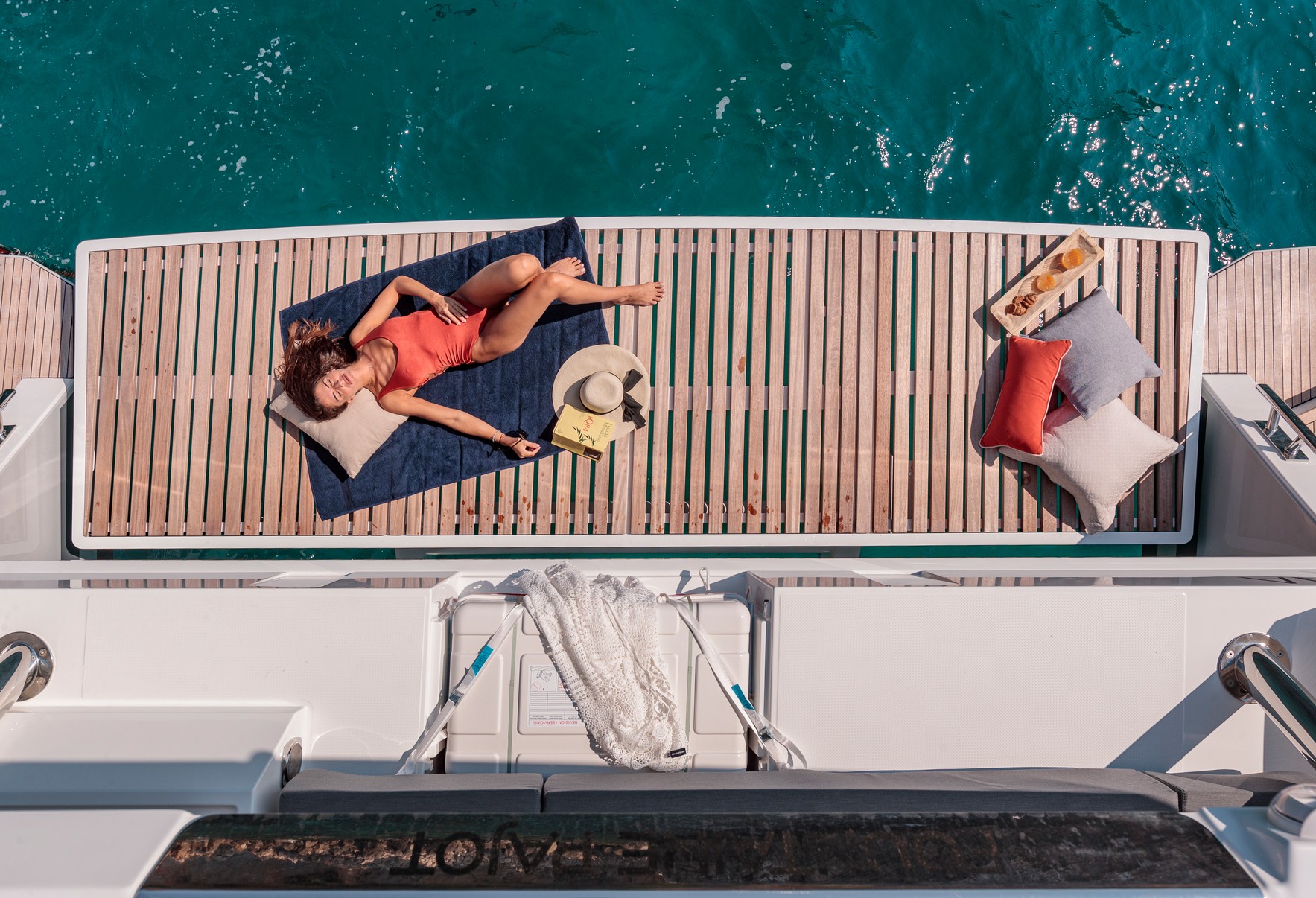
Corfu is one of the most famous islands in Greece, where you can easily spend a full week without running out of things to do. The Old Town of Corfu is packed with history; while the interior is covered in olive groves and small villages, and the coastline changes dramatically from long sandy beaches in the south and west to sheltered coves along the northeast.
It is also one of the best islands in Greece to explore by boat. The northeast coast in particular is lined with small bays, waterfront tavernas and villages that are much easier, and often more enjoyable, to reach from the sea.
Corfu, or Kerkyra in Greek, is located at the northern end of the Ionian Sea, close to both mainland Greece and Albania. It feels quite different from the dry, whitewashed islands of the Cyclades. Corfu is green, mountainous and heavily wooded, with cypress trees and olive groves running almost to the sea.

Its history is equally distinctive. Centuries of Venetian rule, followed by French and British periods, left Corfu Town with fortresses, arcaded streets, grand public buildings and architecture that reminds us of Italy. The Old Town is now a UNESCO World Heritage Site.
But Corfu is much more than Corfu Town. Drive inland and you quickly reach old stone villages, small squares and family tavernas. Head to the coast and you can choose between broad sandy beaches, tiny pebble coves, dramatic cliffs and sheltered anchorages.
That variety is the main reason Corfu deserves more time than a typical three-day Greek island stop.
Why visit Corfu?
Corfu is a great island choice if you want to combine beaches, food, history, villages and boating in one trip.
The island is large enough that different parts feel genuinely different. The west coast is more exposed to the Ionian Sea and has some of the island's biggest sandy beaches.
Around Paleokastritsa and the northwest, steep hills fall into clear blue-green coves. The northeast coast facing Albania is generally more sheltered and is especially good for boating.

What to see in Corfu
Corfu Old Town
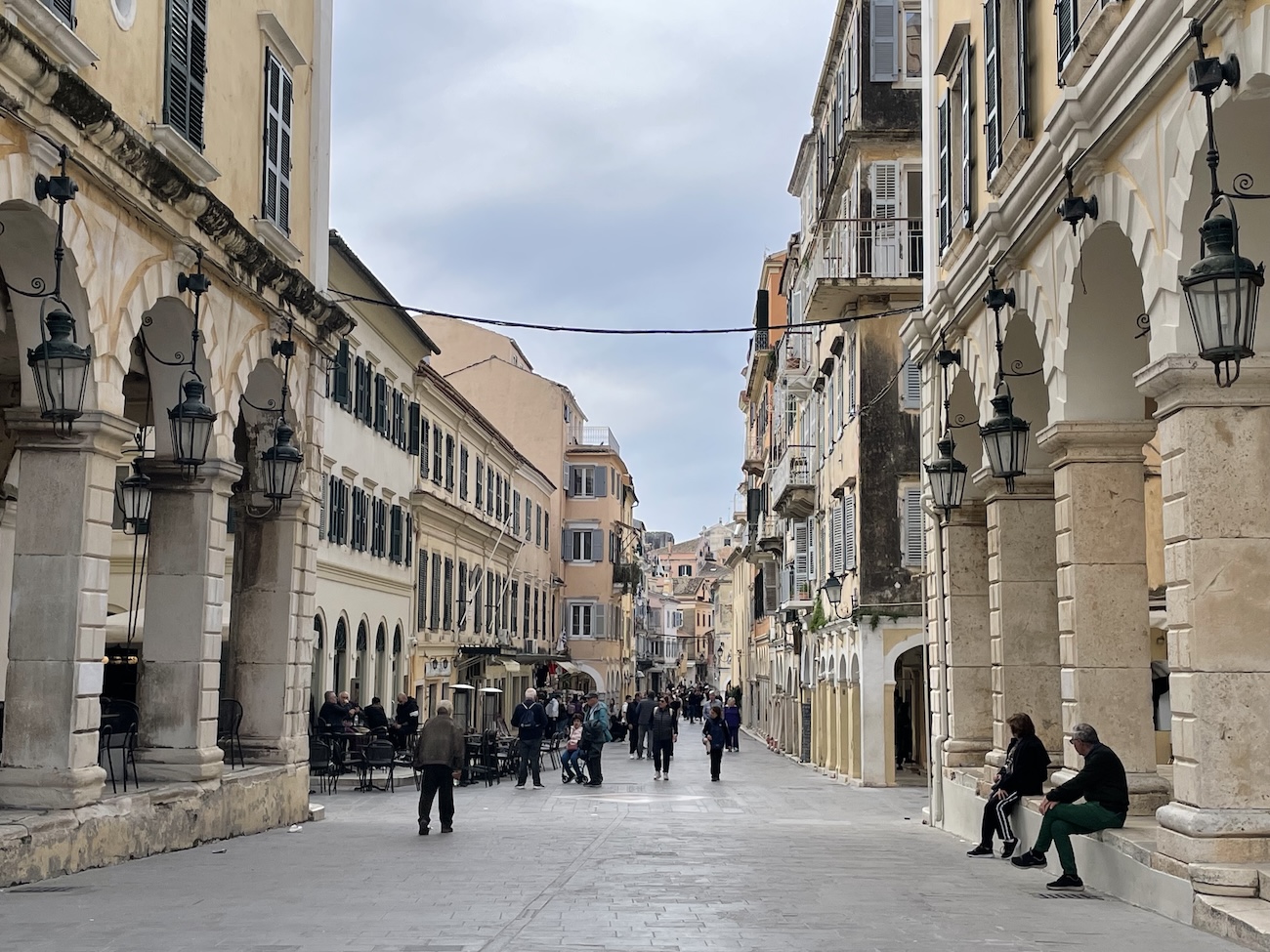
This should be at the top of any Corfu itinerary. You can spend an entire afternoon and evening walking through its narrow streets, visiting museums and stopping for drinks or dinner without needing a car.
Start around Spianada Square and the Liston, then walk without too much of a plan. Some of the most interesting streets are the narrow kantounia running behind the main squares.
Make time for the Old Fortress as well. The walk through the fortress eventually gives you excellent views over Corfu Town, the sea and the mountains of mainland Greece and Albania.



Museum of Asian Art / Palace of St Michael and St George
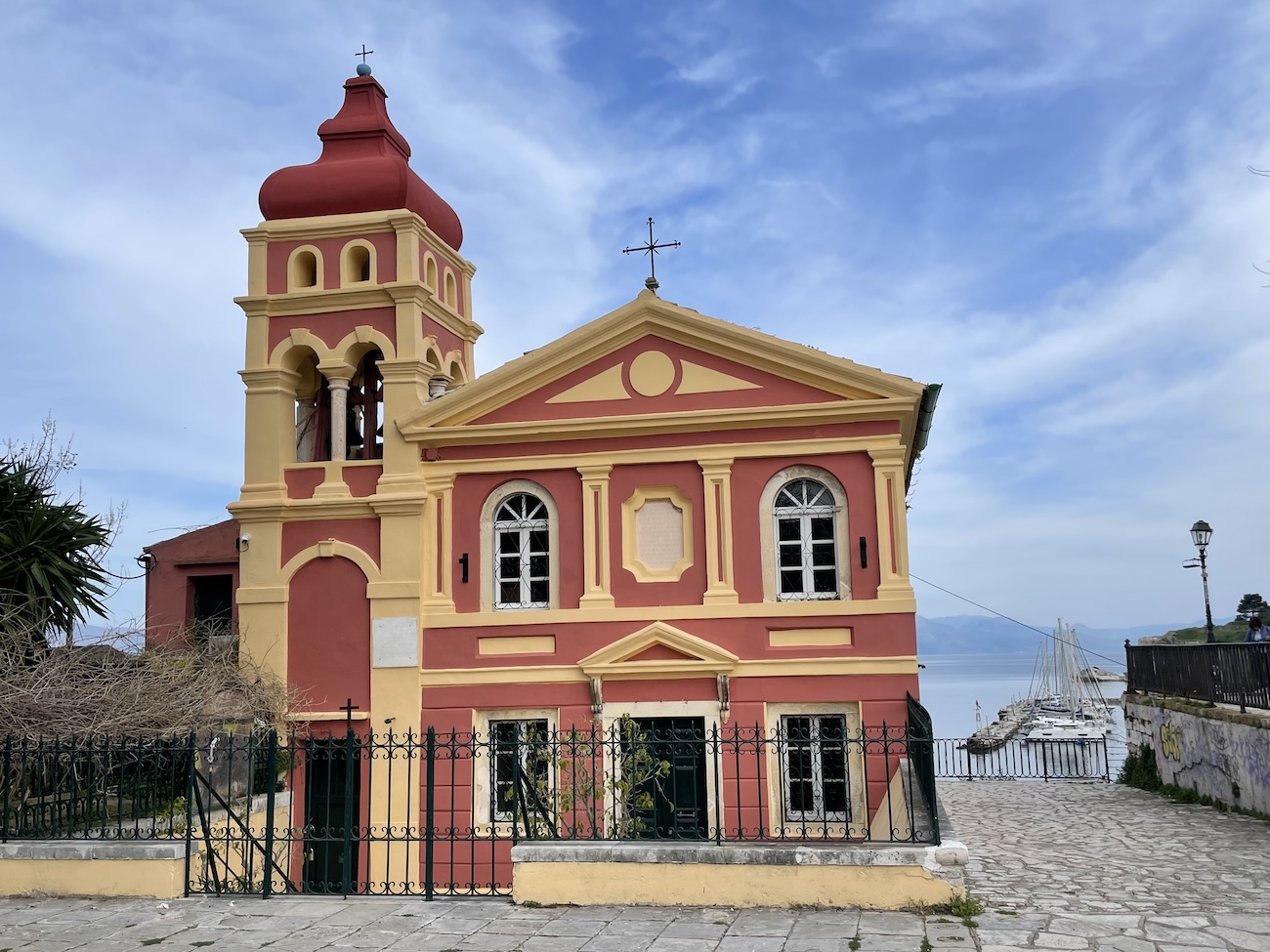
At the northern side of Spianada you can find the Palace of St Michael and St George, built during the British period between 1818 and 1823.
Today it houses the Museum of Asian Art, with more than 11,000 objects covering Chinese, Japanese, Indian, Himalayan and Southeast Asian art. It is one of the more unusual museums you will find on a Greek island.
Even if you do not visit the museum, walk through the palace grounds and surrounding area.
Angelokastro

Angelokastro is one of the most impressive historic sites in Corfu. The Byzantine fortress is located high on a rocky peak above the northwest coast, with wide views over the Ionian Sea and the green hills around Paleokastritsa.
Its location was chosen for defence, and once you reach the top it is easy to understand why. The castle controlled a huge stretch of coastline and formed part of Corfu’s medieval defensive system. Today, the ruins are relatively simple, but the setting is exceptional and gives you a much better sense of the island’s landscape.
A visit to Angelokastro can be combined with Paleokastritsa, Lakones and Makrades, making it a very good stop on a day exploring northwest Corfu.
Achilleion

The Achilleion was built for Empress Elisabeth of Austria, better known as Sisi, in the late 19th century. The palace and gardens are heavily influenced by Greek mythology, particularly the story of Achilles.
One important point for anyone travelling now: as of September 2026, the palace interior is still undergoing restoration and only the outdoor areas and Imperial Gardens are open to visitors. A new €11.5 million restoration phase for the palace complex was tendered in August 2026, so check the official website before planning your visit.
Even with the building closed, the gardens and statues make it worthwhile if you are nearby.
Church of Saint Spyridon
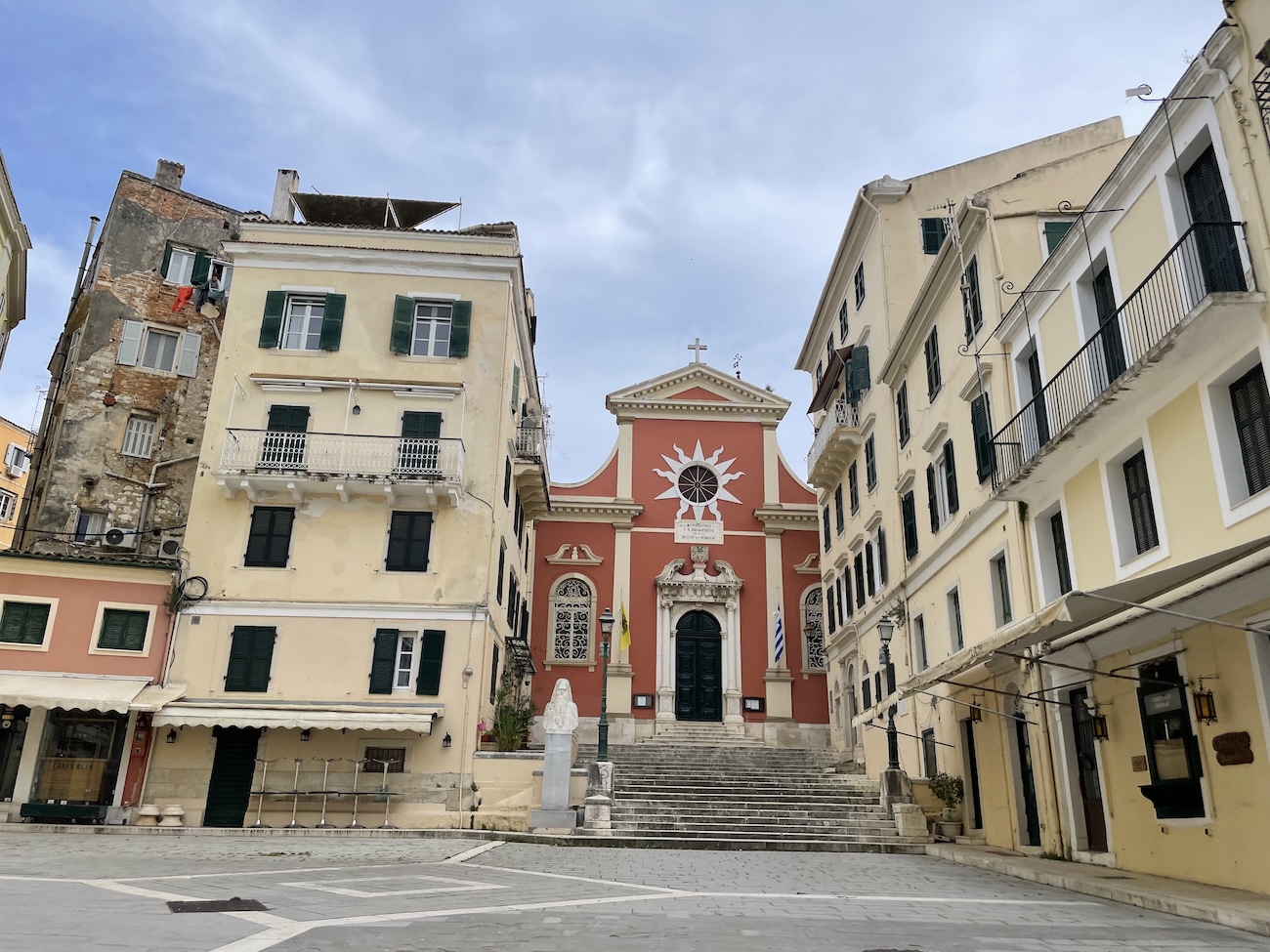
The Church of Saint Spyridon is one of the most important places in Corfu Town and a central part of life on the island.
Built in the late 16th century, the church houses the relics of Saint Spyridon, the patron saint of Corfu, in a silver reliquary beside the sanctuary. For Corfiots, Saint Spyridon has a particularly strong significance, and major religious processions are held in his honour during the year.
The church itself is easy to recognize by its tall bell tower, which rises above the roofs of the Old Town and has a clear Venetian influence.
Markosian Coffee Shop
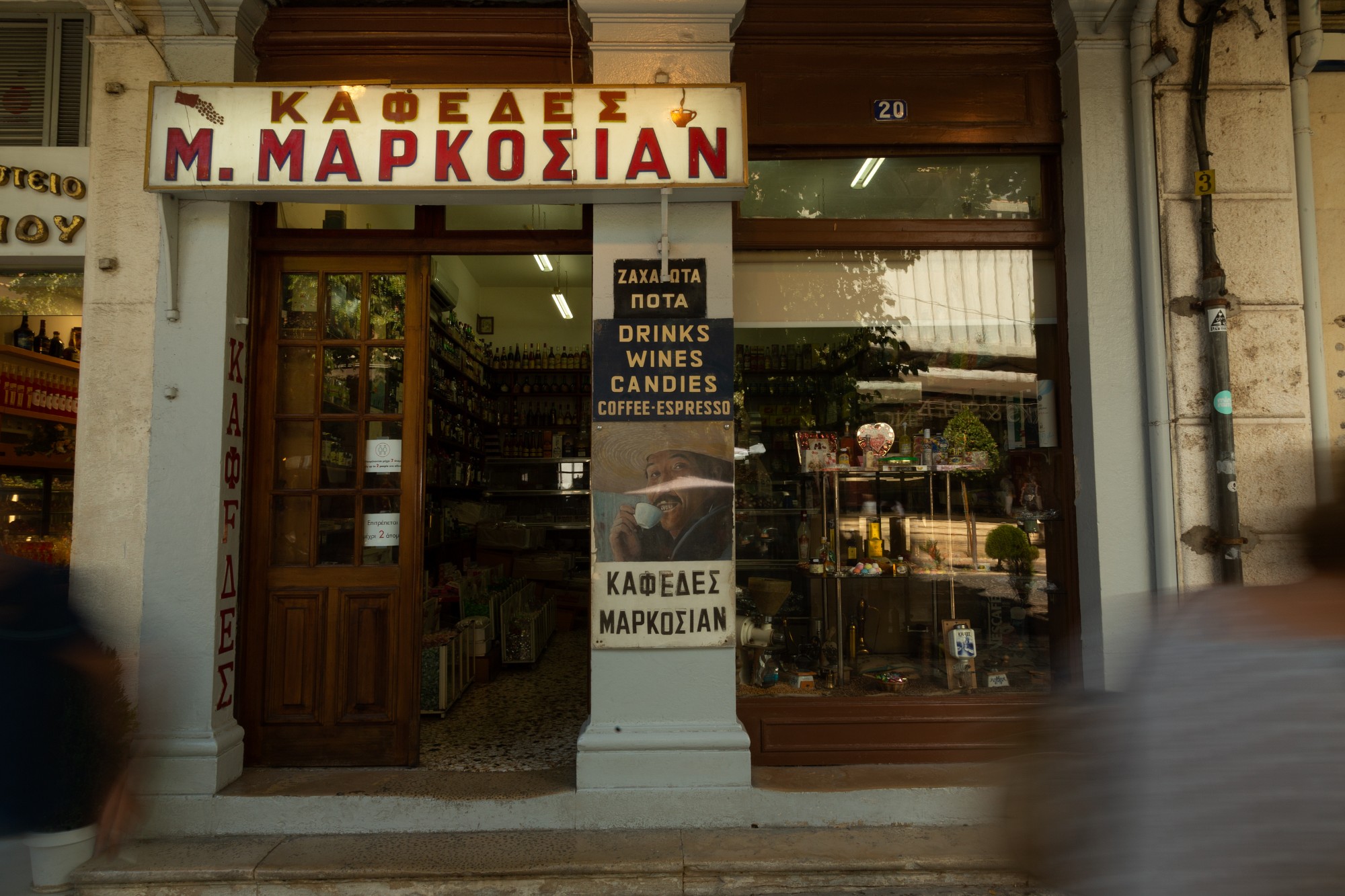
Markosian is one of those places that helps explain Corfu better than another souvenir shop ever could.
This traditional coffee and nut shop on Georgiou Theotoki Street has been part of Corfu Town for generations. Inside, you will find freshly ground Greek coffee, nuts, roasted chickpeas, sweets, spices, and traditional confectionery.
Stop while exploring the town and take something home.
Paleokastritsa

Paleokastritsa is one of the most beautiful parts of Corfu and deserves more than a quick beach stop. The coastline is broken into a series of small bays surrounded by steep, heavily wooded hills, with clear blue-green water and rocky caves along the shore.
The area has six main coves and beaches, including Agios Spyridon, while the small harbour at Alipa is the starting point for short boat trips along the coast and into nearby sea caves. From here, boats can also reach more secluded beaches such as Chomi.
Above the main bay is the Monastery of the Virgin of Paleokastritsa, set on a headland overlooking the sea. The monastery adds a completely different side to the visit, with a quiet courtyard, traditional architecture and excellent views over the surrounding bays.
Kanoni, Vlacherna Monastery & Pontikonisi

This is one of the classic views of Corfu.
Kanoni is just south of Corfu Town, overlooking the narrow lagoon, Vlacherna Monastery and the small island of Pontikonisi, or “Mouse Island”. The viewpoint above gives you the familiar postcard view, but it is also worth walking down to the water.
Vlacherna Monastery dates to the 17th century and is built on a tiny islet connected to the mainland by a narrow pedestrian causeway. Its small white church, bell tower and waterside setting make it one of the most distinctive landmarks on the island.
Mon Repos & Paleopolis
Mon Repos offers a quieter and greener side of Corfu, only a short distance from the centre of town.
The estate is set inside a large wooded park filled with mature Mediterranean and exotic trees. At its centre is the neoclassical Mon Repos Palace, built in 1831 as a summer residence for the British High Commissioner Frederick Adam and his Corfiot wife. It later became a summer residence of the Greek royal family and today houses a museum.
The surrounding area is also part of Paleopolis, the site of ancient Corfu. The ancient settlement developed here from the late 8th century BC and included temples, public buildings, harbour facilities and Roman baths.
This is a lovely area for a relaxed walk, especially if you are interested in seeing how many different periods of Corfu’s history overlap in one place: ancient Greek, Roman, British and modern.
Cape Drastis

Cape Drastis is located near the northwestern tip of Corfu and is known for its pale sculpted cliffs and narrow inlets.
You can enjoy the view from above at the viewpoint, or visit the coastline from the water. In calm conditions, a small boat lets you explore beneath the cliffs and along nearby coves.
The northwest coast is more exposed than Corfu's northeast side, so boating here should always depend on the day's weather and sea state.
Best beaches in Corfu
Glyfada
If you are looking for a sandy beach day, Glyfada is one of the safest choices.
It is a large west-coast beach backed by green hills, with clear water and plenty of facilities. Unlike some of the smaller coves on this list, it is easy to spend most of the day here.
Because the beach faces west, conditions can become rougher when the Ionian Sea picks up.
Rovinia
Rovinia is a smaller, quieter and much more enclosed beach.
The beach is located near Liapades and is reached by footpath or boat. It is a mostly pebble cove surrounded by steep green hills, with particularly clear water. Facilities are limited, so bring what you need.
Coming by boat is especially good because you can combine Rovinia with the other coves around Paleokastritsa.
Porto Timoni

Porto Timoni is one of Corfu's most recognizable locations: two small bays sitting back-to-back below the village of Afionas.
You can reach it by boat or walk down from Afionas. The hike takes roughly 20–30 minutes downhill for many visitors, but the trail is steep, and the return can be harder in the heat. There are no proper beach facilities.
If hiking, go early and take proper shoes rather than flip-flops.
Chomi — by boat
Chomi is the type of beach that explains why renting a boat in Corfu is worth considering.
It lies beneath steep cliffs on the west coast and is effectively a boat beach. There is no practical road access directly to the shore.
Come in settled weather, swim, spend a few hours and move on rather than planning your entire day around facilities ashore.
Chalikounas

Chalikounas is completely different: instead of cliffs and enclosed coves, you get a long sandy coastline separating the Ionian Sea from Korission Lagoon.
It is more open, wild and windswept than beaches such as Rovinia. Those conditions also make the area popular for wind- and kite-sports.
Villages worth visiting in Corfu
The villages are one of the easiest parts of Corfu to overlook. If you can, try dedicating at least half a day to driving through the interior to visit these villages and experience the more traditional island life.
Kouramades
A traditional village in central Corfu, surrounded by countryside and olive groves.
Kouramades is worth seeing precisely because there is no major attraction to rush through. Walk around, have a coffee and use it as part of a longer drive through central Corfu.
Gardelades
Gardelades is another small inland village close to the Paleokastritsa area.
It works well as part of a route through the northwest rather than as a standalone half-day destination.
Doukades
Doukades is one of the most picturesque villages on the island.
Its traditional square, old houses and tavernas make it a very good lunch or dinner stop, particularly if you are visiting Paleokastritsa on the same day. It is considered as one of the better-preserved villages in this part of the island.
Afionas
Afionas is located above the northwest coast and has excellent views over Agios Georgios Bay.
It is also the starting point for the walk to Porto Timoni.
Come in the late afternoon, explore the village, walk to the viewpoints and stay for sunset or dinner.
Old Perithia
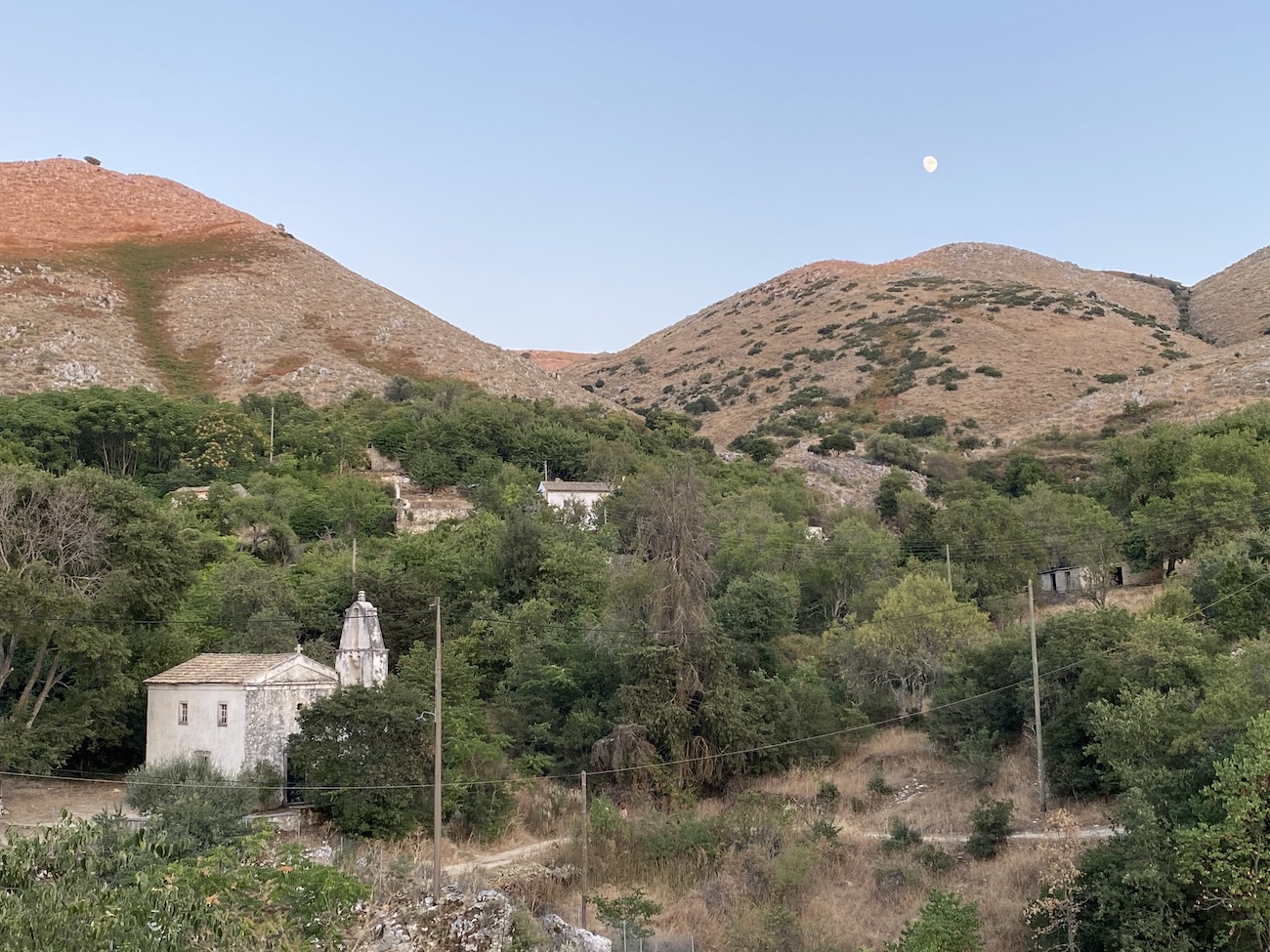
High below Mount Pantokrator, the village of Old Perithia contains dozens of stone houses, churches and old lanes dating largely from the Venetian period.
Parts of the settlement were abandoned for years before a gradual restoration began.
Come around lunchtime or in the late afternoon, walk around the village and then eat at one of the tavernas.
Best restaurants and taverns in Corfu
Corfu has its own traditional dishes you can’t miss.
Look for pastitsada, usually beef, chicken or rooster cooked in a spiced tomato sauce with pasta; sofrito, thinly sliced veal or beef cooked with garlic, parsley, vinegar and white wine; and bianco, traditionally fish cooked with potatoes, garlic, lemon and pepper.
For restaurants, these are worth keeping on your list:
Marina's Tavern, Corfu Town. A traditional Greek taverna in the Old Town area and a good option when you want straightforward local cooking rather than a more formal dinner.
Salto, Corfu Town. A more contemporary choice, particularly good if you like wine. Salto's list contains more than 120 Greek labels, while the kitchen combines Mediterranean cooking with local ingredients and changing seasonal dishes.
Juno's Table, Corfu Town. A relatively new café in the Old Town, open primarily for breakfast and lunch, with coffee, brunch-style dishes and homemade sweets.
Old Buoy, Corfu Town. A good choice when you want something more contemporary than a traditional taverna, whether for breakfast, brunch, food or drinks. It sits on Eleftheriou Venizelou Street close to the waterfront.
Fisalida's Gardens, Corfu Town. A more relaxed option to keep on the list for a casual meal. Smaller seasonal restaurants in Corfu frequently change opening schedules, so check before making a special journey.
TA PSARAKIA TSI GARITSAS, Garitsa. Go here when you want a traditional fish-taverna meal close to the sea rather than a polished Old Town restaurant. It specialises in fish and seafood.
Málathro, Temploni. One of the more interesting choices for contemporary Corfiot cooking. Chef Spyros Athinos works with local ingredients and reinterprets traditional dishes; the menu changes regularly.
Taverna Elizabeth, Doukades. One of the island's classic village tavernas, serving traditional Corfiot slow-cooked dishes. It is a particularly good place to try pastitsada, sofrito and other local recipes.
Foros, Old Perithia. A good match with a visit to Old Perithia. Expect traditional tavern cooking, grills, stews and local dishes rather than elaborate presentation.
Kafe Sas, Agios Georgios. A relaxed spot with a distinctly local feel, Kafe Sas is a great place to stop for lunch or dinner, especially to try Corfu’s traditional dishes or fish.
Visiting Corfu by boat
If you have access to a boat, Corfu becomes a very different destination.
The northeast coast is one of the most visited areas. From Gouvia, head north past Dassia and Ipsos toward Barbati, Nissaki, Agni, Kalami, Kouloura and Kassiopi.
Here the hills fall directly into the sea and small bays appear every few miles. Several restaurants have jetties or are accustomed to guests arriving by tender.
Agni Bay is particularly good for a long lunch stop. Boats commonly anchor in the bay or use taverna jetties where available. The bottom includes sand and weed, and the bay is more exposed toward the east and southeast, so it suits settled summer weather better than deteriorating conditions.
Farther north, Kalami, Kouloura and Kassiopi can easily be combined into the same day.
The west coast is more dramatic but requires more respect for the weather. Paleokastritsa, Rovinia, Chomi, Agios Georgios and Porto Timoni are superb by boat when conditions allow, but they are much less sheltered from Ionian swell.
Where to dock or anchor in Corfu
Gouvia Marina
For proper marina facilities, Gouvia is the main base.
Gouvia has around 1,200 berths, fuel, electricity, water, security and extensive repair and lifting facilities. The marina is around 7 km from Corfu Airport. Contact the marina on VHF 69 when arriving.
If you are chartering a yacht in Corfu, there is a good chance your trip will begin or end here.
Mandraki Harbour, Corfu Town
For location, Mandraki is difficult to beat.
The small harbour is located directly underneath the Old Fortress, putting you within walking distance of Corfu Town.
Visitor space is limited, however. The Corfu Sailing Club says visiting boats should contact it at least three days before arrival; the harbour provides water and electricity and operates on VHF 68 during the summer.
Kassiopi
Kassiopi has a picturesque small harbour on the northeast coast.
Space is limited and the harbour requires more attention than a marina. Depths vary, parts of the basin are shallow, and boats may also anchor outside depending on conditions.
It is an excellent stop if your draft and the day's conditions are suitable.
Agni
Agni is primarily an anchorage and restaurant stop rather than a marina.
Anchor in appropriate sand, or arrange a taverna jetty where possible. In busy summer periods, it is sensible to organize lunch and jetty arrangements before arriving.
Paleokastritsa / Alipa
The small harbour at Alipa gives access to Paleokastritsa and the surrounding west-coast coves.
Capacity is limited, so it is much better suited to smaller boats and short stops than relying on it as your main Corfu base.
Petriti
Petriti on the southeast coast is a useful small harbour and fishing village.
The bay can also be used for anchoring in suitable conditions, but it is exposed to southeasterly weather.
Benitses
Benitses Marina is another possibility on the east coast. Berths can be requested in advance directly from the marina, with availability confirmed by email.

Getting around Corfu
For Corfu Town itself, walk. For almost everything else, a car is the most useful option.
The distances do not look huge on a map, but roads through the interior and north of the island can be narrow and winding. A journey of 25 or 30 kilometres may take much longer than expected.
A car is particularly useful for combining villages and beaches. For example:
For Corfu Town, avoid driving into the historic centre. Park outside the Old Town and continue on foot.
Buses also connect Corfu Town with many major beaches and villages and are perfectly usable if you are staying in one place. They are less convenient if your plan involves visiting several small villages in the same day.
How many days do you need in Corfu?
Three days is enough to see Corfu Town, visit one major beach and explore part of the island.
Five days is much better. You can divide the trip between Corfu Town, the northwest, the northeast and the south without rushing.
Seven days is ideal if you also want a boat day.
A good first visit would look roughly like this:
- Corfu Old Town, Old Fortress and Museum of Asian Art
- Paleokastritsa, Rovinia, Doukades and Makrades
- Glyfada and central Corfu villages
- Afionas, Porto Timoni and northwest Corfu
- Old Perithia, Mount Pantokrator area and northeast coast
- Boat day around Agni, Kalami, Kouloura and Kassiopi
- Chalikounas and southern Corfu, followed by a final evening in Corfu Town
Island hopping after Corfu
Corfu is an excellent starting point for exploring the northern Ionian.
Paxos
If you only add one island, make it Paxos.
By yacht, it is roughly 35 nautical miles south of Corfu. Lakka in the north and Gaios farther south are the island's main boating stops.
Paxos is much smaller than Corfu and works very well for two or three nights.
Antipaxos
Tiny Antipaxos sits just south of Paxos and is mostly about swimming.
Voutoumi and Vrika have exceptionally clear water and are natural daytime stops before returning to Paxos for the night.
Diapontia Islands
For something less obvious, head northwest toward Erikoussa, Othonoi and Mathraki.
They are much quieter than Corfu and Paxos and make an interesting extension for sailors, although harbour depths, reefs and weather require proper passage planning. Erikoussa is approximately 12 nautical miles northwest of Corfu according to current Ionian sailing guides.
Mainland Greece
You can also cross toward Sivota and Parga before continuing south through the Ionian.
Conclusion
Corfu rewards travellers who explore beyond the obvious stops.
Spend time in Corfu Town, but also drive into the villages. Visit Glyfada, but make the effort to reach Rovinia or Porto Timoni. Eat at restaurants in town, then have another meal in Doukades or Old Perithia.
And if you have the opportunity to spend even one day on a boat, take it. The coastline between Gouvia and Kassiopi, with stops around Nissaki, Agni, Kalami and Kouloura, shows a side of Corfu that is difficult to appreciate properly from the road.
For a first trip, five to seven days gives you enough time to understand the island without turning every day into a long drive. Add Paxos afterwards, and you have one of the most beautiful itineraries in the Ionian Sea.
This guide supports itinerary planning; it is not a navigational source. The captain remains responsible for current charts, weather, safe depths, berth instructions and local restrictions.