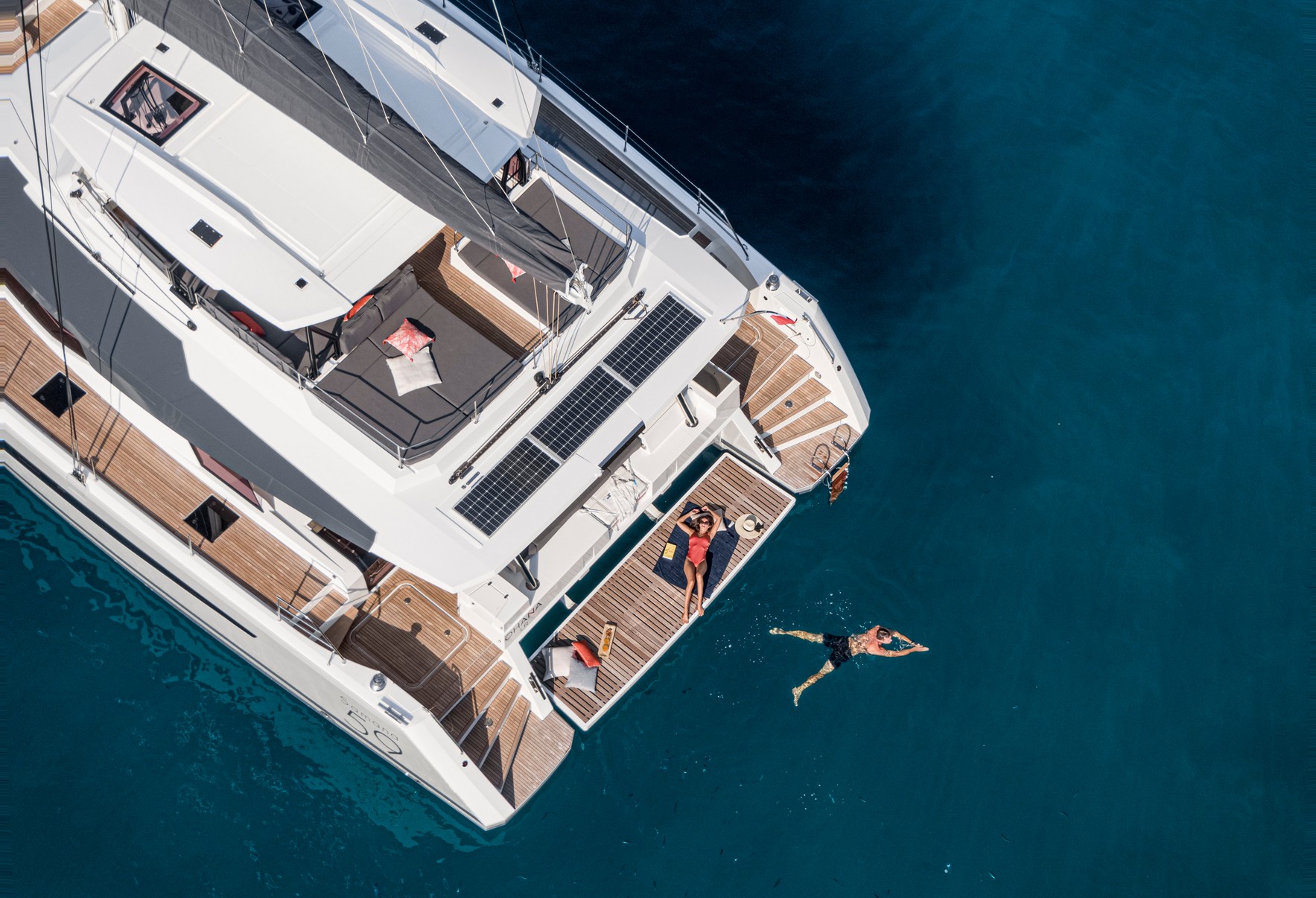
A bareboat gives qualified sailors full operational responsibility. A crewed yacht makes the captain and service team responsible for running the boat. The difference is not just price: it changes how every day feels and how much work your group must do.
What you take on with a bareboat
The nominated skipper plans passages, checks weather, conducts safety briefings, handles the yacht, manages fuel and water, and deals with check-in, damage and technical issues. The group also provisions, cooks and cleans unless extras are arranged.
The operator must accept your original sailing qualifications and documented experience. Local authorities or insurers may require a second capable crew member. A certificate alone does not make an inexperienced catamaran skipper ready for a windy crosswind berth.

What a crewed charter changes
A professional captain handles navigation and yacht operations. Larger crewed yachts add a chef and interior/deck team, so meals, housekeeping, tender driving and water-toy setup are managed on board. Guests still influence the route, but safety and weather decisions remain with the captain.
Aloia’s crewed catamarans carry three to five crew. This suits groups who want the boat to function as their holiday accommodation rather than a shared sailing project.
Cost, privacy and control
Bareboat is usually cheaper at the starting rate, but add cleaning, linen, outboard, insurance or deposit options, fuel, provisioning and any hired skipper. On a crewed yacht, crew costs are generally in the base fee while operating expenses are handled separately.
Bareboat offers more solitude. Crewed yachts offer more usable holiday time. Good crews protect privacy by explaining routines and using service areas; guests retain private cabins and choose how social they want to be.
A simple decision rule
Choose bareboat only if the responsible skipper is qualified, recently experienced on a similar catamaran, comfortable with Greek mooring practices and genuinely wants operational responsibility. Choose crewed when the group prioritizes service, local knowledge and time together.
If you want to sail but not carry full responsibility, a skippered charter is the middle option. Read whether you need a skipper and whether guests need sailing experience.
Charter terms, weather, yacht specifications and port operations can change. Confirm current details with the yacht’s central agent, your broker, the captain and relevant local authorities.