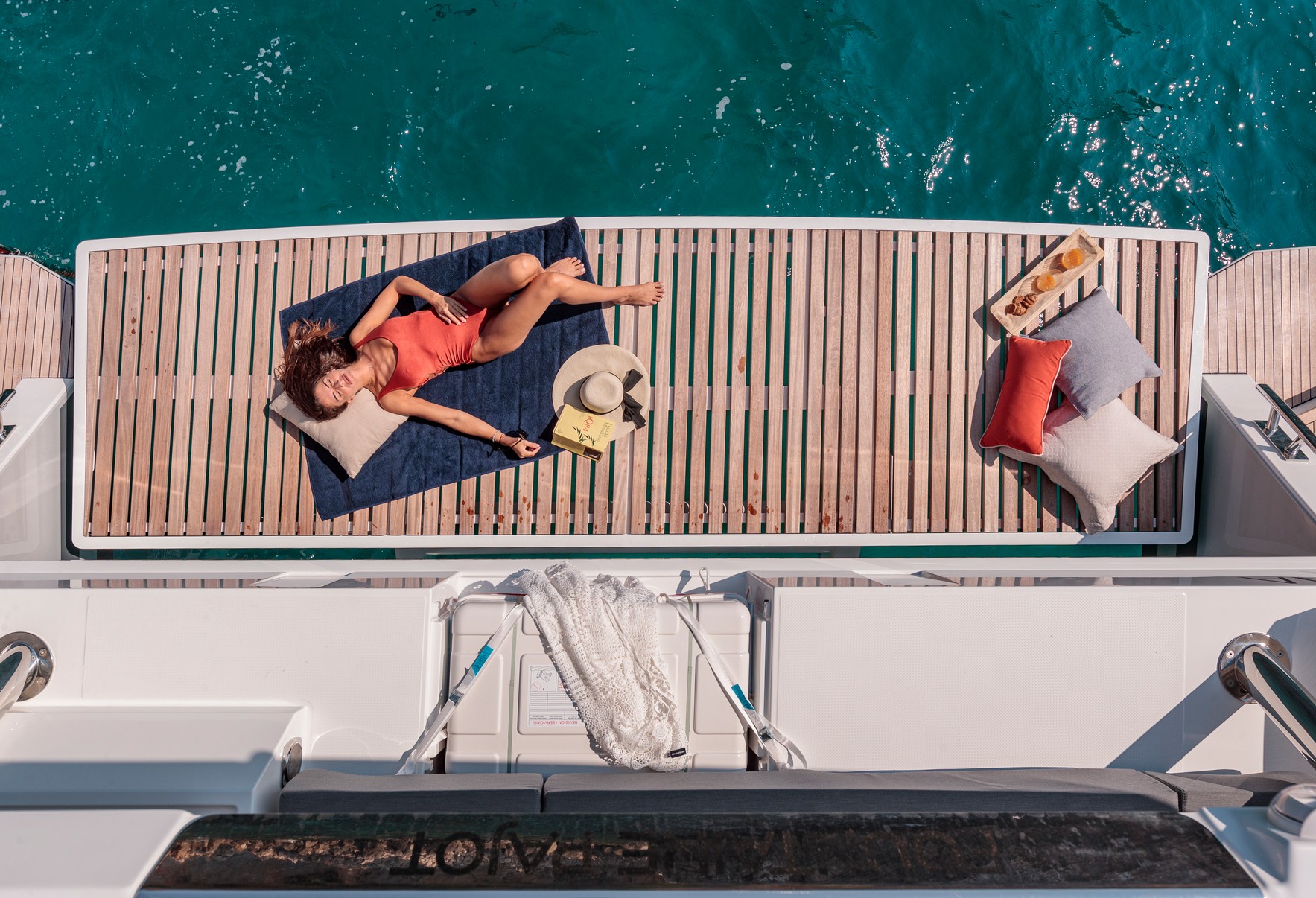
Lesbos is Greece’s third-largest island, so it works better as a small voyage than a one-night stop. Its two deep gulfs, long olive-covered coast and useful harbours let a captain choose a route around the forecast.
Time ashore matters just as much. Molyvos climbs to a medieval castle, Sigri opens onto a petrified forest, Plomari explains the island’s ouzo tradition, and Mytilene has one of the North Aegean’s most interesting town centres.
Distances are substantial. Choose one coast or allow at least three nights, and use current charts and port instructions for every approach.
Why visit Lesbos?
The east is centred on Mytilene and the Gulf of Gera. The south brings you to ouzo-producing Plomari and the long beach at Vatera. In the north, stone-built Molyvos faces the Turkish coast, while the dry volcanic west ends at Sigri and the Petrified Forest.
A private yacht makes these contrasts easier to appreciate, but it is not an island to rush around. A north–south drive can take much longer than expected, and a sea route must account for the prevailing northerly wind and swell.
A balanced stay uses one secure harbour as a base, one fair-weather swim day and one road day. That leaves enough time for a proper village meal rather than turning every stop into a quick photograph.

Exploring Lesbos by private catamaran
Mytilene Marina, at the south end of the city harbour, is the clearest choice for organized berthing, services and provisioning. The adjoining commercial harbour is busy with ferries and international traffic; contact the marina or port authority before entry and follow reporting instructions, especially if arriving from Turkey.
Plomari is a useful south-coast stop for the town and distilleries. The harbour is small and can develop swell in easterly or southerly weather. Molyvos has an attractive but compact harbour beneath the castle, where visiting space is limited in summer.
On the west coast, Sigri is protected in part by the offshore islet and is the practical sea approach for the Petrified Forest. The channels, shoals and choice of anchoring side need current pilotage—not a shortcut based on visual impressions.
The Gulfs of Gera and Kalloni offer extensive water, fishing activity and different shelter from the outer coast. Check charted depths, farms, nets and local traffic. Keep a generous distance from fishing gear and never assume that an empty quay accepts visiting yachts.

Beaches and swimming stops
Agios Isidoros, just outside Plomari, has clear water and a long pebble shore with summer facilities. Vatera is a broad south-coast beach that is easier to enjoy by road when the open coast is unsettled.
On the north coast, Eftalou combines pebble coves with thermal-water bathing near Molyvos. Tsonia, in the northeast, has distinctive reddish sand and can offer a pleasant fair-weather stop, but easterly weather changes its comfort quickly.
Skala Eresou has a long sandy beach, cafés and a relaxed waterfront. Near Sigri, Faneromeni and the beaches around the bay feel much quieter. Treat all outer-coast stops as daytime choices until the captain has assessed protection, holding and the overnight forecast.
The gulfs are productive fishing waters rather than a sequence of resort beaches. Slow down around working boats, aquaculture and nets, and ask locally before landing a tender on an unfamiliar shore.
What to see
Walk up through Molyvos to its castle, passing stone houses, shaded lanes and Ottoman fountains. Nearby Petra has a church above the village on a tall rock; the steps are exposed, so go early or late.
In the west, the Natural History Museum of the Lesvos Petrified Forest at Sigri gives essential geological context before visiting the outdoor park. The fossilized trunks were formed by volcanic activity roughly 20 million years ago and are protected—stay on paths and leave every fragment in place.
In Mytilene, combine the castle and Ermou market street with the New Archaeological Museum or the Tériade Museum and nearby Theophilos Museum. The town’s Ottoman, neoclassical and industrial layers deserve at least half a day.
For a different landscape, drive to mountain Agiasos for its traditional centre and pottery, or visit an olive-industry museum such as the restored Vranas press. Check opening days before crossing the island.

What to do
Tour an ouzo distillery in Plomari and learn why anise, water and distillation matter before tasting. Keep the tasting modest if you are returning to the yacht or driving.
Go birdwatching around the Kalloni Gulf wetlands, especially during spring and autumn migration. Use established roads and observation points, bring binoculars and do not approach feeding flocks.
Build a west-island day around Sigri, the Petrified Forest and Skala Eresou. From Molyvos, a shorter loop can include Petra, Eftalou and the fishing village of Skala Sykamias.
In Mytilene, shop for olive oil, cheese and preserves along the market streets, then settle into an ouzeri. Ordering two or three rounds of small plates is a better introduction to local food than choosing one large main course.
Food & where to eat
Start with Kalloni sardines, often lightly salt-cured in season, and pair them with ouzo and water. Also look for PDO ladotyri Mytilinis, giouzlemedes fried cheese pies, sougania stuffed onions, zucchini flowers, salted fish and dishes built around the island’s olive oil.
In Mytilene, the historic Ermis is a practical place to explore the ouzeri tradition through shared fish, vegetables and meze. In Molyvos, Baboukou is another established ouzadiko listed by the Greek Gastronomy Guide.
Around Plomari, choose a waterfront ouzeri for small fish and meze after a distillery visit. In inland Agiasos, look for seasonal home cooking and local dairy products rather than expecting the same seafood menu found on the coast.
Fresh fish is normally priced by weight. Ask to see it, confirm the price before cooking and order local vegetables and cheese alongside it. Restaurant schedules change outside high summer, so call before making a long drive.
Research sources
These sources were used to check the guide. Port operations, opening hours and restaurant schedules can change, so confirm details close to your visit.
This guide supports itinerary planning; it is not a navigational source. The captain remains responsible for current charts, weather, safe depths, berth instructions and local restrictions.